

Choosing the right fabric can make or break your DTF printing results. Small clothing businesses often struggle to identify which materials will deliver the vibrant, long-lasting prints their customers expect. This guide walks you through essential selection criteria, compares top fabric options, and provides tailored recommendations so you can confidently choose materials that maximize print quality and customer satisfaction.
Table of Contents
- Criteria For Choosing The Best Fabrics For Dtf Printing
- Top Fabric Options For Vibrant Dtf Prints
- Comparing Fabric Performance For Dtf Printing: A Side-By-Side Overview
- Which Fabric Is Best For Your Small Clothing Business? Tailored Recommendations
- Optimize Your Apparel Printing With Transfer Kingz
Key takeaways
| Point | Details |
|---|---|
| Fabric fiber content matters | Cotton and poly-cotton blends offer superior ink adhesion and wash durability for DTF prints. |
| Texture affects print clarity | Smooth, flat weaves produce sharper images while rough textures can dull print vibrancy. |
| Match fabric to business needs | Consider your target market, product type, and budget when selecting materials. |
| Test before bulk ordering | Always print sample designs and run wash tests to verify fabric performance. |
Criteria for choosing the best fabrics for DTF printing
Selecting the right fabric fiber and texture is critical for vibrant and durable DTF prints. Understanding what makes certain fabrics work better helps you avoid costly mistakes and deliver superior products to your customers.
Fiber content directly influences how well DTF ink bonds to fabric surfaces. Natural fibers like cotton absorb ink beautifully, creating rich colors that last through repeated washing. Synthetic blends offer different advantages, with polyester adding durability while maintaining decent color retention. The molecular structure of each fiber type interacts uniquely with DTF adhesive powder, affecting both initial vibrancy and long-term wear resistance.
Fabric texture and weave density play equally important roles in print quality. Smooth, tightly woven materials provide an ideal surface for crisp image reproduction. When you press a DTF transfer onto fabric with minimal texture variation, the design adheres uniformly without gaps or weak spots. Conversely, fabrics with pronounced texture like terry cloth or heavy fleece can trap air pockets during application, leading to incomplete adhesion and premature print failure.
Breathability and fabric weight influence both comfort and print performance. Lighter materials allow better heat penetration during application, ensuring proper adhesive activation. However, extremely thin fabrics may show print edges or feel stiff after application. Medium weight fabrics typically strike the best balance, providing enough body to support the transfer while maintaining garment drape and comfort.
Pro Tip: Avoid heavily textured fabrics like fleece or waffle knits for detailed designs, as the uneven surface will compromise image sharpness and durability.
Consider these key fabric characteristics:
- Fiber composition (natural, synthetic, or blend)
- Surface smoothness and weave tightness
- Fabric weight and thickness
- Moisture wicking properties for activewear
- Shrinkage potential after washing
Top fabric options for vibrant DTF prints
Cotton and poly-cotton blends are widely favored for their balance of comfort and excellent DTF print results. Each fabric type brings distinct advantages and limitations that affect your final product quality and customer satisfaction.
100% cotton delivers exceptional softness and breathability that customers love. The natural fibers absorb DTF ink beautifully, producing rich, vibrant colors with excellent wash durability. Cotton’s porous structure allows adhesive to penetrate deeply, creating strong bonds that withstand repeated laundering. However, pure cotton garments tend to shrink more than blends, requiring careful pre-washing or sizing adjustments. The fabric’s natural texture can also vary between manufacturers, affecting consistency across production runs.
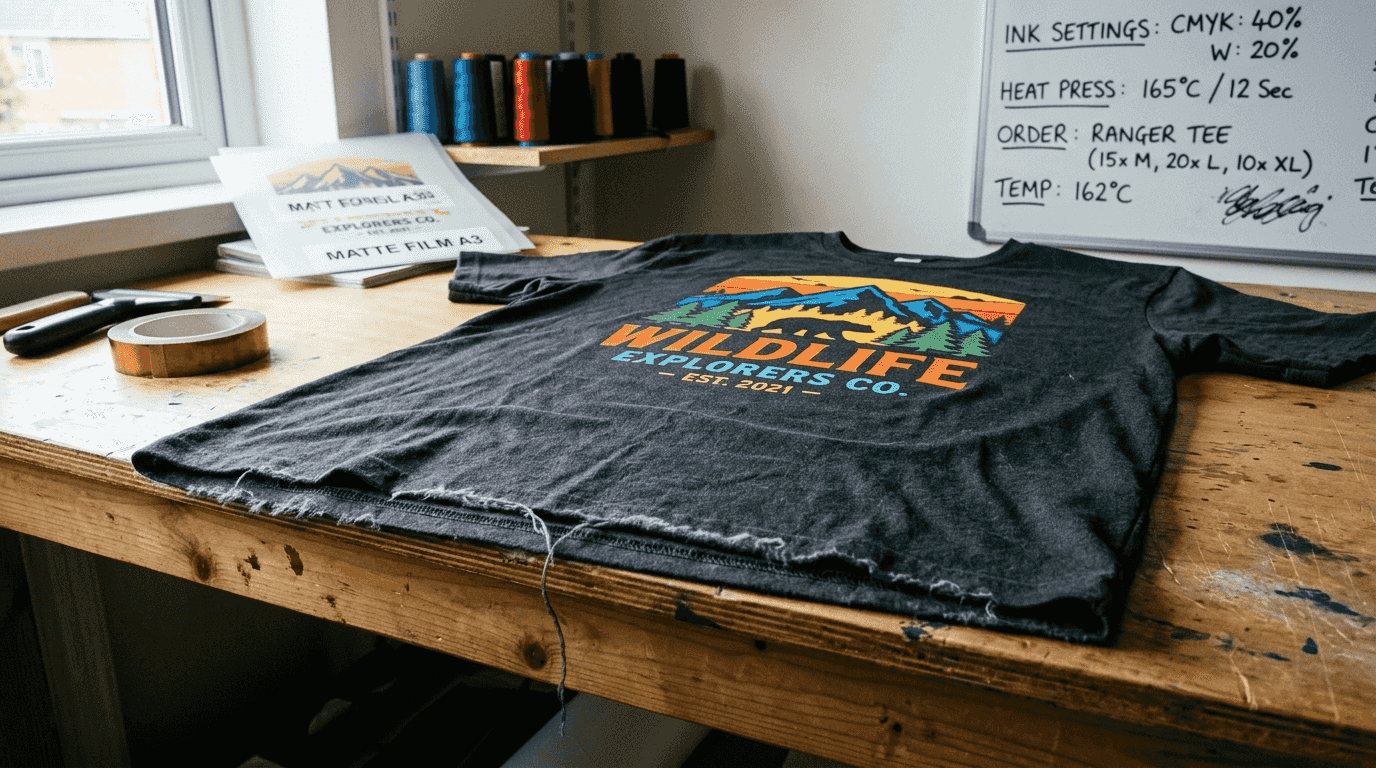
Poly-cotton blends combine the best qualities of both fiber types. Typical 50/50 or 65/35 cotton-polyester ratios offer superior dimensional stability with minimal shrinkage. The polyester content adds strength and durability while cotton maintains softness and moisture absorption. These blends accept DTF transfers exceptionally well, producing vibrant prints that maintain color intensity through dozens of wash cycles. Most clothing businesses find poly-cotton blends provide the most reliable, consistent results across different garment styles.
Polyester presents unique considerations for DTF printing. While the synthetic fiber is durable and wrinkle-resistant, it can produce less vibrant results compared to cotton-rich fabrics. Fabric composition significantly impacts print quality, with polyester sometimes causing colors to appear slightly muted. The smooth, tightly woven surface does provide excellent image sharpness, making polyester suitable for detailed logos and fine text. Athletic wear manufacturers often choose polyester for its moisture-wicking properties despite minor color trade-offs.
Linen and rayon offer alternative aesthetics but require careful evaluation. Linen’s natural texture and drape create distinctive, high-end garments that appeal to certain markets. However, the loose weave and slubbed texture can compromise print adhesion and clarity. Rayon provides silk-like softness but lacks durability, with prints potentially degrading faster under normal wear conditions. Both fabrics work best for limited-run specialty items rather than everyday production.
Pro Tip: For activewear and performance garments, prioritize poly-cotton blends over pure polyester to maintain both functionality and print vibrancy.
Key fabric characteristics to remember:
- Cotton: Superior softness, vibrant prints, higher shrinkage
- Poly-cotton: Best balance of durability, vibrancy, and stability
- Polyester: Excellent durability, slightly muted colors
- Linen: Unique aesthetic, challenging for detailed prints
- Rayon: Luxurious feel, lower wash durability
Comparing fabric performance for DTF printing: a side-by-side overview
Poly-cotton blends strike an optimal balance of durability, vibrancy, and comfort for DTF prints. This comparison helps you quickly evaluate which fabric best matches your specific business needs and product applications.
| Fabric Type | Print Vibrancy | Wash Durability | Softness/Comfort | Cost | Best Use Cases |
|---|---|---|---|---|---|
| 100% Cotton | Excellent | Very Good | Excellent | Moderate | Casual wear, fashion tees, premium garments |
| Poly-Cotton (50/50) | Excellent | Excellent | Very Good | Low to Moderate | Everyday apparel, promotional items, activewear |
| Poly-Cotton (65/35) | Very Good | Excellent | Good | Low | Workwear, team uniforms, high-volume production |
| 100% Polyester | Good | Excellent | Good | Low | Athletic wear, moisture-wicking garments, outdoor apparel |
| Linen | Fair to Good | Fair | Excellent | High | Premium casual wear, limited editions |
| Rayon | Good | Fair | Excellent | Moderate to High | Fashion pieces, special occasion items |
Understanding these performance differences helps you make informed purchasing decisions. Print vibrancy reflects how accurately colors reproduce and maintain intensity over time. Wash durability indicates how well transfers withstand repeated laundering without cracking, fading, or peeling. These factors directly impact customer satisfaction and return rates for your business.
Cost considerations extend beyond initial fabric purchase price. While 100% cotton may cost slightly more per yard, its superior print quality can justify premium pricing for your finished garments. Conversely, poly-cotton blends offer excellent value by combining lower material costs with outstanding performance, making them ideal for businesses focused on volume production and competitive pricing.
Softness and comfort influence customer perception and repeat purchases. Natural fiber content generally correlates with softer hand feel, though modern polyester blends have dramatically improved in recent years. For businesses targeting fashion-conscious consumers or premium markets, prioritizing comfort through higher cotton content may strengthen your brand positioning.
Consider these decision factors:
- Volume requirements and budget constraints
- Target customer preferences for fabric feel
- Garment end use and washing frequency
- Desired price point for finished products
Which fabric is best for your small clothing business? tailored recommendations
Matching fabric choice to your business model and customer preferences maximizes DTF print impact and satisfaction. Your specific circumstances should guide material selection more than generic recommendations.
Start by analyzing your target market’s fabric expectations and typical garment uses. Fashion-forward customers shopping for casual streetwear typically prefer the soft hand feel of cotton-rich fabrics. These buyers often prioritize comfort and natural fiber content, making 100% cotton or high-cotton blends your best choice despite slightly higher costs. The superior print vibrancy on cotton also helps your designs pop, strengthening brand perception and justifying premium pricing.
Businesses focused on promotional products, corporate apparel, or team uniforms benefit most from poly-cotton blends. The 50/50 or 65/35 ratios provide exceptional durability for garments that will see frequent washing and heavy wear. Your customers in these markets prioritize longevity and consistent appearance over luxury softness, making the performance-to-cost ratio of poly-cotton blends unbeatable. The reduced shrinkage also minimizes size-related returns and customer complaints.
Activewear and performance apparel producers should carefully evaluate their priorities. Pure polyester offers moisture-wicking and quick-dry properties athletes demand, but slightly muted print colors may affect design impact. Consider poly-cotton athletic blends that maintain some performance characteristics while delivering better print vibrancy. Test both options with your actual designs to determine which trade-offs work best for your product line.
Budget constraints require strategic compromises without sacrificing quality. Lower-cost poly-cotton blends can deliver excellent results when paired with high-quality DTF transfers and proper application techniques. Investing in premium transfer materials often provides better overall value than choosing expensive fabrics with mediocre transfers. Focus your budget where it creates the most visible impact on final product quality.
Always conduct sample testing before committing to bulk fabric orders. Purchase small quantities of your top fabric choices and print actual production designs, not just test patterns. Wash samples multiple times using typical consumer laundry methods to verify durability claims. This small upfront investment prevents costly mistakes and ensures your chosen fabrics truly meet your quality standards and customer expectations.
Practical selection guidelines:
- Fashion/casual wear: 100% cotton or 60/40 cotton-poly
- Promotional/corporate: 50/50 poly-cotton blends
- Activewear: Specialized athletic poly-cotton or pure polyester
- Budget-conscious: 65/35 poly-cotton with premium transfers
- Premium/specialty: 100% cotton or linen for unique positioning
Optimize your apparel printing with Transfer Kingz
Selecting the right fabric sets the foundation, but pairing it with high-quality DTF transfers elevates your custom apparel to professional standards. Transfer Kingz specializes in premium DTF transfers engineered to deliver exceptional vibrancy and durability on the fabrics you’ve chosen.
Our transfers work seamlessly with cotton, poly-cotton, and polyester materials, ensuring flawless adhesion and long-lasting results regardless of your fabric selection. The combination of optimal fabric choice and expert transfer quality creates custom apparel that exceeds customer expectations and builds your brand reputation.
Whether you’re producing small batches or scaling to volume production, Transfer Kingz provides the tools, expertise, and support to maximize your printing success. Explore our transfer options and gang sheet builders to start creating professional-quality custom apparel that showcases your designs beautifully on the perfect fabric foundation.
FAQ
What fabrics work best with DTF printing?
Cotton and poly-cotton blends consistently deliver the best DTF printing results. 100% cotton offers superior softness and excellent ink absorption for vibrant colors. Poly-cotton blends (50/50 or 65/35 ratios) provide the optimal balance of durability, vibrancy, and dimensional stability. These fabrics create strong adhesive bonds that withstand repeated washing while maintaining color intensity and design clarity.
Can polyester fabrics produce vibrant DTF prints?
Polyester can accept DTF prints successfully but typically produces less vibrant colors compared to cotton or cotton-blend fabrics. The synthetic fibers don’t absorb ink as readily, sometimes resulting in slightly muted tones. For pure polyester garments requiring maximum color brightness, sublimation printing often performs better than DTF, though DTF still provides acceptable results for many applications.
How does fabric texture affect DTF print quality?
Smooth, tightly woven fabrics produce the sharpest, most durable DTF prints. Flat surfaces allow uniform adhesive contact across the entire design, preventing weak spots or gaps. Rough or heavily textured fabrics like fleece or waffle knits can cause ink spread and reduced image clarity. The uneven surface traps air during application, compromising adhesion and potentially leading to premature print failure.
What is the best way to test fabrics for DTF printing?
Print small sample designs on fabric swatches before committing to bulk production. Use your actual production artwork rather than generic test patterns to accurately evaluate results. Wash test samples 5 to 10 times using normal consumer laundry methods to verify durability claims. This testing process reveals potential adhesion issues, color fading, or cracking before you invest in large fabric orders.
Recommended
- High-Quality DTF Ink for Stunning Transfers: Achieve Vibrant, Durable – Transfer Kingz
- 7 Essential DTF Printing Best Practices for Apparel Brands – Transfer Kingz
- How DTF Printing Works: Boost Custom Apparel Quality – Transfer Kingz
- Future of DTF Printing: Innovations Shaping Apparel – Transfer Kingz
- Design vs Print: Why Stunning Files Fail in Production – BcardsCreation
0 comments