

Many small business owners believe custom apparel printing requires expensive equipment and complicated processes that only large operations can handle. Direct-to-Film (DTF) printing shatters this misconception by delivering vibrant, durable designs with minimal upfront investment and flexible production capabilities. This technology empowers apparel decorators to compete effectively while maintaining quality standards that customers demand. You’ll discover how DTF printing works, its cost advantages, material selection strategies, and practical steps to implement this game-changing solution in your business.
Table of Contents
- What Is Dtf Printing And How Does It Work?
- Key Advantages Of Dtf Printing For Small Businesses
- Choosing The Right Materials And Equipment For Your Dtf Setup
- Cost Considerations And Roi Of Adopting Dtf Printing
- Enhance Your Custom Apparel Business With Transfer Kingz
Key takeaways
| Point | Details |
|---|---|
| Low barrier to entry | DTF eliminates expensive screen setup costs, making custom printing accessible for small businesses with limited budgets. |
| Superior design flexibility | Supports complex, multi-color designs without additional fees, perfect for personalized and small-batch orders. |
| Exceptional durability | Prints withstand 30-50+ wash cycles while maintaining vibrant colors across cotton, polyester, blends, and leather. |
| Faster production cycles | Streamlined workflow reduces turnaround time, enabling higher order capacity and improved customer satisfaction. |
| Material quality matters | Premium films and inks directly impact color vibrancy, adhesion strength, and long-term print performance. |
What is DTF printing and how does it work?
Direct-to-Film printing represents a straightforward approach to custom apparel decoration that small businesses can master quickly. The process involves printing a design onto a special film, applying an adhesive powder, and then heat-pressing the design onto the fabric. Unlike traditional methods requiring extensive setup, DTF streamlines production from artwork to finished product.
The workflow breaks down into clear stages:
- Print your design onto specialized DTF film using compatible inks
- Apply hot-melt adhesive powder evenly across the wet ink
- Cure the powder through a heat tunnel or oven to create a transferable sheet
- Heat press the film onto your garment, then peel away the carrier film
This technology works across diverse fabric types including cotton, polyester, blends, and even leather. You don’t need separate processes for different materials, which simplifies inventory management and expands your product offerings. The minimal artwork preparation required means you can move from customer approval to production in minutes rather than hours.
Small businesses benefit tremendously from DTF’s elimination of screen setup requirements. Traditional screen printing demands creating physical screens for each color, a time-consuming and expensive process that only makes financial sense for large runs. DTF removes this barrier entirely, letting you profitably produce single items or small batches. Understanding what is DTF printing helps you recognize opportunities to serve niche markets and personalized orders that competitors can’t touch.
Pro Tip: Maintain consistent powder application thickness and proper curing temperatures to achieve optimal adhesion and wash durability. Inconsistent powder coverage creates weak points that fail during washing, while under-curing prevents proper bonding to fabric fibers.
Key advantages of DTF printing for small businesses
The financial accessibility of DTF printing transforms how small businesses approach custom apparel. Lower initial investment eliminates the prohibitive costs associated with traditional methods, while operational expenses remain predictable and manageable. You avoid purchasing screens, emulsions, and exposure equipment that screen printing demands.
DTF printing offers vibrant colors, incredible detail, and versatile application that surpasses what many established techniques can deliver. The technology reproduces photographic images, gradients, and fine text with precision that screen printing struggles to match. Color range extends across the full spectrum without requiring additional screens or setup time.
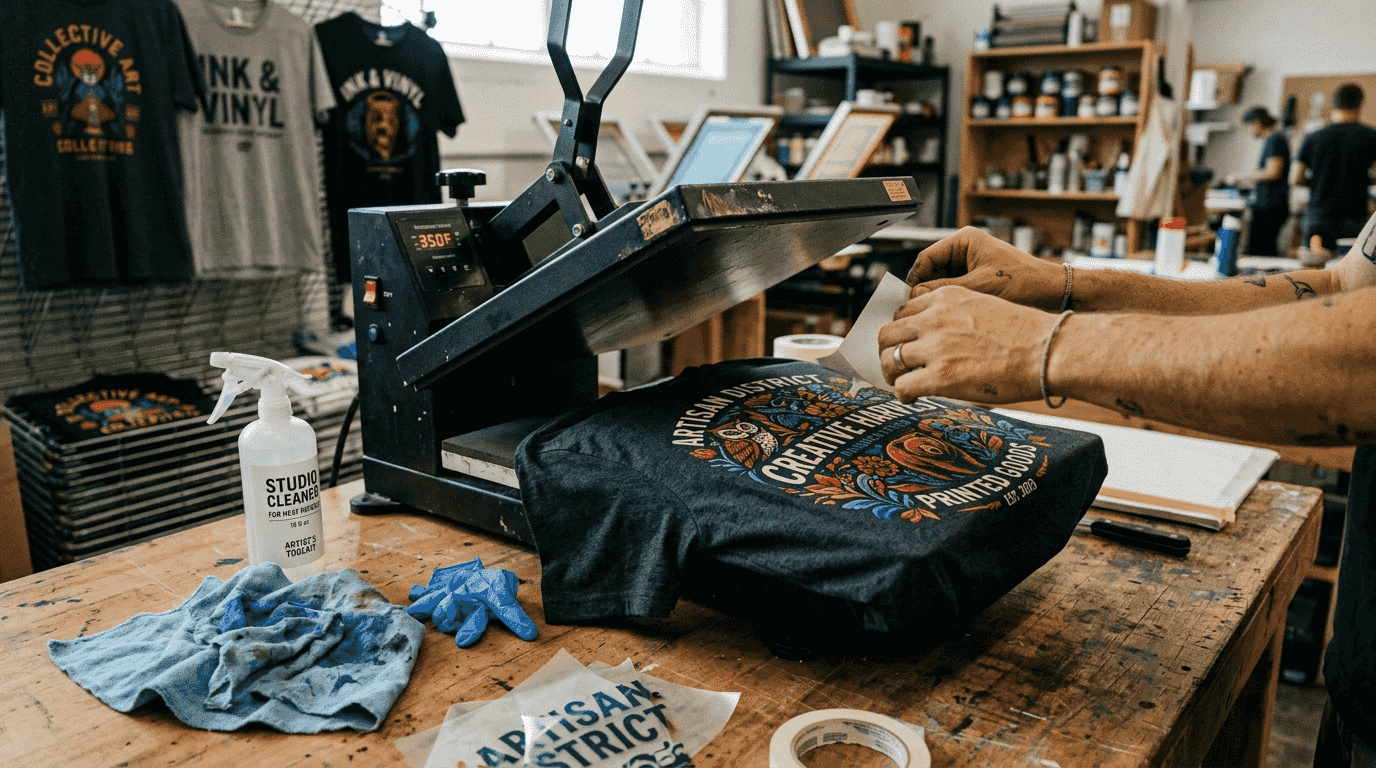
Durability stands as a critical advantage for customer satisfaction and repeat business. DTF prints maintain quality through 30-50 wash cycles when properly applied, resisting fading, cracking, and peeling that plague inferior methods. This longevity builds your reputation and reduces warranty claims or remake requests.
Speed advantages compound over time as order volume increases. DTF eliminates screen preparation, exposure, and cleanup steps that consume hours in traditional workflows. You can complete small orders the same day, enabling faster turnaround that customers value highly. This responsiveness opens opportunities for rush orders and premium pricing.
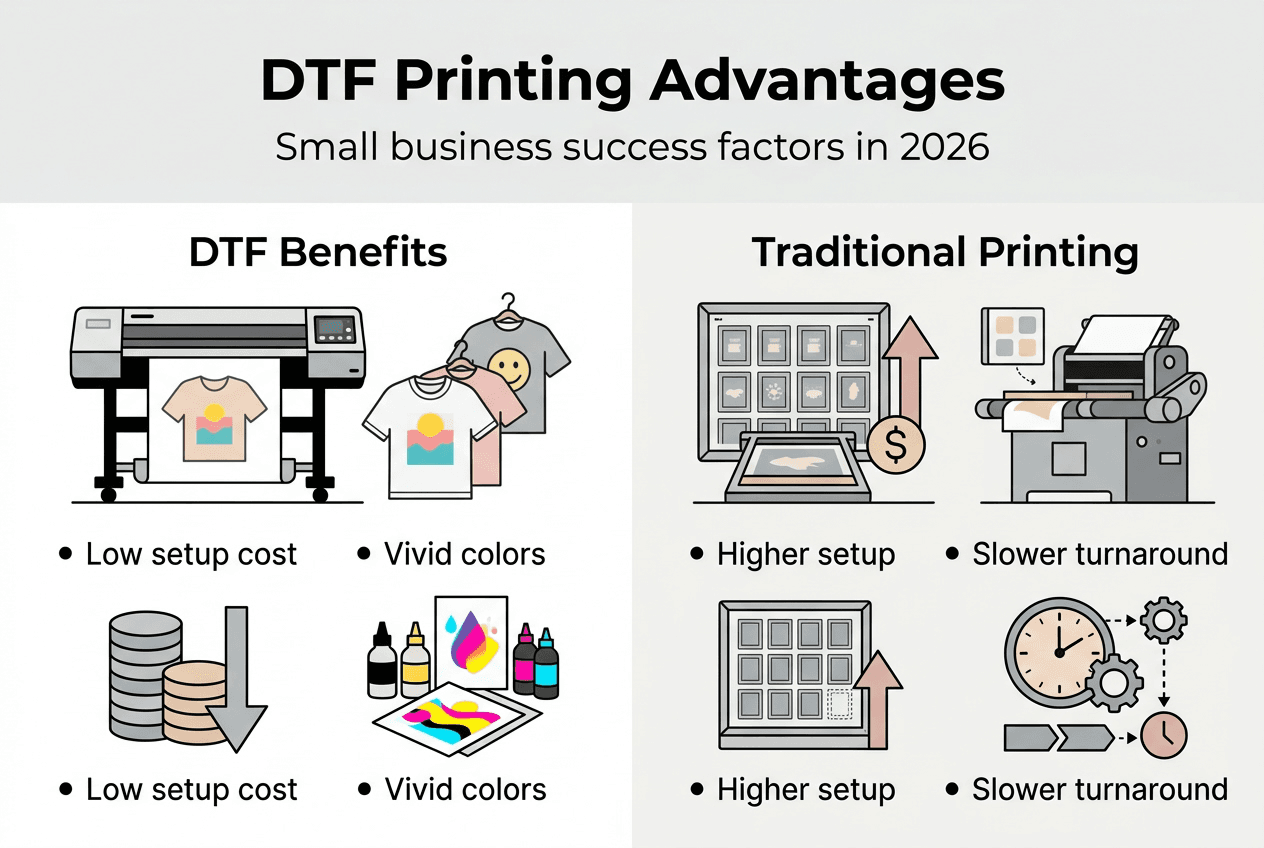
| Feature | DTF Printing | Screen Printing |
|---|---|---|
| Setup cost per design | Minimal, no screens needed | $25-$50 per screen/color |
| Wash durability | 30-50+ cycles | 50+ cycles (when done right) |
| Fabric compatibility | Cotton, polyester, blends, leather | Best on cotton, limited on synthetics |
| Turnaround time | Same day possible | 3-5 days typical |
| Minimum order viability | Single items profitable | 50-100+ units for profitability |
The flexibility to serve diverse customer needs positions your business for growth. Wedding parties need matching shirts in various sizes, local sports teams want personalized jerseys, and boutique retailers seek unique designs in small quantities. DTF handles all these scenarios profitably while maintaining consistent quality standards. Exploring DTF printing benefits for small businesses reveals additional strategic advantages.
Pro Tip: Invest in premium films and inks from the start rather than cheaper alternatives. Quality materials deliver superior color vibrancy and wash resistance that justify higher pricing and generate stronger customer loyalty.
Choosing the right materials and equipment for your DTF setup
Material selection directly determines your print quality, durability, and customer satisfaction levels. Film choice affects color vibrancy, ink adhesion, and wash durability more than most beginners realize. Premium films feature specialized coatings that enhance ink absorption and prevent bleeding, producing sharper details and more accurate color reproduction.
Ink quality separates professional results from amateur output. High-grade DTF inks maintain color intensity through repeated washing while resisting UV degradation that causes fading. Cheaper inks may appear acceptable initially but deteriorate quickly, damaging your reputation and generating costly remakes. The formulation affects both immediate vibrancy and long-term colorfastness.
Printer calibration requires attention to multiple technical factors. OmniDTF printers undergo rigorous calibration achieving 99.99% accuracy in registration, demonstrating the precision possible with proper setup. Table height adjustments ensure consistent film contact, printhead alignment prevents banding and misregistration, and gear and belt tension affects print speed and quality.
| Printer Model | Print Width | Hourly Profit Potential | Best For | | — | — | — | | Desktop BY-20 | 13 inches | $500-$1,000 | Startups, home businesses | | Mid-size TY-200 | 24 inches | $1,500-$2,500 | Growing operations | | Production TY-300 | 24 inches | $2,000-$3,500 | High-volume shops |
Environmental factors significantly impact print consistency and longevity:
- Maintain 40-60% humidity to prevent static and powder adhesion issues
- Control temperature between 68-77°F for optimal ink flow and curing
- Minimize dust exposure through regular cleaning and air filtration
- Store films and powders in sealed containers away from moisture
- Clean printheads weekly to prevent clogs and maintain color accuracy
Understanding DTF film selection tips helps you match materials to specific applications and customer requirements. Different film thicknesses suit various fabric weights, while specialized formulations optimize results for stretch fabrics or dark garments. Learning why small businesses use DTF printing in 2026 reveals how equipment choices align with business models.
Pro Tip: Schedule weekly calibration checks and monthly deep maintenance rather than waiting for quality issues to appear. Preventive care reduces waste, maintains consistent output, and extends equipment lifespan significantly.
Cost considerations and ROI of adopting DTF printing
Financial planning determines whether DTF printing becomes a profitable addition or an expensive mistake. Smart business owners evaluate multiple cost factors before committing to equipment purchases:
- Initial equipment investment including printer, heat press, and curing system
- Ongoing consumable costs for films, inks, adhesive powder, and maintenance supplies
- Labor requirements for design preparation, printing, and application processes
- Expected print volume based on current demand and growth projections
- Pricing strategy that covers costs while remaining competitive in your market
Profit potential varies significantly based on equipment capacity and utilization rates. Desktop DTF machines like the BY-20 generate $500-$1,000 profit per hour when operating at capacity, making them attractive for businesses testing the technology or serving smaller markets. Larger production units multiply these returns but require higher initial investment and consistent order volume to justify the expense.
Break-even analysis reveals when DTF becomes more economical than traditional methods. The break-even point between DTF and screen printing occurs around 838 shirts for a 4-color design, though this varies based on local labor costs, equipment efficiency, and pricing structures. Small to medium runs consistently favor DTF economics.
| Order Size | DTF Cost Per Unit | Screen Print Cost Per Unit | Better Option |
|---|---|---|---|
| 1-25 units | $3.50-$5.00 | $8.00-$12.00 | DTF |
| 26-100 units | $2.50-$3.50 | $4.00-$6.00 | DTF |
| 101-500 units | $2.00-$2.75 | $2.50-$3.50 | DTF |
| 501+ units | $1.75-$2.25 | $1.50-$2.00 | Screen printing |
Customization capabilities unlock premium pricing opportunities that offset higher per-unit costs. Personalized names, individual design variations, and small-batch exclusivity command prices that mass-produced screen-printed items cannot match. This value-based pricing transforms DTF from a cost comparison into a revenue opportunity.
Faster turnaround reduces labor costs while increasing order capacity. Traditional screen printing requires setup time that remains constant regardless of order size, creating inefficiency for small jobs. DTF eliminates this waste, letting you process more orders with the same labor hours. The operational efficiency compounds as volume grows.
Exploring DTF cost advantages reveals how material efficiency and reduced waste contribute to profitability. Understanding DTF vs screen printing costs helps you make informed decisions about when each method serves your business best.
Enhance your custom apparel business with Transfer Kingz
Transfer Kingz supplies the premium materials and specialized products that maximize your DTF printing results. Our intricate transfer film options deliver the color vibrancy and detail reproduction that sets professional work apart from amateur output.
We’ve built our reputation on understanding what small businesses need to compete effectively in custom apparel markets. Our product selection focuses on materials that perform consistently across diverse applications, from single personalized items to medium-batch production runs. Every film, ink, and supply meets rigorous quality standards that protect your reputation and customer relationships. Discover how DTF shirt transfers are revolutionizing custom apparel and find solutions tailored to your specific production requirements.
FAQ
What is the typical lifespan of DTF prints on apparel?
DTF prints maintain quality through 30-50 wash cycles when properly applied with correct heat press temperature and pressure settings. Premium films and inks extend longevity beyond this range, with some applications lasting 60+ washes before showing significant wear. Proper curing and substrate preparation significantly impact durability, as under-cured adhesive or contaminated fabric surfaces reduce adhesion strength.
How does DTF printing compare to screen printing for small batches?
DTF eliminates screen setup costs and preparation time, making small batches of 1-100 units significantly more profitable than screen printing. Complex, full-color designs require no additional expense with DTF, while screen printing charges separately for each color separation. Screen printing becomes economical only for runs exceeding several hundred identical units where setup costs distribute across higher volume.
What fabrics can I print on using DTF technology?
DTF works effectively on cotton, polyester, cotton-polyester blends, tri-blends, and even leather or synthetic materials. This versatility surpasses DTG printing, which performs best on 100% cotton and struggles with polyester content above 50%. The broad fabric compatibility lets you diversify product offerings without investing in multiple printing technologies or maintaining separate workflows for different material types.
Recommended
- Why small businesses use DTF printing in 2026 – Transfer Kingz
- Why DTF printing is ideal for small businesses in 2026 – Transfer Kingz
- DTF Printing: 50+ Washes & 40% Lower Setup Costs – Transfer Kingz
- DTF Printing for Business Branding: How Custom DTF Transfers Boost Sma – Transfer Kingz
- Is My Data Safe? Protecting Brisbane SMEs in 2026 - IT Start
0 comments