

Many small business owners assume DTF printing only makes sense for large production runs. That’s wrong. DTF actually excels at short runs and complex designs, making it perfect for small apparel businesses that need flexibility without high upfront costs. This article reveals why small businesses are rapidly adopting DTF printing in 2026, covering cost efficiency, versatility, scalability, and practical adoption strategies.
Table of Contents
- Introduction To Direct-To-Film (DTF) Printing
- How DTF Printing Works: Step-By-Step Process
- Cost Efficiency And Startup Investment For Small Businesses
- Material Compatibility And Print Durability
- Efficiency And Scalability Through Gang Sheets
- Common Misconceptions About DTF Printing
- Practical Tips For Small Businesses To Adopt DTF Printing
- Conclusion And Next Steps
- Explore DTF Printing Solutions For Your Small Business
Key takeaways
| Point | Details |
|---|---|
| Low startup investment | DTF printing costs between $3,500 and $20,000 to start, far less than screen printing setups. |
| Works on any fabric | DTF transfers adhere to cotton, polyester, nylon, blends, and leather without pretreatment. |
| Exceptional durability | DTF prints withstand over 100 washes without cracking or fading, ensuring customer satisfaction. |
| Gang sheets save money | Printing multiple designs on one film sheet reduces material waste by up to 30%. |
| Quick turnaround times | Simple workflow and no pretreatment enable fast fulfillment of small batch and seasonal orders. |
Introduction to direct-to-film (DTF) printing
DTF printing creates custom apparel by printing designs onto a special film, then transferring them to garments using heat and pressure. The process involves printing with CMYK plus white ink, coating the film with adhesive powder, curing it, and pressing the transfer onto fabric. This approach delivers vibrant, multi-color prints on both light and dark garments without complicated pretreatment steps.
Small apparel businesses are embracing DTF in 2026 because it offers remarkable flexibility and consistent quality. Unlike screen printing, which requires expensive screens for each design, DTF printing setup costs range from $3,500 to $20,000, making entry accessible for businesses of all sizes. This lower barrier opens opportunities for entrepreneurs who want to launch or expand custom apparel lines without massive capital investment.
The key advantages for small businesses include:
- No fabric pretreatment required, saving time and labor
- Supports one-off orders to large batches with equal efficiency
- Produces durable, wash-resistant prints that retain color vibrancy
- Works on diverse fabric types from cotton to polyester blends
- Enables rapid design changes without costly retooling
Understanding what is DTF printing helps business owners recognize why this technology fits their production needs. The combination of affordability, versatility, and quality makes DTF an ideal choice for small businesses aiming to compete in the custom apparel market.
How DTF printing works: step-by-step process
Understanding the DTF workflow clarifies why it delivers efficiency and quality for small business operations. Each step is straightforward, requiring less manual intervention than traditional methods.
-
Design preparation: Create or upload artwork using RIP (Raster Image Processor) software. The software optimizes color profiles and ensures proper ink layering for vibrant output.
-
Film printing: The printer deposits CMYK color layers followed by a white ink underbase onto special PET film. White ink ensures colors pop on dark fabrics.
-
Adhesive application: Hot-melt adhesive powder is evenly applied over the wet ink. Excess powder is shaken off and recycled for future prints.
-
Curing: The coated film passes through a heat tunnel or oven, melting the adhesive and bonding it to the ink layer. This creates a ready-to-press transfer.
-
Heat pressing: Place the transfer onto the garment and apply heat and pressure using a heat press. The adhesive bonds the design permanently to the fabric.
-
Peel and finish: After cooling briefly, peel away the film to reveal the finished print. The transfer is wash-ready immediately.
This streamlined process allows small to mid-size apparel businesses to handle short runs and complex designs efficiently. The workflow supports quick turnaround times, crucial for businesses managing online stores or seasonal product lines. Unlike screen printing, which requires setup time for each color and design, DTF printing lets you switch designs instantly without retooling.
Pro Tip: Master your heat press settings early. Proper temperature, pressure, and dwell time prevent issues like cracking or poor adhesion, ensuring professional results every time.
Small businesses benefit from this efficiency because it reduces bottlenecks and labor costs. You can fulfill custom orders faster, test new designs with minimal risk, and respond to market trends without inventory commitments. Learning why DTF printing is ideal for small businesses reveals how this process supports growth and flexibility.
Cost efficiency and startup investment for small businesses
Financial considerations often determine which printing method small businesses adopt. DTF printing stands out for its low entry cost and favorable economics at small to medium volumes.
Typical DTF printing setup costs range from $3,500 to $20,000, depending on printer size, automation level, and included accessories. Entry-level systems serve businesses printing a few dozen transfers weekly, while mid-range setups handle hundreds of prints daily. Compare this to screen printing, which demands separate screens for each design and color, plus emulsion, exposure units, and wash-out stations. Initial screen printing investments often exceed $25,000 before producing the first print.
| Printing method | Startup cost | Best for | Labor intensity |
|---|---|---|---|
| DTF printing | $3,500–$20,000 | Short to medium runs, multiple designs | Low |
| Screen printing | $15,000–$30,000+ | Large runs, few designs | High |
| Heat transfer vinyl (HTV) | $500–$3,000 | Very small runs, simple designs | Very high (weeding) |
| Direct-to-garment (DTG) | $10,000–$40,000 | Short runs, photo-quality prints | Medium (pretreatment) |
DTF also reduces per-print costs through gang sheet efficiency and minimal waste. DTF printing reduces labor involved in weeding and setup compared to HTV, freeing your team to focus on customer service, marketing, and business development. This labor savings compounds over time, improving profit margins on every order.
Scalability matters for growing businesses. DTF equipment handles increased volume without requiring proportional increases in labor or setup time. You can start with a modest machine and upgrade as demand grows, protecting your initial investment while maintaining production quality.
Pro Tip: Calculate your break-even point by dividing equipment cost by your estimated profit per print. Most small businesses recoup DTF investments within six to twelve months at moderate production levels.
Exploring DTF printing business branding benefits shows how cost efficiency translates to competitive pricing and higher margins. Small businesses can offer custom apparel at prices that attract customers while maintaining healthy profitability.
Material compatibility and print durability
Versatility across fabric types gives DTF printing a decisive advantage for small businesses serving diverse customer needs. DTF transfers bond successfully to cotton, polyester, nylon, rayon, blends, canvas, and even leather. This broad compatibility means you can offer customers more product options without investing in multiple printing systems.
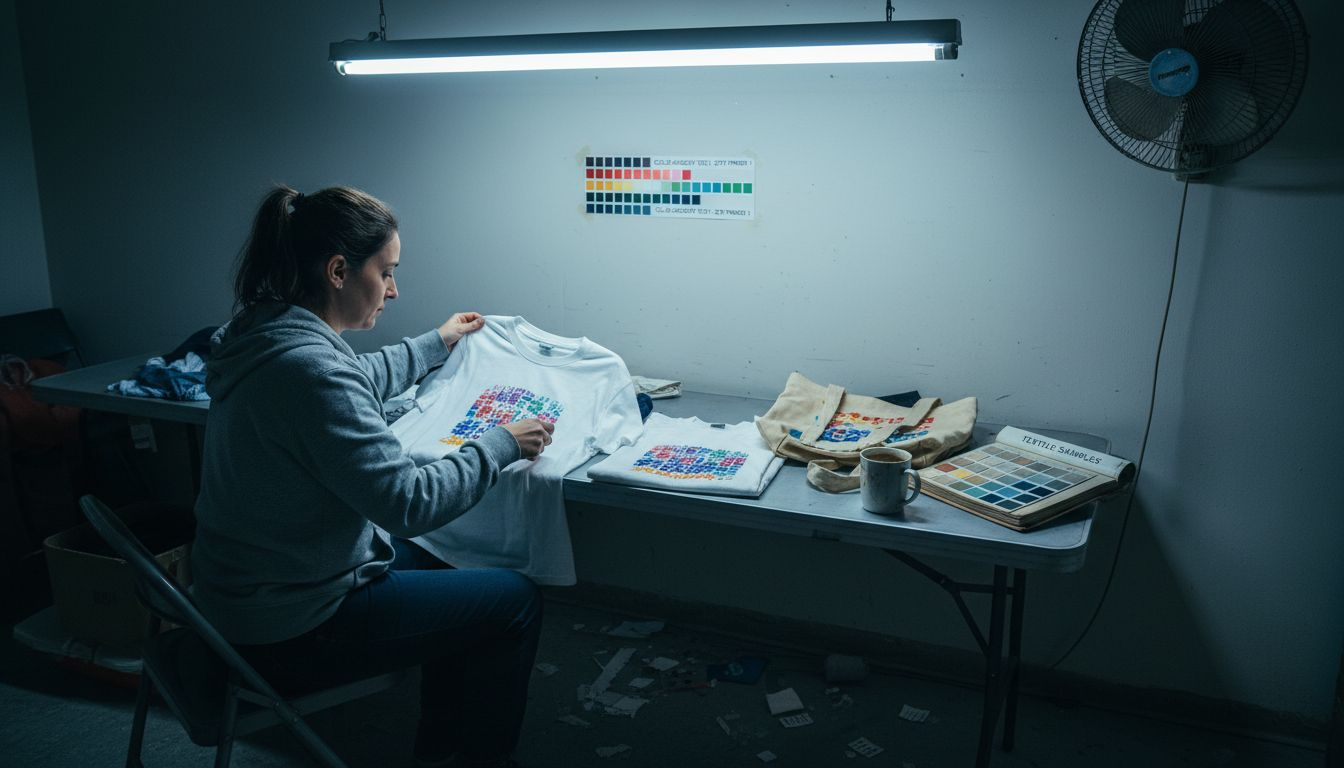
DTF printing eliminates the need for pretreatment, unlike DTG methods that require spraying fabrics before printing. This saves time, reduces consumable costs, and simplifies workflow. You can print on dark and light garments with equal ease, using the white ink layer to make colors vibrant on any background.
Print durability directly impacts customer satisfaction and repeat business. DTF prints maintain their appearance through 100+ wash cycles without cracking, peeling, or significant fading. The adhesive creates a strong mechanical bond that flexes with the fabric, preventing the brittleness that plagues some heat transfer methods. Colors stay vivid, and fine details remain sharp even after extended wear and washing.
Key durability factors include:
- Strong adhesive bond resists washing and wearing stress
- Proper curing ensures complete adhesion before pressing
- Quality inks maintain color fastness under UV exposure
- Flexible transfer moves naturally with fabric stretch
- Professional pressing technique maximizes bond strength
Durability spotlight: Independent testing shows DTF prints retain over 95% of original color intensity after 100 standard wash cycles, exceeding performance of traditional plastisol transfers and many DTG prints.
This durability builds customer trust and reduces return rates. When customers receive apparel that looks great after months of regular use, they become repeat buyers and brand advocates. Understanding why choose direct to film printing helps you communicate these quality advantages to your customers.
Efficiency and scalability through gang sheets
Gang sheets represent one of DTF printing’s smartest efficiency innovations. A gang sheet prints multiple designs, sizes, or colors on a single large film sheet, maximizing material use and minimizing waste.
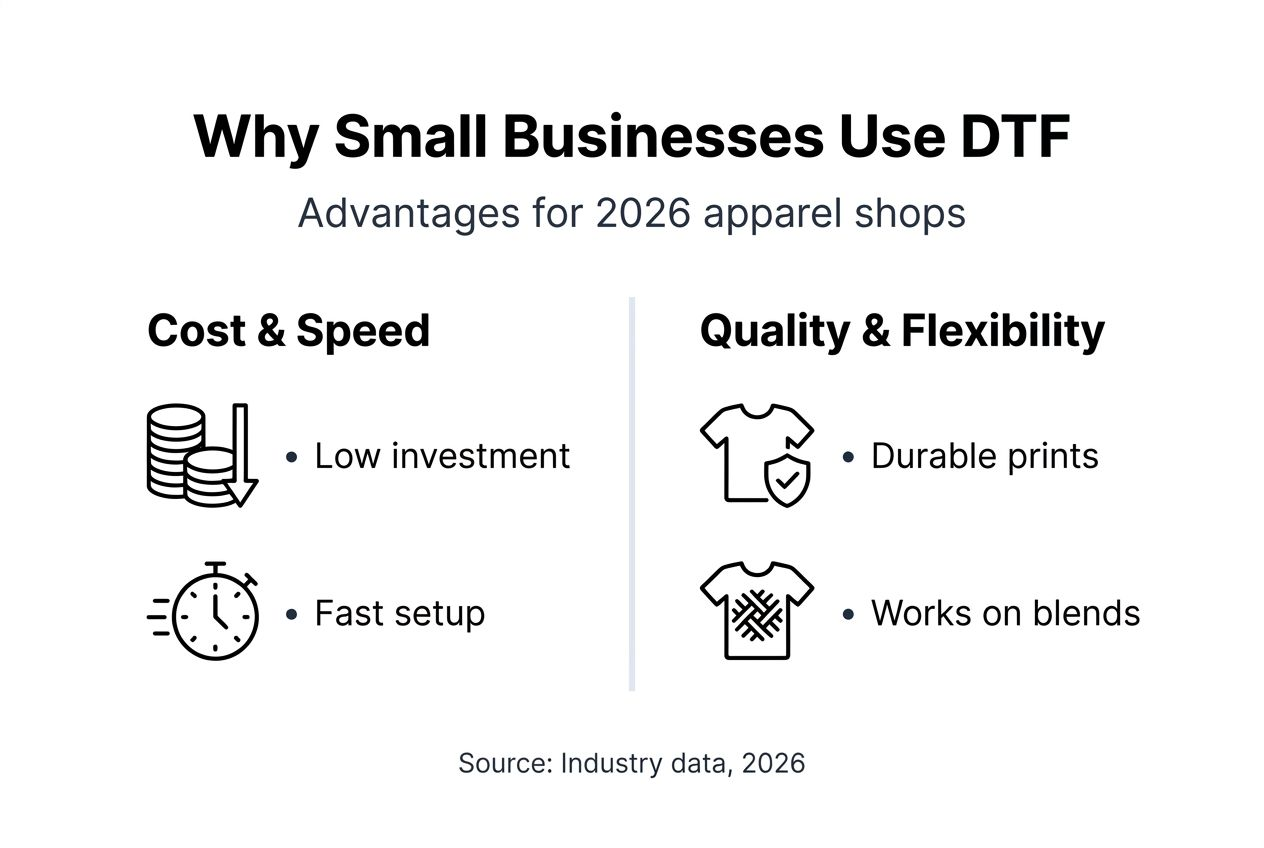
The benefits for small businesses are substantial. Gang sheets reduce material waste by up to 30% and enable simultaneous printing of multiple designs, speeding turnaround for seasonal and on-demand orders. Instead of printing individual transfers with unused film around each design, you arrange designs efficiently to fill the available space.
This approach delivers several advantages:
- Lower material costs per transfer through better film utilization
- Faster production by printing multiple orders simultaneously
- Simplified inventory management for popular designs
- Reduced setup time when fulfilling multi-item orders
- Better workflow planning by batching similar orders
Gang sheets particularly benefit businesses handling diverse custom orders. You can combine a customer’s logo in three sizes, another customer’s event design, and stock designs for your online store on one sheet. This flexibility lets you fulfill varied orders without switching materials or recalibrating equipment.
| Gang sheet approach | Material waste | Production speed | Best use case |
|---|---|---|---|
| Individual prints | 40–50% waste | Slower (one at a time) | Single urgent orders |
| Partial gang sheets | 20–30% waste | Medium (small batches) | Weekly order batches |
| Full gang sheets | 5–15% waste | Fastest (maximize capacity) | High-volume production |
Pro Tip: Plan gang sheets at least 24 hours ahead when possible. Batching orders by heat press temperature requirements (different fabrics need different settings) streamlines pressing and reduces errors.
Learning to use a DTF gang sheet guide properly helps small businesses maximize these efficiency gains. Strategic gang sheet planning turns material savings into profit improvements over time.
Common misconceptions about DTF printing
Several myths about DTF printing persist in the apparel industry, sometimes preventing small businesses from exploring this beneficial technology. Let’s address the most common misunderstandings.
Myth: DTF only works for large production runs
Reality: DTF excels at small batches and even single-piece orders. Unlike screen printing, which requires costly setup for each design, DTF has no minimum order size. You can profitably print one shirt or one thousand without changing your process or economics dramatically.
Myth: DTF prints lack durability
Reality: Quality DTF transfers withstand over 100 wash cycles without cracking or fading. Modern adhesives and inks create bonds that often outlast the garment itself. Poor results typically stem from incorrect pressing technique or low-quality materials, not the DTF process itself.
Myth: DTF costs more than screen printing
Reality: For short and medium runs, DTF proves significantly cheaper. Screen printing only becomes cost-effective at volumes exceeding several hundred identical pieces. Most small businesses rarely print such quantities of a single design, making DTF the more economical choice.
Myth: DTF prints feel thick and uncomfortable
Reality: Properly applied DTF transfers create a thin, flexible layer that breathes well and moves naturally with fabric. The hand feel rivals or exceeds screen printing quality, particularly on lighter garments.
Myth: DTF requires extensive technical expertise
Reality: The learning curve is gentle compared to screen printing or DTG. Basic training covers design preparation, printer operation, and heat pressing within days. Most small business owners achieve professional results within their first week of production.
Educating yourself prevents these misconceptions from limiting your business growth. Resources explaining why DTF printing is ideal for small businesses provide evidence-based information to guide decision making.
Practical tips for small businesses to adopt DTF printing
Successfully integrating DTF printing into your business requires thoughtful planning and smart execution. These actionable tips help you avoid common pitfalls and accelerate your path to profitability.
-
Match equipment to your scale: Start with a printer sized for your current volume plus 30% growth capacity. Oversized equipment ties up capital, while undersized printers create bottlenecks quickly.
-
Master design preparation: Invest time learning RIP software and proper file preparation. Correct color profiles, resolution, and ink layering produce superior prints and reduce material waste.
-
Batch orders strategically: Group orders by fabric type and transfer size to maximize efficiency. Use gang sheets effectively to reduce material costs and speed production.
-
Perfect your pressing technique: Document your heat press settings for each fabric type. Temperature, pressure, and dwell time directly affect transfer durability and appearance.
-
Test extensively before scaling: Run samples of your most common fabric and design combinations. Wash test these samples to verify durability before committing to customer orders.
-
Maintain equipment properly: Clean print heads weekly, replace filters on schedule, and calibrate your press monthly. Preventive maintenance prevents costly downtime and quality issues.
-
Source quality materials: Cheap films and inks produce inferior results that damage your reputation. Balance cost with quality to protect your brand.
Pro Tip: Create a sample book showing your work on various fabrics with different design styles. This physical showcase helps customers visualize possibilities and builds confidence in your capabilities.
Explore DTF printing setup tips for detailed guidance on avoiding rookie mistakes. Starting smart accelerates your return on investment and builds a foundation for sustainable growth.
Conclusion and next steps
DTF printing delivers compelling advantages for small apparel businesses in 2026. Its combination of low startup costs, exceptional fabric versatility, outstanding durability, and operational efficiency makes it the practical choice for businesses prioritizing flexibility and quality. The technology supports growth from your first custom order through scaling to hundreds of weekly prints without requiring proportional increases in labor or complexity.
Key benefits worth emphasizing:
- Accessible entry costs between $3,500 and $20,000 fit small business budgets
- Gang sheet efficiency reduces material waste by up to 30%
- Prints last 100+ washes, ensuring customer satisfaction and repeat business
- No pretreatment requirement simplifies workflow and cuts costs
- Works on virtually any fabric, expanding your product offerings
Start by experimenting with sample transfers to gain confidence in the process. Test on your most common fabric types and design styles. This hands-on experience reveals the quality and efficiency DTF delivers, helping you commit to equipment investment with confidence.
The apparel industry trend clearly favors DTF adoption among small businesses seeking competitive advantages. Learning more about what is DTF printing positions you to make informed decisions that drive business growth. Take the first step today to explore how DTF printing can transform your custom apparel capabilities.
Explore DTF printing solutions for your small business
Ready to implement DTF printing in your apparel business? Transfer Kingz offers premium DTF films, inks, and supplies specifically designed for small business success. Our solutions scale with your operation, from startup to established production.
Discover how DTF shirt transfers are revolutionizing custom apparel with quality that exceeds traditional methods. Explore our capabilities for intricate and detailed prints that set your products apart. Visit Transfer Kingz to access educational resources, expert support, and everything you need to launch or expand your DTF printing capabilities. Our team helps small businesses navigate equipment selection, material sourcing, and technique refinement to ensure your success.
FAQ
What fabrics are compatible with DTF printing?
DTF printing works on cotton, polyester, nylon, rayon, blends, canvas, and leather without pretreatment. This broad compatibility lets you offer diverse product options using a single printing system, simplifying inventory and expanding customer choice.
How durable are DTF prints compared to other methods?
DTF prints withstand over 100 wash cycles without cracking, peeling, or significant fading. This durability exceeds many traditional plastisol transfers and matches or surpasses DTG quality, ensuring long-lasting customer satisfaction and reducing returns.
Can small businesses afford DTF printing equipment?
Typical DTF setups cost between $3,500 and $20,000, making them accessible for most small businesses. Lower per-print costs and no minimum order requirements help you recoup investment quickly, often within six to twelve months at moderate production volumes.
What is a gang sheet and how does it save money?
A gang sheet prints multiple designs on one large film sheet, maximizing material use. This approach reduces waste by up to 30% and speeds production by printing several transfers simultaneously, lowering costs per piece and improving turnaround times.
0 comments