

Choosing the right transfer film can make or break your custom apparel business. Many small business owners and independent designers struggle to navigate the overwhelming options available, often settling for mediocre results that disappoint customers. The wrong film leads to faded prints, cracked designs, and unhappy clients who won’t return. This guide cuts through the confusion by walking you through proven selection criteria, preparation steps, and application techniques that ensure vibrant, durable prints every time. You’ll learn exactly what to look for in transfer films for DTF printing and how to avoid costly mistakes that drain your budget and reputation.
Table of Contents
- Understanding Transfer Films And Key Selection Criteria
- Preparing And Selecting The Right Transfer Films For Your Apparel Projects
- How To Execute Transfer Application Correctly For Flawless Prints
- Troubleshooting Common Transfer Film Issues And Verifying Quality
- Enhance Your Custom Apparel With Premium Transfer Films
- FAQ
Key takeaways
| Point | Details |
|---|---|
| Film selection impacts results | Different transfer films vary in durability, print quality, and fabric compatibility, directly affecting customer satisfaction. |
| Preparation prevents errors | Understanding required materials and preparation steps ensures a smoother printing process and reduces waste. |
| Application technique matters | Following step-by-step instructions prevents common transfer mistakes like peeling, cracking, and fading. |
| Troubleshooting saves money | Quick problem identification and resolution help achieve flawless, professional results without costly reprints. |
| Quality verification builds trust | Proper inspection ensures the final product meets expectations and strengthens your brand reputation. |
Understanding transfer films and key selection criteria
Transfer films serve as the foundation for direct-to-film printing, acting as the carrier that holds your design until it’s heat pressed onto fabric. In DTF printing, specialized films receive printed designs using water-based inks, then get coated with adhesive powder before curing. This process creates a transfer ready to bond permanently with your chosen garment. The film quality directly determines how well your design adheres, how vibrant the colors appear, and how long the print survives repeated washing.
Several transfer film types dominate the market in 2026, each with distinct characteristics. Standard DTF films work well for most cotton and polyester blends, offering excellent color reproduction and durability. Premium films provide enhanced stretch and recovery for athletic wear and performance fabrics. Specialty films cater to unique applications like dark fabrics, delicate materials, or eco-conscious brands seeking sustainable options. Understanding these categories helps you match the right film to your specific product line.
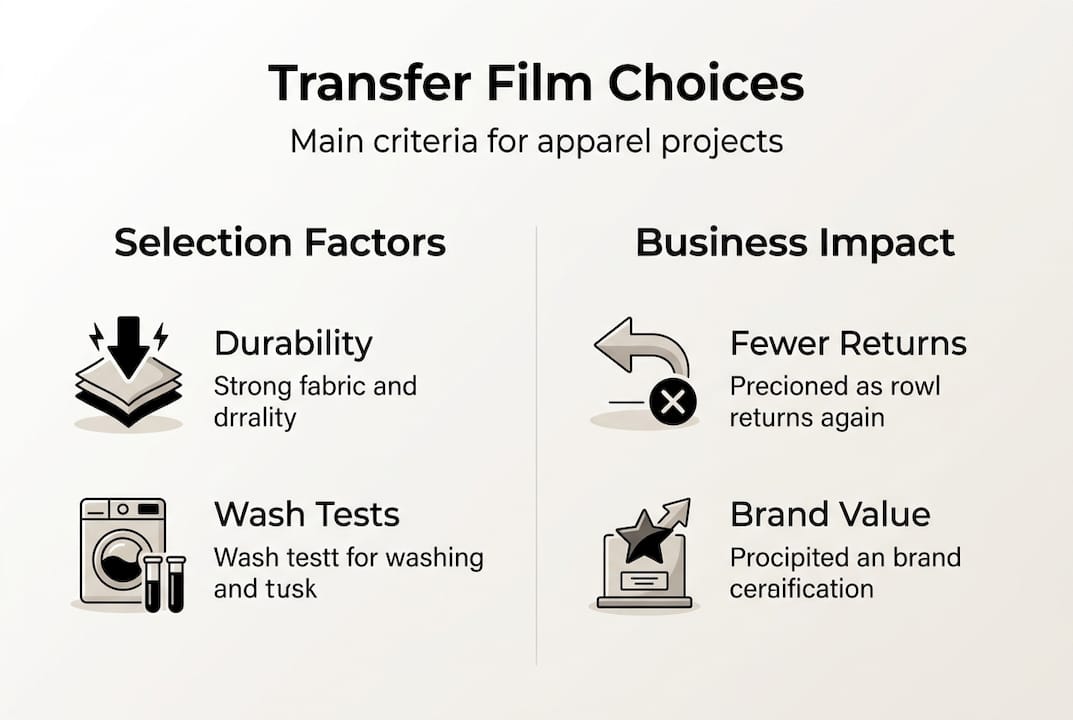
When selecting transfer films for your business, prioritize these critical factors:
- Fabric compatibility ensures the film bonds properly with your target materials, whether cotton, polyester, blends, or specialty fabrics
- Durability determines how many wash cycles your prints survive before showing signs of wear, cracking, or fading
- Print detail capability affects your ability to reproduce fine lines, small text, and intricate artwork accurately
- Finish options like matte or glossy impact the final aesthetic and customer perception of quality
- Cost effectiveness balances initial investment against long-term performance and customer satisfaction
Your film choice ripples through every aspect of your business. A premium film might cost more upfront but reduces returns, builds customer loyalty, and justifies higher pricing. Conversely, choosing budget films to save money often backfires when prints fail prematurely, damaging your reputation and forcing expensive replacements. Smart business owners test multiple options, gather customer feedback, and invest in films that align with their quality standards and target market expectations.
Preparing and selecting the right transfer films for your apparel projects
Successful transfer printing starts long before you press a design onto fabric. Proper preparation separates professional results from amateur disappointments. Follow this systematic approach to ensure you’re ready:
- Test fabric samples with your chosen film to verify compatibility and adhesion strength before committing to large orders
- Confirm your printer settings match the film manufacturer’s specifications for optimal ink saturation and color accuracy
- Verify your heat press temperature calibration using an infrared thermometer to ensure consistent, accurate readings
- Organize your workspace with adequate ventilation, clean surfaces, and proper lighting for quality control
- Stock essential supplies including lint rollers, parchment paper, and temperature strips for monitoring
- Document your successful settings and processes to maintain consistency across production runs
The right materials and equipment make the difference between frustrating failures and smooth production. This table outlines what you need for professional DTF transfer work:
| Material/Equipment | Purpose | Quality Indicator |
|---|---|---|
| DTF Transfer Film | Carrier for printed designs | Even coating, no wrinkles or defects |
| Adhesive Powder | Bonds print to fabric | Fine particle size, consistent coverage |
| Heat Press | Applies heat and pressure | Accurate temperature control, even pressure distribution |
| Teflon Sheets | Protects press and transfers | Heat resistant, non-stick surface |
| Quality Fabrics | Base for transfers | Pre-washed, lint-free, appropriate weight |
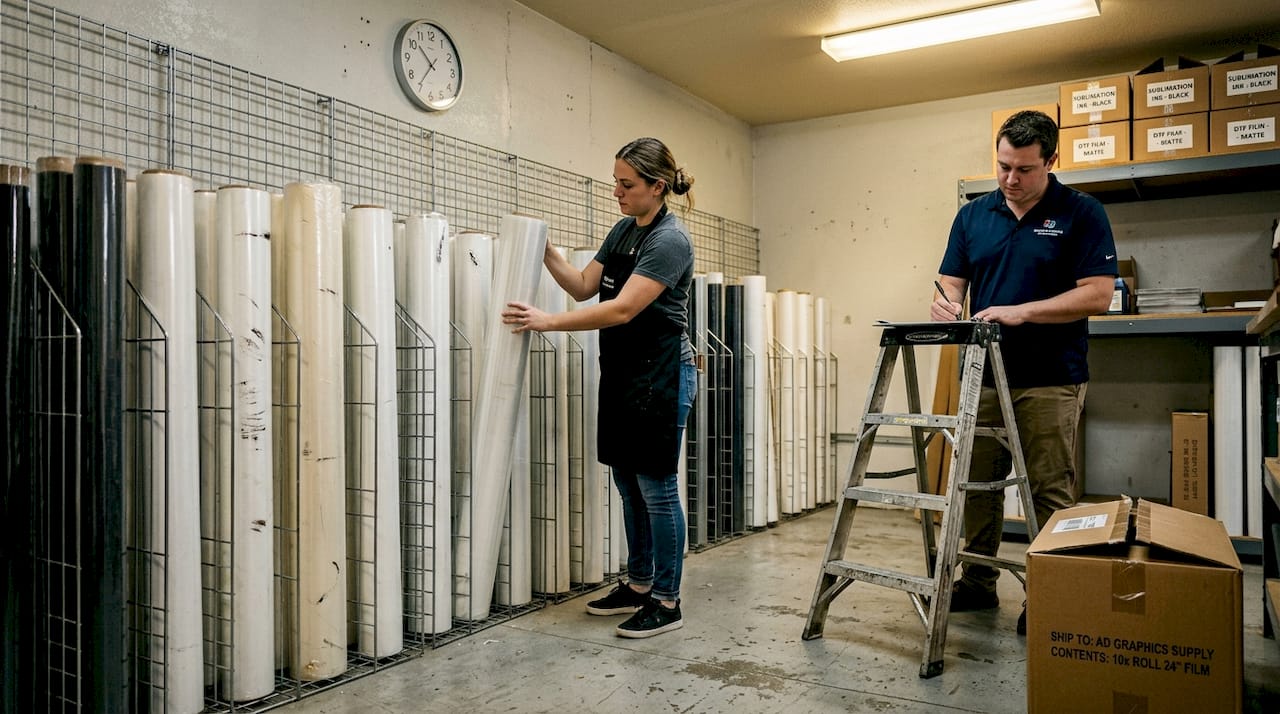
Handling and storage practices protect your investment in quality films. Store rolls vertically in a cool, dry environment away from direct sunlight, which can degrade adhesive properties over time. Keep films sealed in their original packaging until needed, and always handle them with clean, dry hands to prevent contamination. Proper preparation and material selection prevent costly errors and improve print results significantly.
Pro Tip: Before committing to a large production run, create sample prints on actual garment fabric and wash them three to five times. This real-world testing reveals how your chosen film performs under customer use conditions, helping you catch problems before they become expensive mistakes. Document the results with photos and notes to build a reference library for future projects.
How to execute transfer application correctly for flawless prints
Applying transfer films correctly requires precision, patience, and attention to detail at every stage. Rushing through the process or skipping steps almost guarantees problems. Follow this proven sequence for consistent, professional results:
- Preheat your fabric for 5 to 10 seconds to remove moisture and wrinkles that interfere with adhesion
- Position your transfer film precisely on the garment, using alignment marks or templates for accuracy
- Cover the transfer with a Teflon sheet or parchment paper to protect both the design and your heat press
- Apply firm, even pressure at the manufacturer’s recommended temperature for the specified duration
- Allow the transfer to cool completely before peeling, unless using a hot peel film that requires immediate removal
- Peel the carrier film slowly and steadily at a low angle to prevent lifting edges or damaging fine details
- Apply a final press with parchment paper for 5 to 10 seconds to ensure complete adhesion and durability
Common mistakes sabotage even the best materials and intentions. Incorrect temperature settings rank as the number one culprit, with too much heat causing scorching and too little preventing proper bonding. Inadequate pressure creates weak adhesion that fails during the first wash. Peeling too quickly or at the wrong temperature tears delicate design elements. Using incompatible fabrics wastes time and materials on transfers that never had a chance to succeed. Each error teaches a lesson, but learning from others’ mistakes costs less than discovering them yourself.
Every step in the perfect DTF transfer checklist serves a specific purpose in creating durable, vibrant prints. Preheating eliminates variables that cause inconsistent results. Proper positioning ensures your design appears exactly where intended. Correct pressure distributes heat evenly across the entire image. Controlled peeling preserves fine details and prevents edge lifting. The final press locks everything in place for maximum wash durability.
Pro Tip: Keep a detailed log of your successful transfers, recording fabric type, film brand, temperature, pressure, and dwell time for each project. When you achieve perfect results, you’ll have an exact recipe to replicate. When problems occur, your notes help identify what changed and how to correct it quickly.
Troubleshooting common transfer film issues and verifying quality
Even experienced printers encounter occasional problems with transfer films. Recognizing issues quickly and knowing how to fix them separates profitable operations from money-losing frustration. The most frequent problems include:
- Peeling edges or corners indicate insufficient pressure, incorrect temperature, or incompatible fabric preparation
- Fading colors suggest inadequate ink saturation, wrong film type for the fabric, or excessive heat during application
- Cracking designs result from over-pressing, using film past its shelf life, or applying transfers to fabrics with too much stretch
- Adhesive residue appears when peeling occurs at the wrong temperature or the film sits too long before application
- Uneven coverage stems from inconsistent pressure distribution or contaminated fabric surfaces
This comparison table helps you diagnose and resolve the most common transfer film problems:
| Problem | Likely Cause | Solution |
|---|---|---|
| Edges peel after washing | Insufficient pressure or time | Increase pressure and extend press time by 2-3 seconds |
| Colors appear dull | Wrong film for fabric type | Switch to film designed for your specific material |
| Design cracks when stretched | Over-pressing or old film | Reduce temperature by 10-15°F and use fresh film |
| Sticky residue remains | Incorrect peel timing | Adjust peel timing per manufacturer specifications |
| Patchy coverage | Contaminated fabric | Pre-wash garments and use lint roller before pressing |
Quality verification protects your reputation and ensures customer satisfaction. Inspect every transfer immediately after application, checking for complete adhesion, accurate colors, and clean edges. Perform a stretch test on a corner to verify the design flexes with the fabric without cracking. Wash a sample garment before shipping large orders to confirm durability under real-world conditions. Troubleshooting and verifying prints ensures consistent professional results and reduces waste significantly.
Testing protocols should include both visual inspection and physical stress tests. Hold finished garments up to bright light to spot thin coverage or missed areas. Rub the design firmly with your thumb to ensure proper bonding. Stretch the fabric in multiple directions to verify flexibility. These simple checks catch problems before they reach customers, saving you the cost and embarrassment of returns or negative reviews. Building verification into your workflow takes minutes but protects hours of work and your business reputation.
Enhance your custom apparel with premium transfer films
Your success in custom apparel depends on the quality of materials you choose and the knowledge you apply. Transfer Kingz provides both, offering premium DTF transfer films engineered specifically for small businesses and independent designers who refuse to compromise on quality. Our films deliver exceptional color vibrancy, superior wash durability, and reliable performance across diverse fabric types, ensuring your customers receive products they’ll love and recommend.
Explore our innovative solutions designed for intricate designs and professional results. Our digital transfer films reproduce even the finest details with stunning clarity, while our DTF shirt transfer innovations revolutionize how you approach custom apparel production. Visit Transfer Kingz today to discover premium materials, expert resources, and the support you need to elevate your printing business and delight your customers with every order.
FAQ
What types of fabrics work best with transfer films?
Most quality transfer films work excellently on cotton, polyester, and cotton-poly blends, which represent the majority of custom apparel projects. Some specialized films are formulated specifically for delicate materials like silk or synthetic performance fabrics that require lower temperatures. Always test your chosen film on a fabric sample before committing to production runs.
How can I ensure my transfers last through multiple washes?
Use high-quality transfer films from reputable suppliers and follow the manufacturer’s heat press instructions precisely, as proper application creates the foundation for durability. Advise your customers to wash garments inside out in cold water and avoid bleach or fabric softeners that can degrade the print. Quality materials combined with correct application typically survive 50 or more wash cycles without significant fading.
Are digital transfer films suitable for intricate and detailed designs?
Digital transfer films excel at reproducing intricate and detailed prints when paired with quality printing equipment and proper application techniques. Modern DTF technology captures fine lines, small text, and complex gradients that would challenge traditional screen printing methods. The key lies in using premium films, calibrated printers, and correct heat press settings to achieve professional results.
What common mistakes should I avoid when using transfer films?
Avoid incorrect heat press temperature settings, which either prevent proper bonding or damage the film and fabric. Inadequate pressure creates weak adhesion that fails quickly, while peeling the carrier film too early or at the wrong temperature tears delicate design elements. Using incompatible fabrics or skipping fabric preparation steps like pre-washing also leads to disappointing results and wasted materials.
0 comments