

The apparel customization industry is experiencing a seismic shift. While many small business owners still rely solely on traditional screen printing, Direct-to-Film technology is projected to reach $3.92 billion by 2030, driven by innovation and accessibility. This explosive growth signals a fundamental change in how creators produce custom merchandise. If you’re still viewing DTF as a niche method, you’re missing opportunities to scale efficiently, reduce costs, and deliver vibrant designs on virtually any fabric.
Table of Contents
- Understanding The Role Of DTF In Modern Apparel Customization
- Market Trends And Growth Driving DTF Adoption In 2026
- Comparing DTF With Other Apparel Printing Methods
- How To Apply DTF Technology For Your Apparel Customization Business
- Discover Innovative DTF Solutions For Your Apparel Business
Key takeaways
| Point | Details |
|---|---|
| Market expansion | DTF printing is a rapidly growing segment valued near $3.9B by 2030, offering substantial business opportunities. |
| Cost efficiency | DTF provides cost-effective, high-quality production ideal for small to medium apparel runs without large setup investments. |
| Versatile application | DTF enables intricate, colorful designs on various fabrics including cotton, polyester, blends, and dark garments. |
| Workflow optimization | Understanding DTF’s straightforward process can significantly boost your customization speed and operational efficiency. |
| Continuous innovation | Ongoing improvements in films, inks, and equipment are expanding DTF’s capabilities and market accessibility. |
Understanding the role of DTF in modern apparel customization
Direct-to-Film printing represents a digital printing method where designs are printed onto specialized film, then heat-transferred onto garments. Unlike traditional screen printing that requires creating physical screens for each color, DTF uses digital files to produce full-color transfers in a single pass. This fundamental difference eliminates the setup complexity and minimum order constraints that have historically limited small creators.
The process works on virtually any fabric type and color. You can apply the same transfer to cotton t-shirts, polyester athletic wear, or poly-cotton blends without adjusting your workflow. Dark garments receive the same vibrant colors as light ones because DTF prints include a white underbase layer. This versatility transforms what’s possible for small batch production.
Cost structures favor smaller operations. You don’t need to invest thousands in screen setups or maintain large inventories of pre-printed stock. Print exactly what you need when you need it. One design or one hundred, the per-unit economics remain favorable. This on-demand capability reduces waste and ties up less capital in inventory.
Understanding what is DTF printing fundamentally changes how you approach custom apparel projects. The barriers that once made customization prohibitive for small creators have largely disappeared. Educating users on DTF printer ease of use remains crucial for driving adoption, but the learning curve is significantly shorter than traditional methods.
Key advantages for small apparel businesses include:
- No minimum order requirements enabling true on-demand production
- Full-color capability without additional setup costs per color
- Compatibility with diverse fabric types and garment colors
- Faster turnaround times from design to finished product
- Lower initial equipment investment compared to industrial screen printing setups
Market trends and growth driving DTF adoption in 2026
The numbers tell a compelling story. The global DTF market grew from $2.72B in 2024 to $2.89B in 2025, demonstrating accelerating momentum. This isn’t speculative growth. Real businesses are investing in equipment and consumables at unprecedented rates.
Machine sales provide concrete evidence. DTF machine sales more than doubled this year for major suppliers, indicating both new market entrants and existing businesses expanding capacity. This surge reflects growing confidence in the technology’s commercial viability and profit potential.
“The global DTF market is projected to reach $3.92 billion by 2030, with innovation driving continuous improvements in quality and ease of use.”
Consumables demand follows equipment adoption. As more printers enter the market, ongoing purchases of films, inks, and adhesive powders create recurring revenue streams. This consumables growth signals an expanding active user base, not just equipment sitting idle. Businesses are running production, fulfilling orders, and generating revenue.
| Market Indicator | 2024 Value | 2025 Value | 2030 Projection |
|---|---|---|---|
| Global DTF Market Size | $2.72B | $2.89B | $3.92B |
| Year-over-Year Growth | - | 6.2% | 6-7% annually |
| Machine Sales Growth | Baseline | 2x increase | Continued expansion |
Innovation drives this expansion. Manufacturers focus on improving film quality, developing more vibrant and durable inks, and simplifying application processes. These enhancements make DTF increasingly competitive with established methods while maintaining cost advantages. The technology isn’t static; it’s evolving rapidly to meet market demands.
Exploring DTF printing industry trends reveals where the market is heading. Automation, improved color matching, faster curing times, and enhanced wash durability represent areas of active development. Early adopters gain competitive advantages as these innovations roll out.
Comparing DTF with other apparel printing methods
Choosing the right printing method impacts your profit margins, production speed, and product quality. Each technology serves specific use cases, and understanding these distinctions helps you optimize your customization strategy.
| Method | Setup Cost | Per-Unit Cost | Quality | Fabric Compatibility | Best For |
|---|---|---|---|---|---|
| DTF | Low | Medium | Excellent | All types | Small to medium runs, diverse designs |
| Screen Printing | High | Low (volume) | Excellent | Limited stretch | Large runs, simple designs |
| Heat Transfer Vinyl | Very Low | High | Good | Most types | Single items, simple graphics |
| Direct-to-Garment | Medium | Medium-High | Excellent | Cotton-heavy | Small runs, complex designs on light garments |
DTF excels in scenarios requiring design flexibility without volume commitments. You can produce 10 different designs in a single session without the setup costs screen printing demands. Each transfer applies the same way regardless of design complexity or color count.
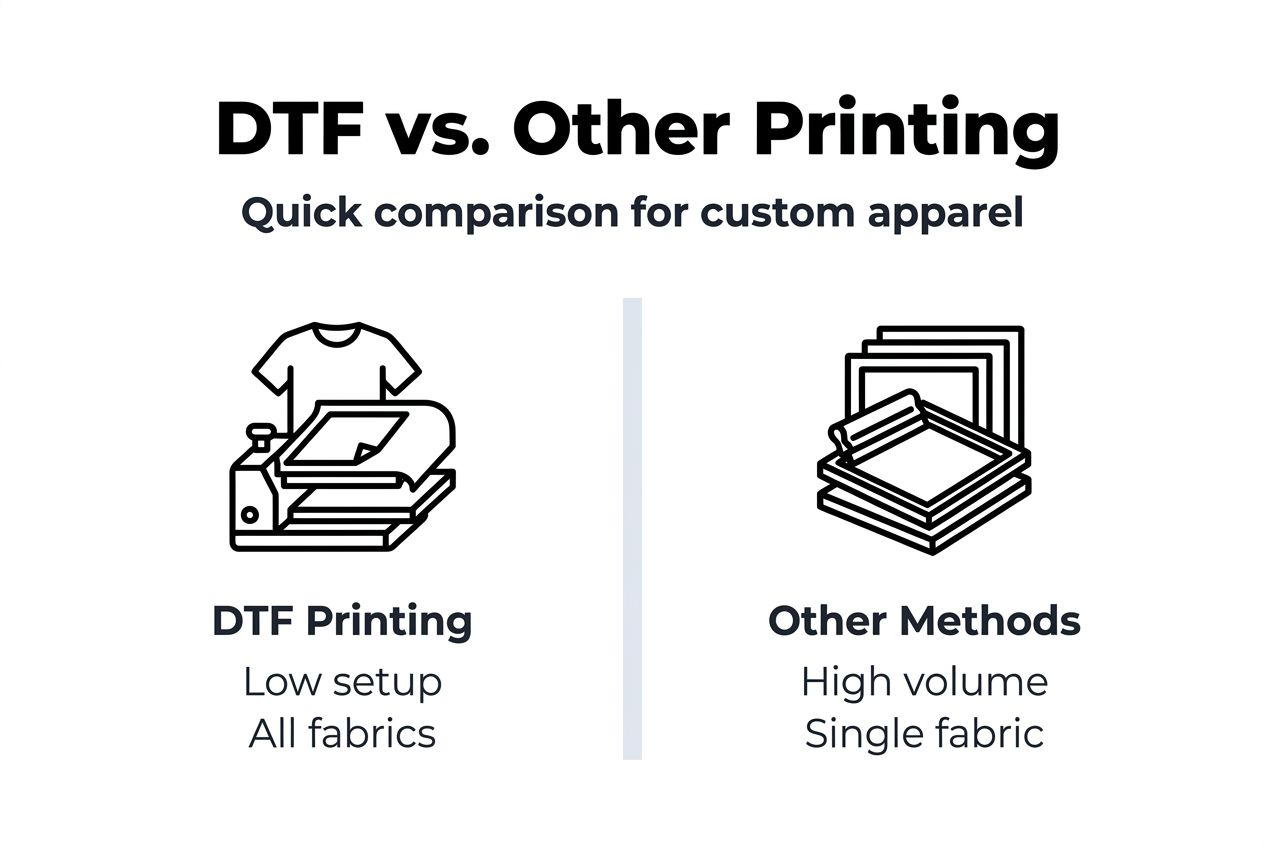
Compared to screen printing, DTF eliminates the need for creating and storing screens. Screen printing remains cost-effective for large runs of identical designs, but DTF wins for variety and smaller quantities. The comparison between DTF vs screen printing reveals distinct advantages for each method based on your production volume and design diversity.
Key DTF strengths include:
- No setup fees or screen costs regardless of design complexity
- Consistent quality across different fabric types and colors
- Ability to produce photo-realistic images and gradients easily
- Faster turnaround from design approval to production
- Minimal waste since you print only what you need
Weaknesses to consider:
- Per-unit costs higher than screen printing for very large identical runs
- Requires specialized equipment and consumables
- Learning curve for optimal heat press settings and application technique
Pro Tip: Choose DTF for orders under 100 pieces or when producing multiple designs simultaneously. Switch to screen printing only when producing 200+ identical items where setup costs can be amortized effectively.
Innovation in the DTF market continues improving quality and ease of use, narrowing the gap with traditional methods while maintaining flexibility advantages. Better films now offer improved stretch and durability, while advanced inks deliver richer colors and superior wash fastness.
How to apply DTF technology for your apparel customization business
Implementing DTF printing successfully requires understanding both the technical workflow and business considerations. Follow this systematic approach to integrate DTF into your operations efficiently.
-
Assess your production needs and volume. Calculate your typical order sizes, design variety, and fabric types. DTF makes economic sense when you regularly produce diverse designs in small to medium quantities. If you’re printing 500 identical shirts weekly, screen printing might still be optimal.
-
Choose appropriate equipment based on scale. Entry-level DTF printers start around $3,000 for desktop models suitable for side businesses. Mid-range systems ($8,000-$15,000) handle higher volumes with better speed and reliability. Research brands with strong support networks and readily available consumables.
-
Source quality films, inks, and powders. Consumable quality directly impacts your finished product durability and appearance. Cheap films may save money initially but cause adhesion failures and customer complaints. Invest in proven supplies from reputable manufacturers.
-
Master your design preparation workflow. Design files need proper resolution (300 DPI minimum), correct color profiles, and appropriate sizing. Learn your RIP software thoroughly to ensure accurate color reproduction and efficient film usage. Poor design prep wastes materials and time.
-
Dial in your heat press settings. Temperature, pressure, and dwell time vary by film type and fabric. Start with manufacturer recommendations, then test on actual garments you’ll be decorating. Document successful settings for different fabric types to ensure consistency.
-
Establish quality control checkpoints. Inspect prints before peeling, check adhesion after pressing, and perform wash tests regularly. Catching issues early prevents shipping defective products and damaging your reputation.
-
Build ongoing learning into your operations. The DTF design process for custom apparel evolves as techniques improve. Stay current with industry developments, join user communities, and experiment with new approaches.
Pro Tip: Start with a limited product range using fabrics you know well. Master the process on cotton t-shirts before expanding to performance fabrics, hoodies, or specialty materials. Consistency builds customer confidence and reduces costly mistakes.
Understanding how DTF printing works for apparel at a technical level helps you troubleshoot issues and optimize your workflow. Education remains crucial for maximizing DTF adoption and success, so invest time in proper training rather than learning through expensive trial and error.
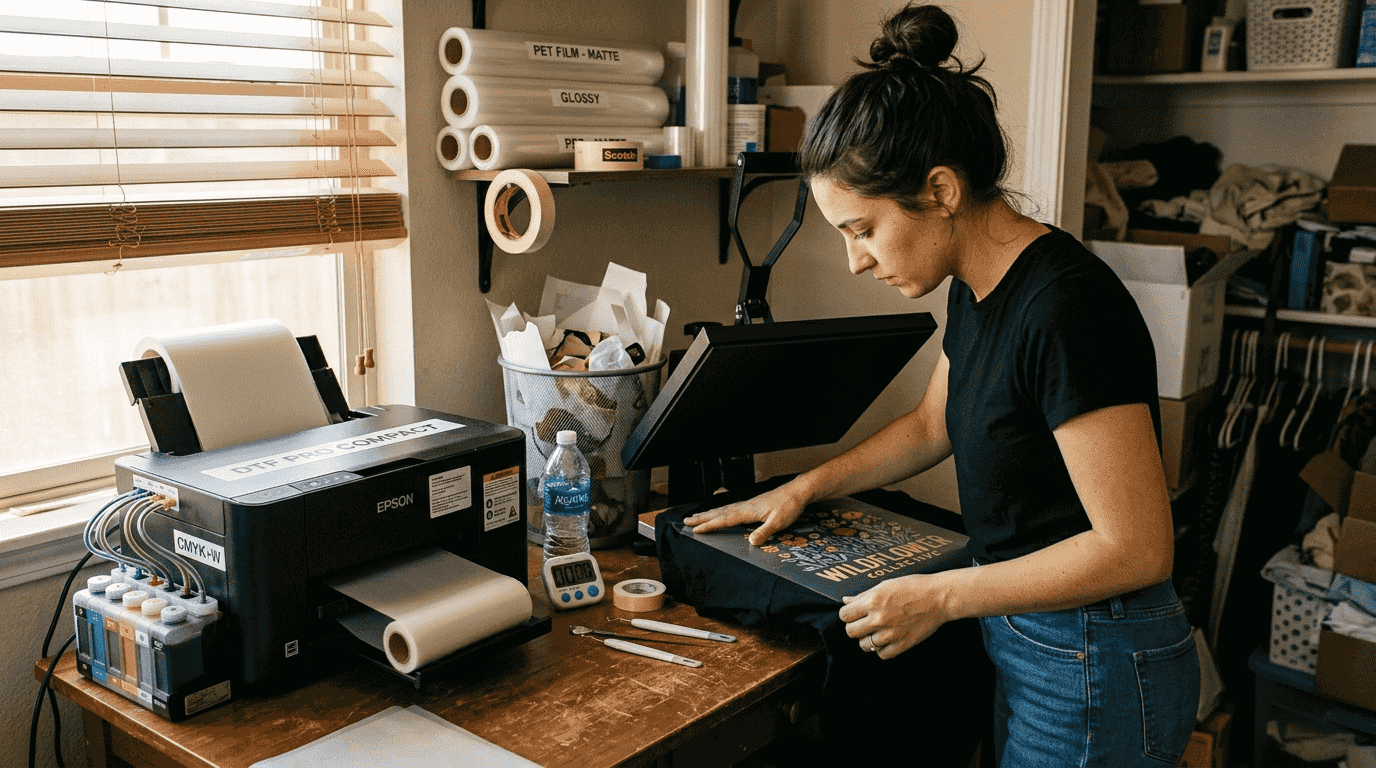
Common pitfalls to avoid include inadequate pretreatment of certain fabrics, inconsistent heat press pressure across the platen, using expired or improperly stored consumables, and rushing the cooling process before peeling. Each mistake costs materials and time while potentially damaging customer relationships.
Discover innovative DTF solutions for your apparel business
Transfer Kingz specializes in cutting-edge DTF products designed specifically for small apparel businesses and independent creators. Our platform eliminates the complexity of managing your own printing equipment while delivering professional-grade results.
Explore our UV DTF PermaSticke products that expand your customization possibilities beyond traditional apparel. These innovative transfers adhere to hard surfaces, opening new product categories and revenue streams. From custom phone cases to promotional drinkware, you can diversify your offerings without additional equipment investments.
Our gang sheet builder lets you maximize material usage by arranging multiple designs on a single sheet. No minimum orders mean you can test new designs without financial risk. Fast turnaround times keep your production moving, and our premium inks and films ensure your finished products meet professional quality standards.
Visit Transfer Kingz to access educational resources, application guides, and expert support that help you succeed. We’ve built our business on empowering creators like you to deliver exceptional custom products efficiently and profitably.
What is the role of DTF in apparel customization?
What makes DTF printing ideal for small apparel businesses?
DTF eliminates the high setup costs and minimum order requirements that make traditional screen printing prohibitive for small operations. You can produce single items or diverse designs economically, enabling on-demand production that reduces inventory costs and waste. This flexibility allows small businesses to compete on customization and speed rather than just price.
How does DTF compare to direct-to-garment printing for custom apparel?
DTF works on a broader range of fabrics including polyester, blends, and performance materials where DTG struggles. DTF also prints vibrant colors on dark garments without the heavy pretreatment DTG requires. While DTG excels on 100% cotton light-colored shirts, DTF provides more versatility across different garment types and colors in a single workflow.
What equipment do I need to start using DTF for apparel customization?
You need a DTF printer, heat press, and powder shaker at minimum. Entry-level setups start around $3,000 for basic desktop printers suitable for side businesses. You’ll also need ongoing supplies including DTF film, textile inks, and adhesive powder. Many creators start by ordering pre-printed transfers from services like Transfer Kingz before investing in equipment.
How durable are DTF prints compared to screen-printed designs?
Properly applied DTF transfers withstand 40-50 wash cycles while maintaining color vibrancy and adhesion, comparable to quality screen prints. The key is using premium films and inks, correct heat press settings, and appropriate curing times. Cheap consumables or rushed application significantly reduce durability and can damage your business reputation through product failures.
What apparel customization trends are driving DTF adoption in 2026?
Consumers increasingly demand personalized, unique designs rather than mass-produced graphics. Small-batch custom merchandise for events, teams, and businesses creates opportunities that DTF serves perfectly. The rise of online custom apparel stores and print-on-demand business models relies heavily on technologies like DTF that enable economical short runs with fast turnaround times.
Can DTF printing handle complex, photo-realistic designs effectively?
DTF excels at reproducing intricate details, gradients, and photo-realistic images that would require numerous screens in traditional printing. The digital process captures subtle color variations and fine details that heat transfer vinyl cannot achieve. This capability opens creative possibilities for custom portraits, detailed artwork, and complex branded designs that differentiate your products in competitive markets.
0 comments