

Many small clothing business owners believe that screen printing is the only viable method for custom apparel decoration, or that digital printing requires expensive equipment and technical expertise beyond their reach. This misconception keeps countless entrepreneurs from discovering efficient, high-quality alternatives that could transform their production capabilities. Direct-to-Film (DTF) printing has emerged as a game-changing solution for custom clothing businesses, offering flexibility, quality, and cost-effectiveness that traditional methods struggle to match. This guide will walk you through what DTF printing is, how it compares to other decoration methods, which materials work best, and the essential practices that will help your apparel business thrive using this innovative technology.
Table of Contents
- Understanding Dtf Printing And Its Role In Apparel Customization
- Comparing Dtf With Other Apparel Decoration Methods
- Choosing The Right Materials For Dtf Apparel Printing
- Maximizing Your Apparel Business Success With Dtf Best Practices
- Explore Transfer Kingz For Your Dtf Apparel Solutions
- Frequently Asked Questions
Key takeaways
| Point | Details |
|---|---|
| DTF enables detailed designs | This printing method produces vibrant, intricate custom designs on various fabric types with exceptional color accuracy. |
| Perfect for small batches | DTF supports rapid, low-volume production without expensive setup costs, ideal for small business operations. |
| Superior to traditional methods | DTF offers faster turnaround, lower minimums, and better fabric versatility compared to screen printing and DTG. |
| Material selection matters | Choosing compatible fabrics, films, and adhesive powders directly impacts print durability and visual quality. |
| Best practices drive success | Following proven workflows for design prep, application, and curing ensures consistent, professional results. |
Understanding DTF printing and its role in apparel customization
Direct-to-Film printing represents a revolutionary approach to custom apparel decoration that bridges the gap between traditional screen printing and direct-to-garment methods. The process involves printing designs onto a special film using water-based inks, applying adhesive powder while the ink is still wet, curing the powder with heat, and then transferring the finished design onto fabric using a heat press. This workflow creates durable, washable prints that maintain their vibrancy through repeated wear and laundering.
The technology has gained rapid adoption because it solves multiple pain points that small clothing businesses face daily. Unlike screen printing, which requires costly setup and large minimum orders to be economical, DTF allows you to produce single pieces or small batches profitably. You can switch between designs instantly without reconfiguring equipment or creating new screens. Leveraging DTF technology for apparel customization enables personalized and on-demand decoration that meets modern consumer expectations for unique, custom products.
DTF printing excels in several key areas that matter most to apparel decorators:
- Produces photo-quality prints with unlimited colors and gradients
- Works on cotton, polyester, blends, nylon, and other challenging fabrics
- Requires minimal training and equipment investment compared to traditional methods
- Delivers soft hand feel that customers prefer over thick vinyl transfers
- Enables same-day turnaround for rush orders and custom requests
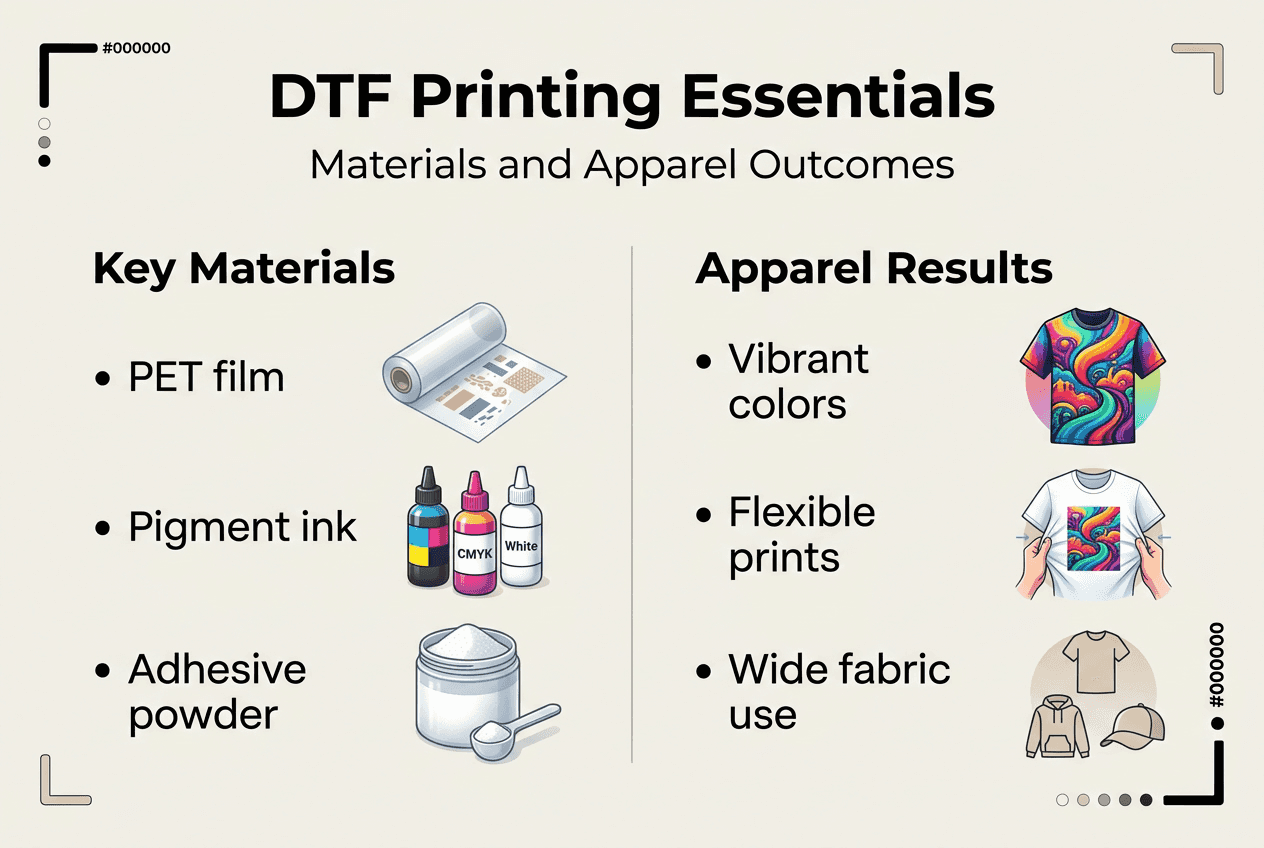
The materials involved in DTF printing include specialized PET films that receive the printed design, pigment-based or reactive inks formulated for textile adhesion, hot-melt adhesive powders that bond the print to fabric, and heat press equipment for the final transfer. Each component plays a critical role in achieving professional results. The curing process melts the adhesive powder into the ink layer, creating a cohesive transfer that bonds permanently to fabric fibers when heat and pressure are applied.
Pro Tip: Start with pre-made DTF transfers to test designs and fabric combinations before investing in your own printing equipment, allowing you to validate demand and perfect your application technique.
Comparing DTF with other apparel decoration methods
Understanding how DTF stacks up against screen printing, direct-to-garment, and sublimation helps you make informed decisions about which method best serves your business model and customer needs. Each technique has distinct advantages and limitations that affect production costs, quality, speed, and the types of products you can create.
| Method | Setup Cost | Best For | Fabric Types | Color Limit | Durability | | — | — | — | — | — | | DTF | Low to Medium | Small to medium runs, detailed designs | All fabric types | Unlimited | Excellent | | Screen Printing | High | Large runs, simple designs | Cotton, blends | Limited by screens | Excellent | | DTG | Medium to High | Cotton garments, photo prints | Primarily cotton | Unlimited | Good | | Sublimation | Low to Medium | Polyester only, all-over prints | Polyester, poly-coated | Unlimited | Excellent on polyester |
DTF differs significantly from screen printing in cost structure, quality capabilities, and operational versatility. Screen printing requires creating physical screens for each color in a design, which makes setup expensive and time-consuming. This method becomes economical only when producing hundreds or thousands of identical pieces. DTF eliminates these barriers by printing directly onto film, allowing you to produce one shirt as cost-effectively as one hundred.
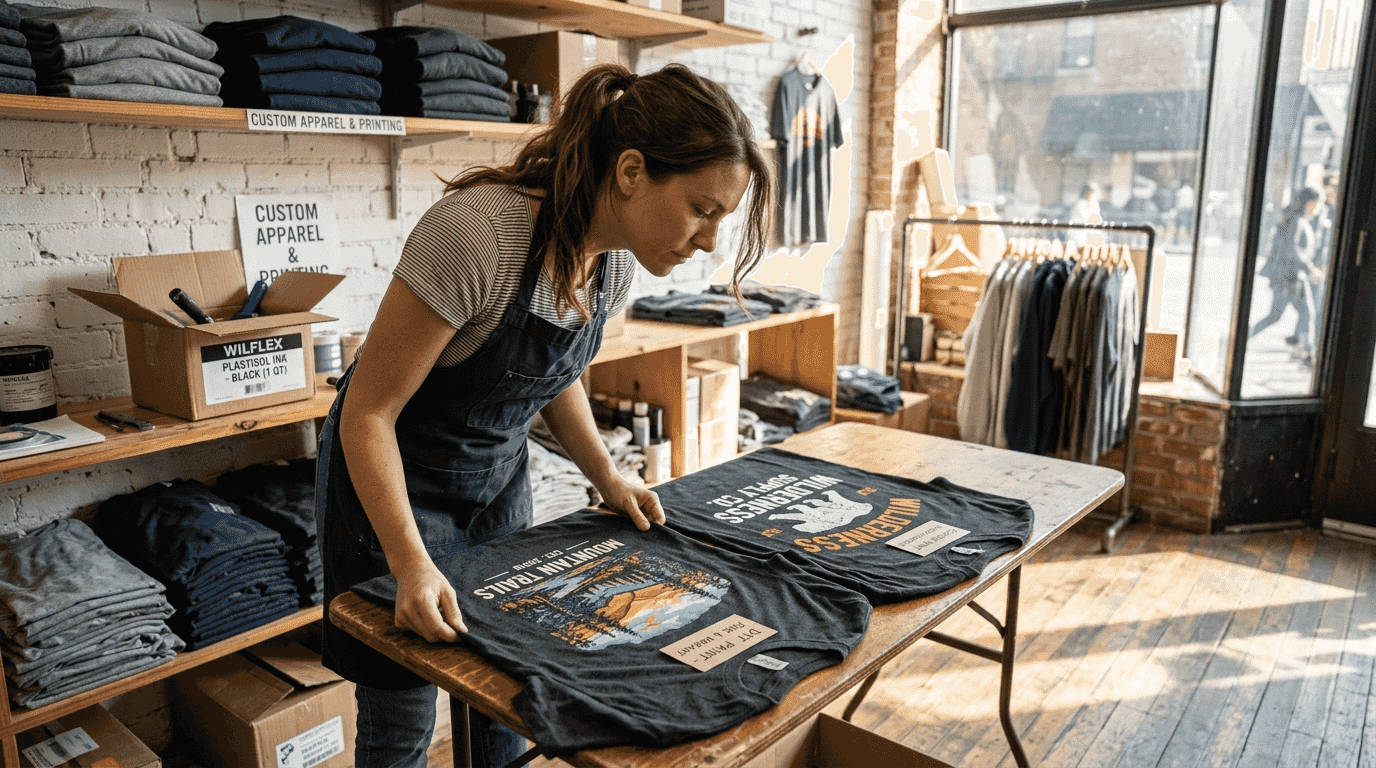
Direct-to-garment printing shares some similarities with DTF but faces significant limitations. DTG printers spray ink directly onto fabric, which works beautifully on 100% cotton but struggles with polyester and blends. The process requires pretreating garments, which adds time and complexity. DTF offers advantages over inkjet and DTG printing for specific custom apparel applications, particularly when working with diverse fabric types or producing items that need to withstand heavy use.
Common misconceptions about these methods often lead business owners to make suboptimal choices:
- Believing screen printing always produces better quality (DTF now matches or exceeds screen print quality for most designs)
- Assuming DTG is faster for small orders (DTF transfers apply in seconds, while DTG requires pretreat and longer press times)
- Thinking sublimation works on all fabrics (it only bonds to polyester and poly-coated surfaces)
- Expecting all digital methods to have similar costs (equipment and consumable expenses vary dramatically)
DTF emerges as the optimal choice when you need design flexibility, work with various fabric types, produce small to medium batches, require quick turnaround times, or want to minimize upfront investment. Small clothing businesses benefit most from DTF’s combination of quality, speed, and economic viability across different order sizes.
Pro Tip: Keep a sample book showing the same design printed using different methods on various fabrics to help customers understand quality differences and make informed purchasing decisions.
Choosing the right materials for DTF apparel printing
Material selection directly impacts the final quality, durability, and customer satisfaction with your DTF printed apparel. Understanding which fabrics, films, inks, and adhesive powders work best together ensures consistent, professional results that withstand repeated washing and wear.
Certain fabrics provide more vibrant and durable results with DTF printing technology. Cotton and cotton-polyester blends represent the sweet spot for DTF applications, offering excellent adhesion, vibrant color reproduction, and a soft hand feel that customers love. These fabrics allow the adhesive powder to bond deeply with fibers, creating transfers that last through dozens of wash cycles without cracking or fading.
Polyester and polyester-blend fabrics also work exceptionally well with DTF, though they require slightly different temperature and pressure settings during application. The synthetic fibers accept DTF transfers readily, and the prints often appear even more vibrant on polyester due to the smooth surface texture. Nylon, spandex blends, and performance fabrics used in activewear can be decorated successfully with DTF, expanding your product range beyond traditional t-shirts and hoodies.
Film characteristics matter more than many beginners realize. High-quality DTF films feature:
- Consistent thickness that ensures even ink absorption
- Smooth coating that prevents ink bleeding and maintains detail
- Easy release properties that separate cleanly from the transfer
- Heat resistance that withstands press temperatures without degrading
Ink formulations designed specifically for DTF printing contain pigments that remain flexible after curing, preventing the cracking that plagues inferior products. These inks bond chemically with adhesive powders to create a unified layer that moves with fabric rather than sitting on top as a rigid coating. Color accuracy depends on using properly calibrated inks that match your design software’s color profiles.
Adhesive powder serves as the critical bonding agent between printed film and fabric. The powder melts during curing and again during heat pressing, flowing into fabric fibers to create permanent adhesion. Fine-grain powders produce softer transfers with better stretch, while coarser powders may provide stronger initial adhesion but feel stiffer. Temperature and melt characteristics must match your specific workflow and equipment capabilities.
Care instructions significantly influence material choices for different applications. Garments that will be washed frequently in commercial settings need more aggressive adhesive formulations and higher-quality films than items intended for occasional wear. Athletic apparel requires transfers that withstand moisture, stretching, and high-heat drying. Understanding your customer’s use case helps you select materials that deliver appropriate longevity.
Pro Tip: Always test new material combinations on scrap fabric before committing to production runs, documenting your temperature, pressure, and time settings for each successful combination to build a reliable reference guide.
Maximizing your apparel business success with DTF best practices
Implementing proven workflows and avoiding common pitfalls separates successful DTF operations from those that struggle with quality issues and inefficiency. Following essential DTF printing best practices ensures high-quality, durable apparel products that build your reputation and customer loyalty.
Optimizing your workflow from design to finished product creates consistency and efficiency:
- Prepare designs at 300 DPI minimum resolution with proper color profiles (CMYK for print accuracy)
- Print designs onto DTF film using calibrated equipment with fresh, properly mixed inks
- Apply adhesive powder evenly while ink remains wet, shaking off excess to prevent stiff transfers
- Cure the powder-coated film at manufacturer-specified temperature and duration
- Store cured transfers in a cool, dry location away from direct sunlight until application
- Press transfers onto pre-heated fabric using correct temperature, pressure, and time for each material type
- Allow pressed garments to cool completely before peeling film (hot peel vs. cold peel depends on film type)
- Cure the applied transfer with a final heat press cycle to maximize wash durability
Color management requires attention to detail throughout the process. Your design software, printer profiles, and ink characteristics must align to produce accurate colors. Many beginners struggle because they design in RGB color space (used for screens) rather than CMYK (used for printing). This mismatch causes disappointing results when vibrant screen colors appear dull or shifted on fabric. Calibrate your monitor and printer regularly, and maintain a physical swatch book showing how colors actually print.
Common pitfalls that undermine quality include:
- Applying insufficient pressure during heat pressing, resulting in poor adhesion
- Using incorrect temperatures that either fail to activate adhesive or scorch fabric
- Rushing the cooling process and peeling film too early, leaving residue or incomplete transfers
- Neglecting to pre-press garments to remove moisture and wrinkles
- Storing transfers in humid conditions that degrade adhesive properties
Equipment maintenance directly affects output consistency and longevity. Clean print heads weekly to prevent clogging that causes banding or color shifts. Inspect and clean your heat press platen monthly, removing any adhesive buildup that creates hot spots or uneven pressure. Replace worn Teflon sheets that protect transfers during pressing. Keep your workspace clean and dust-free, as contaminants can mar print surfaces or interfere with adhesion.
“The difference between amateur and professional DTF results comes down to controlling variables. Successful decorators document every setting, test methodically, and refuse to skip steps even when rushed. This discipline pays dividends in consistent quality and minimal waste.”
Scaling production efficiently requires systems thinking. Batch similar jobs together to minimize setup changes. Create templates for common sizes and placements to speed positioning. Invest in conveyor dryers or heat tunnel systems when volume justifies the expense. Train team members on specific stations rather than expecting everyone to handle every step, allowing specialization that improves speed and quality.
Pro Tip: Keep a production log noting fabric type, transfer settings, and results for every job, creating a knowledge base that eliminates guesswork and accelerates troubleshooting when issues arise.
Explore Transfer Kingz for your DTF apparel solutions
Now that you understand how DTF printing can transform your custom clothing business, you need reliable supplies and ongoing support to implement these techniques successfully. Transfer Kingz specializes in providing small apparel businesses with premium DTF printing supplies and resources designed specifically for decorators who demand quality without the enterprise-level investment.
Whether you are just starting with pre-made transfers or ready to invest in your own printing equipment, Transfer Kingz offers the products, expertise, and educational content to support your growth. Their blog features detailed guides on DTF customization technology and techniques, helping you stay current with industry developments and refine your craft. Explore their catalog to find films, inks, powders, and finished transfers that match your specific production needs and quality standards.
Frequently asked questions
What is DTF printing and why is it good for small apparel businesses?
DTF printing uses specialized film transfers to decorate fabrics with durable, vibrant designs that maintain quality through repeated washing. The process prints designs onto film, applies adhesive powder, cures the combination, and then heat presses the transfer onto garments. Small businesses benefit because DTF requires minimal upfront investment compared to screen printing equipment, supports profitable single-piece production, and works on virtually any fabric type. This flexibility lets you offer diverse product lines and respond quickly to custom orders without maintaining large inventory or expensive setup costs.
How does DTF compare to screen printing and other methods?
DTF offers significantly faster setup than screen printing, making it economical for short production runs and detailed multi-color designs that would require numerous screens. Screen printing excels at very large runs of simple designs where per-unit costs drop dramatically with volume. DTG works best on 100% cotton garments but requires pretreatment and longer press times than DTF. Sublimation only bonds to polyester and light-colored fabrics, limiting product variety. DTF provides the best balance of quality, speed, and versatility for businesses producing custom apparel across different fabric types and order sizes.
Which fabrics and materials work best with DTF printing?
Cotton, cotton-polyester blends, and 100% polyester fabrics deliver excellent results with DTF printing technology. These materials accept adhesive bonding readily and display vibrant colors with good wash durability. Nylon and performance fabrics also work well with adjusted temperature settings. Use high-quality DTF films with consistent coating and easy release properties paired with fine-grain adhesive powders for soft hand feel. Material selection affects both washability and color vibrancy, so match your supplies to the intended use case and care requirements of the finished garments.
What are the essential best practices for effective DTF apparel printing?
Prepare all designs at 300 DPI minimum resolution using CMYK color profiles rather than RGB to ensure accurate color reproduction. Apply adhesive powder evenly while ink is wet, then cure at manufacturer-specified temperatures before storage. Pre-heat fabrics to remove moisture before pressing transfers using correct temperature, pressure, and time combinations for each material type. Maintain equipment regularly by cleaning print heads weekly and heat press platens monthly. Always test new fabric and transfer combinations on samples before committing to production runs, documenting successful settings for future reference.
0 comments