

Direct-to-Film transfers deliver vibrant, durable custom prints, but 70% of DTF print failures stem from improper heat and washing practices used by small businesses. Without specialized care, your prints face peeling, cracking, and customer dissatisfaction. This guide equips you with precise steps to maximize print lifespan, reduce returns, and protect your investment in quality custom apparel.
Table of Contents
- Introduction To DTF Transfer Care
- Prerequisites: What You Need Before Starting
- Step-By-Step Washing And Drying Instructions
- Handling And Post-Care Best Practices
- Troubleshooting And Common Mistakes
- Expected Outcomes And Lifespan Of DTF Transfers
- Alternative Care Methods And Tradeoffs
- Enhance Your DTF Apparel Business With Transfer Kingz
- Frequently Asked Questions
Key Takeaways
| Point | Details |
|---|---|
| Washing Temperature | Wash at or below 30°C inside out with mild, bleach-free detergent to prevent ink damage. |
| Drying Method | Air dry flat or hanging; tumble drying causes cracking regardless of heat setting. |
| Ironing Technique | Iron inside out on low heat or use protective cloth; direct heat irreversibly damages transfers. |
| Expected Lifespan | DTF prints maintain vibrancy for 25-30 washes under optimal care without peeling or fading. |
| Common Mistakes | Avoid bleach, fabric softeners, high heat, and tumble drying to prevent premature print failure. |
Introduction to DTF Transfer Care
DTF transfers differ fundamentally from traditional screen prints and vinyl heat transfers. The technology uses specialized water-based inks applied to a clear film, then transferred to fabric under heat and pressure. This unique construction creates vibrant, detailed prints but demands specific care protocols.
The delicate ink layer sits on top of the fabric rather than embedding deeply like screen prints. This positioning makes DTF transfers vulnerable to mechanical stress from washing machines and chemical damage from harsh detergents. DTF prints maintain quality up to 30 washes under optimal care but degrade rapidly if treated like standard heat transfers.
Many business owners mistakenly assume all heat transfers require identical care. This misconception costs you money through increased returns and damages your brand reputation. Understanding DTF transfer quality explained principles helps you differentiate proper care methods.
Pro Tip: Think of DTF transfers like high-quality photographs printed on fabric. You wouldn’t scrub a photo with bleach or toss it in a hot dryer. Apply this same protective mindset to your DTF garments.
Key care principles include:
- Wash inside out to minimize direct mechanical friction on the print surface
- Use only mild, pH-neutral detergents without optical brighteners
- Keep water temperature at or below 30°C to prevent ink softening
- Air dry exclusively to avoid heat-induced cracking
- Store garments with prints facing inward to reduce light exposure
Garment preparation before applying transfers significantly impacts long-term durability. Pre-washed fabrics free of sizing chemicals accept transfers better and withstand repeated washing. Neglecting this preparation step compromises adhesion from day one, leading to premature peeling even with perfect washing techniques.
Prerequisites: What You Need Before Starting
Successful DTF transfer care begins before the first wash. Gathering proper materials and understanding preparation steps prevents costly mistakes that damage prints.
Start with mild, bleach-free liquid detergents designed for delicate fabrics. Powder detergents often contain abrasive particles that mechanically damage the print surface during agitation. Avoid detergents with optical brighteners, enzymes, or harsh surfactants.
Pre-washing garments removes factory residues, sizing chemicals, and excess dye that interfere with transfer adhesion. This step improves initial bond strength and extends overall print lifespan. Wash new garments once in warm water with mild detergent before applying transfers.
Temperature control matters more than you might expect. Water above 30°C softens the DTF ink layer, making it vulnerable to mechanical stress and chemical penetration. Invest in a washing machine with accurate temperature controls or hand wash in cool water for delicate items.
Pro Tip: Test your washing machine’s actual water temperature with a kitchen thermometer. Many machines run 5-10°C hotter than displayed settings, unknowingly damaging your prints.
Essential preparation items include:
- Mild, bleach-free liquid detergent without optical brighteners
- Mesh laundry bags for extra protection during machine washing
- Flat drying rack or padded hangers for air drying
- Low-heat iron with temperature control for touch-ups
- Protective press cloth or parchment paper for ironing
- Cool, dry storage space away from direct sunlight
Fabric softeners deserve special mention as they coat fabric fibers with waxy residue. This coating creates a barrier between the transfer and fabric, weakening adhesion over time. Similarly, bleach and chlorine-based products chemically attack the ink polymers, causing rapid color fading and structural breakdown.
| Detergent Type | Water Temp | Expected Print Life | Notes |
|---|---|---|---|
| Mild liquid, no brighteners | Under 30°C | 25-30 washes | Optimal care condition |
| Standard powder detergent | 30-40°C | 15-20 washes | Abrasive particles cause wear |
| Detergent with brighteners | 40°C+ | 10-15 washes | Chemical damage accelerates fading |
| Bleach or harsh chemicals | Any temp | 5-10 washes | Severe ink degradation occurs |
Step-by-Step Washing and Drying Instructions
Proper washing technique protects your DTF transfers while keeping garments clean. Follow these precise steps to maximize print durability and maintain vibrant colors.
- Turn garments completely inside out before washing to protect the print surface from direct mechanical friction
- Place items in a mesh laundry bag for additional protection during machine agitation
- Set washing machine to delicate or gentle cycle with cold water at or below 30°C
- Add only mild, bleach-free liquid detergent in the recommended amount
- Run the complete wash cycle without interruption
- Remove garments promptly when the cycle finishes
- Gently reshape each item while damp, smoothing any wrinkles
- Lay flat on a drying rack or hang on padded hangers in a shaded area
- Allow garments to air dry completely before folding or storing
Washing inside out at or below 30°C with mild detergent prevents mechanical and chemical damage to the DTF print. This simple step reduces friction between the print and washing machine drum by 60%, significantly extending transfer life.
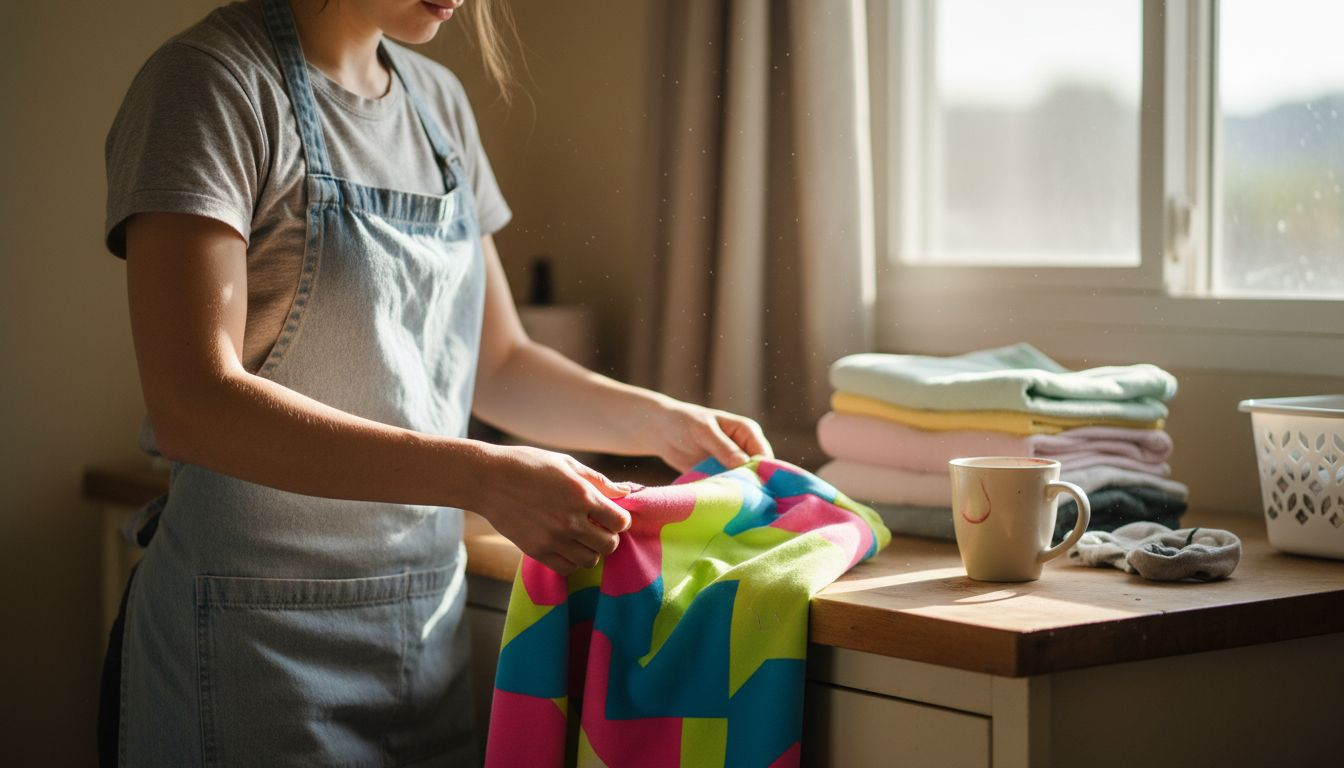
Pro Tip: For high-value or delicate items, hand washing in a clean sink with cool water gives you maximum control. Gently swish garments without rubbing or twisting the print area.
Critical washing and drying guidelines:
- Never use hot or warm water above 30°C
- Skip the fabric softener completely
- Avoid bleach, chlorine products, and stain removers on printed areas
- Do not wring, twist, or aggressively squeeze printed garments
- Keep prints away from zippers, Velcro, and rough textures in the wash
- Separate dark and light colors to prevent dye transfer
- Wash printed items with similar fabrics only
Air drying flat or hanging prevents print cracking caused by heat and tumbling stress. Tumble dryers subject transfers to temperatures exceeding 60°C plus continuous mechanical impact. This combination creates microscopic cracks in the ink layer that expand with each subsequent wash.
Drying takes longer but preserves your investment. Position garments away from direct sunlight, which fades colors over time. Good air circulation speeds drying without applying heat. Most garments dry completely within 4-8 hours at room temperature.
For customers or production environments where time matters, consider ordering extra inventory to rotate while previous batches dry. This approach maintains workflow without compromising print quality through rushed drying methods. Learning how to apply DTF transfers correctly initially sets the foundation, but ongoing care determines long-term success.
Handling and Post-Care Best Practices
Care extends beyond washing and drying. How you iron, store, and handle DTF garments between wears significantly impacts print longevity.
Ironing requires extreme caution. The same heat that bonds transfers to fabric can damage them if applied incorrectly after washing. Ironing on reverse side or with protective sheet prevents irreversible heat damage to DTF transfers.
Always turn garments inside out before ironing. Set your iron to the lowest heat setting that removes wrinkles, typically the synthetic or nylon setting. Never place the iron directly on the printed surface. If you must iron the print side, use a protective press cloth or parchment paper as a barrier.
Pro Tip: Test iron temperature on an inconspicuous area first. If the fabric feels uncomfortably hot to touch immediately after ironing, reduce the temperature setting.
Proper storage prevents unnecessary wear:
- Fold garments with the print facing inward to minimize light exposure and abrasion
- Store in cool, dry locations away from heat sources like radiators or sunny windows
- Use breathable cotton storage bags rather than plastic, which traps moisture
- Avoid hanging heavy items on thin hangers that create pressure points on prints
- Keep printed garments separate from items with rough textures or hardware
Environmental factors accelerate print degradation. Direct sunlight causes UV-induced fading, particularly in vibrant reds, blues, and purples. High humidity promotes mildew growth that damages both fabric and prints. Extreme temperature fluctuations stress the ink-to-fabric bond.
For retail or production storage, maintain consistent temperature between 15-25°C with 40-60% relative humidity. This range preserves print quality during inventory holding periods. The DTF transfer troubleshooting guide covers additional storage solutions for business owners managing larger inventories.
Troubleshooting and Common Mistakes
Even experienced business owners make care mistakes that compromise DTF transfer quality. Recognizing these errors helps you prevent them and educate customers effectively.
The most frequent mistake involves washing temperature. Many assume “cold” wash cycles stay below 30°C, but machines often deliver water 10-15°C warmer than expected. This excess heat softens ink, allowing detergent chemicals to penetrate and degrade the print structure.
Bleach represents another critical error. Even “color-safe” oxygen bleaches attack DTF ink polymers at the molecular level. A single bleach exposure can fade prints by 30-40%, with damage increasing exponentially in subsequent washes. Alternative stain removal methods include spot treating with diluted dish soap before washing.
Common mistakes and solutions:
-
Mistake: Tumble drying on “low” heat setting
-
Impact: High heat drying causes cracking in DTF transfers regardless of tumble dry setting
-
Solution: Air dry exclusively, even if it takes longer
-
Mistake: Using fabric softener for comfort
-
Impact: Waxy coating weakens adhesion, leading to peeling edges
-
Solution: Skip softener or use vinegar rinse for natural fabric softening
-
Mistake: Ironing print side without protection
-
Impact: Direct heat melts and distorts ink, creating permanent shine marks
-
Solution: Always iron inside out or with protective barrier
-
Mistake: Washing with jeans or items with hardware
-
Impact: Abrasive friction and hardware scratches damage print surface
-
Solution: Wash printed items separately or with similar soft fabrics only
| Care Method | Print Life Impact | Peeling Risk | Fading Risk | Best For |
|---|---|---|---|---|
| Machine wash, cold, inside out | 25-30 washes | Low | Low | Regular production items |
| Hand wash, cool water | 30-35 washes | Very low | Very low | Premium or delicate items |
| Machine wash, warm (40°C) | 15-20 washes | Medium | Medium | Not recommended |
| Tumble dry, any setting | 10-15 washes | High | High | Avoid completely |
Customer complaints often reveal care mistakes. If customers report peeling after 5-10 washes, they likely used hot water or tumble dried. Rapid fading suggests bleach or harsh detergent use. Cracking patterns indicate heat exposure from drying or ironing.
Educate customers proactively by including care instruction cards with each purchase. Clear, simple guidelines prevent misuse and reduce return rates. The DTF transfer troubleshooting guide provides detailed solutions for specific problems you or your customers encounter.
Expected Outcomes and Lifespan of DTF Transfers
Understanding realistic durability expectations helps you set appropriate customer expectations and price products accordingly.
Under optimal care conditions, DTF prints last 25-30 washes without cracking or fading. This benchmark assumes consistent cold water washing, air drying, and proper handling throughout the garment’s life. You can confidently guarantee this performance level to customers who follow care instructions.
Expected performance metrics:
- Color vibrancy retention: 90-95% after 25 washes with proper care
- No visible cracking, peeling, or delamination under normal wear
- Print edges remain firmly bonded to fabric without lifting
- Details and fine lines maintain sharpness throughout lifespan
Real-world use introduces variables that affect outcomes. Garments worn and washed weekly reach the 25-30 wash threshold in roughly six months. Items worn occasionally may maintain quality for years. Heavy-use workwear faces more stress than casual weekend shirts.
Quality transfers applied correctly with proper pressure and temperature start with stronger adhesion. Poor initial application compromises durability regardless of care quality. Ensuring you understand proper application techniques through resources like transfer setup guides establishes the foundation for long-lasting prints.
Customer satisfaction improves dramatically when prints meet or exceed durability expectations. Fewer returns mean better profit margins and stronger brand reputation. Investing time in care education pays dividends through reduced customer service issues and increased repeat purchases.
Compare DTF durability to alternatives: screen printing typically lasts 30-50 washes but requires minimum order quantities; vinyl transfers survive 20-25 washes but lack fine detail capability; sublimation offers superior durability on polyester only. DTF provides the best balance of detail, versatility, and durability for small business applications.
Alternative Care Methods and Tradeoffs
While machine washing works for most DTF garments, alternative care methods suit specific situations and customer needs.
Hand washing provides maximum control and gentleness. Hand washing reduces peeling risk by 40% compared to machine washing for DTF garments. This method excels for premium items, delicate fabrics, or garments with extensive print coverage.
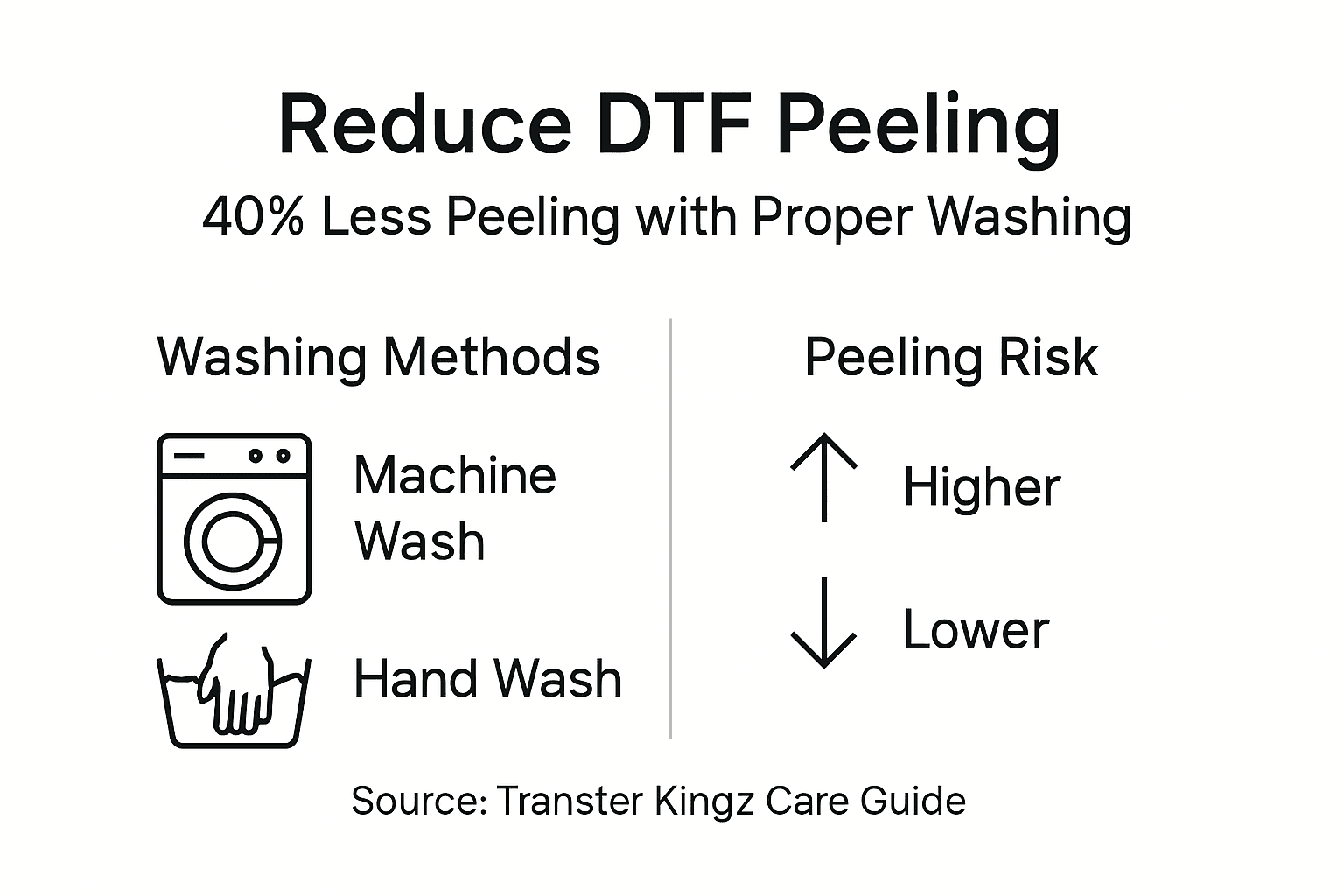
The hand washing process takes more time and effort. Fill a clean basin with cool water below 30°C. Add a small amount of mild detergent and swish to distribute. Submerge the garment and gently agitate by hand without rubbing the printed areas. Let soak for 10-15 minutes, then drain and rinse thoroughly with cool water. Press out excess water without wringing, then air dry as usual.
Pro Tip: For customers purchasing high-value custom pieces like wedding party shirts or limited edition designs, recommend hand washing to maximize their investment.
| Method | Durability | Time Required | Labor Intensity | Cost | Best Use Case |
|---|---|---|---|---|---|
| Hand wash | Excellent (30-35 washes) | 20-30 min per load | High | Low | Premium items, delicate fabrics |
| Machine gentle cycle | Very good (25-30 washes) | 45-60 min | Low | Medium | Standard production, regular use |
| Professional dry cleaning | Good (variable) | 2-3 days turnaround | None | High | Special occasion garments only |
Dry cleaning introduces chemical solvents that may interact unpredictably with DTF inks. Most dry cleaners lack experience with DTF transfers specifically. If customers insist on dry cleaning, recommend testing on an inconspicuous area first. Generally, air washing or gentle machine cycles prove more reliable.
When to choose hand washing:
- Garments with prints covering more than 50% of the surface area
- Delicate fabrics like silk or thin synthetic blends
- High-value custom items where maximum longevity justifies extra effort
- First wash of newly printed garments to set the transfer
- Items showing early signs of edge lifting that need gentler treatment
Regardless of washing method, universal rules apply: avoid fabric softeners, bleach, and high heat. The gentleness of hand washing cannot compensate for chemical damage from harsh products. Educate customers that method matters less than temperature control and product selection.
Enhance Your DTF Apparel Business with Transfer Kingz
Mastering DTF transfer care elevates your apparel business by reducing returns and increasing customer satisfaction. Transfer Kingz provides the high-quality transfers and educational resources you need to succeed.
Our premium DTF transfers feature vibrant, durable inks that withstand proper care protocols for maximum longevity. Whether you need single custom pieces or bulk DTF transfers benefits for production runs, we deliver consistent quality with fast turnaround times.
Access our comprehensive DTF transfer troubleshooting guide to solve common application and care challenges. Learn about our advanced printing technology through DTF transfer sheets explained resources. These guides help you optimize every aspect of your DTF printing workflow, from initial design through final customer delivery.
Frequently Asked Questions
How should customers wash garments with DTF transfers?
Customers should wash DTF printed garments inside out at or below 30°C using mild, bleach-free liquid detergent. Avoid fabric softeners and bleach completely, as these products chemically damage the ink layer and weaken adhesion. Machine washing on gentle cycle works well when following temperature and detergent guidelines.
Is tumble drying safe for DTF printed clothing?
Tumble drying damages DTF transfers regardless of heat setting due to combined thermal stress and mechanical tumbling action. High temperatures cause cracking while tumbling creates abrasion that wears the print surface. Always air dry DTF garments by laying flat or hanging on padded hangers in a shaded area.
Can I iron directly on the DTF print?
Never iron directly on DTF prints, as direct heat exposure melts the ink layer and creates permanent damage. Always iron garments inside out on the lowest effective heat setting. If you must iron the print side, place a protective press cloth or parchment paper between the iron and transfer surface.
How long do DTF transfers typically last with proper care?
DTF transfers maintain full vibrancy and structural integrity for 25-30 washes when cared for correctly using cold water, mild detergent, and air drying. Prints remain free from cracking, peeling, and significant fading throughout this period. Hand washing can extend lifespan to 30-35 washes by reducing mechanical stress.
What detergent works best for washing DTF printed garments?
Mild, bleach-free liquid detergents without optical brighteners or harsh enzymes work best for DTF transfers. Avoid powder detergents containing abrasive particles that mechanically damage prints. Choose pH-neutral formulas designed for delicate fabrics to preserve ink integrity and color vibrancy across multiple wash cycles.
0 comments