

More than 60 percent of small apparel shops struggle to keep pace with fast-growing order volumes in the American market and beyond. Keeping production speed high is now central to competing for repeat business and big clients. If you want to unlock the full potential of Direct To Film printing, understanding the efficiency drivers behind each workflow step can save hours and prevent costly delays.
Table of Contents
- Defining Production Speed in DTF Printing
- Key Steps in the DTF Printing Process
- Major Factors That Impact Output Speed
- Best Practices for Faster DTF Turnarounds
- Common Pitfalls Slowing Production Down
Key Takeaways
| Point | Details |
|---|---|
| Production Speed Factors | DTF printing speed is influenced by printer technology, operator skill, and workflow efficiency. Addressing these factors can significantly enhance output. |
| Workflow Optimization | Implementing a streamlined workflow process minimizes transition times and increases production efficiency across all stages. |
| Equipment Maintenance | Regular maintenance and calibration of printing equipment prevent unexpected downtimes and ensure consistent output quality. |
| Training and Development | Comprehensive training for operators enhances skills and reduces errors, ultimately leading to a smoother production process. |
Defining Production Speed in DTF Printing
Production speed in Direct to Film (DTF) printing represents the total volume of transfers a business can successfully produce within a specific timeframe. Unlike traditional printing methods, DTF offers unique efficiency metrics that directly impact operational productivity. Understanding these parameters requires examining multiple interconnected factors beyond simple output rates.
At its core, production speed encompasses several critical components: printer throughput, transfer preparation time, heat press cycling, and post-production processing. Experimental research on heat press settings demonstrates that standardizing temperature and dwell time significantly influences both print quality and overall production efficiency. Manufacturers and custom apparel businesses must carefully calibrate these variables to maximize output without compromising transfer durability.
The primary elements affecting DTF production speed include:
- Printer resolution and printing speed
- Film and ink quality
- Heat press performance
- Transfer preparation techniques
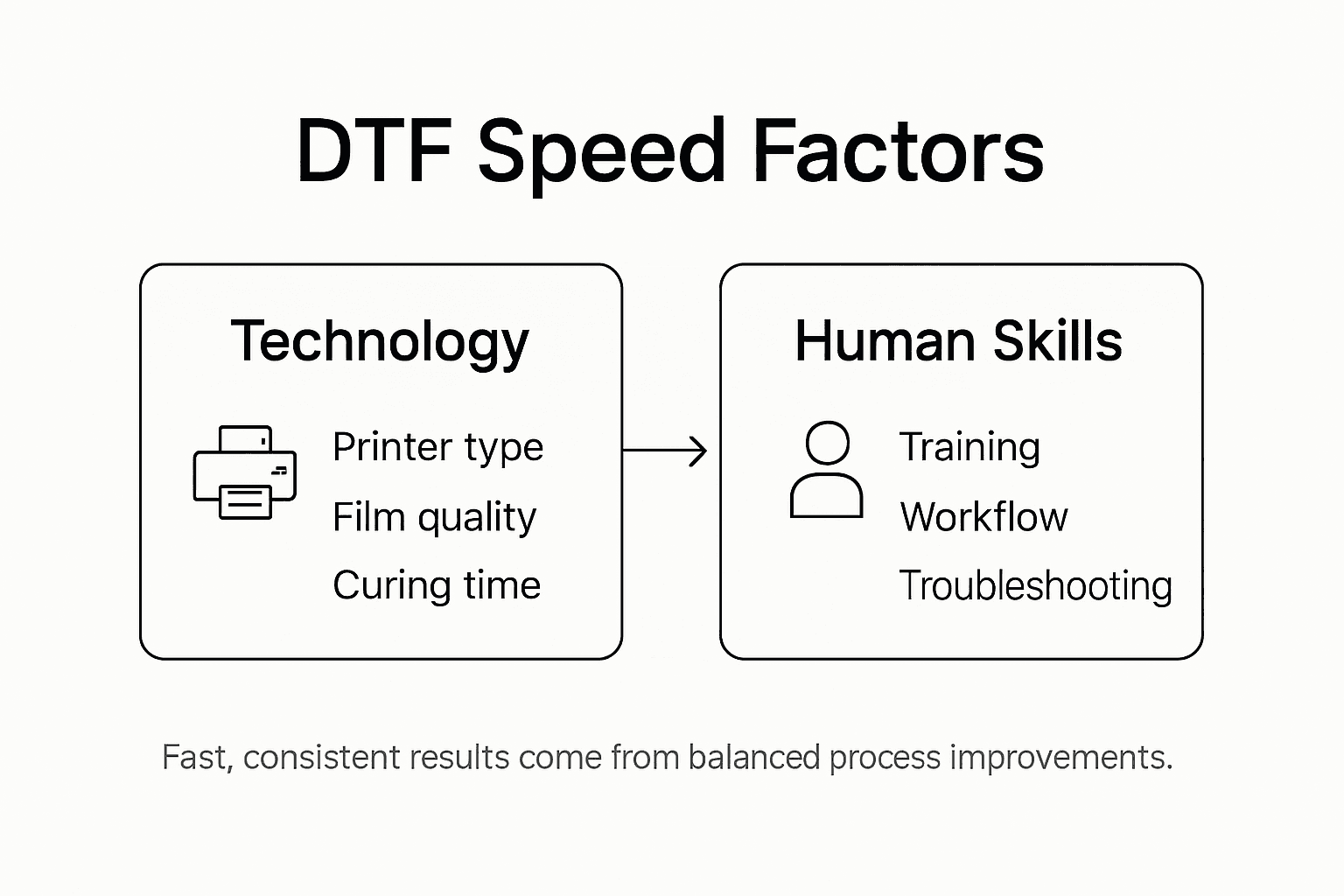
- Operator skill and workflow optimization
Successful DTF printing operations recognize that production speed isn’t merely about how fast a machine can print, but how seamlessly different production stages integrate. Reducing bottlenecks between printing, curing, pressing, and finishing can dramatically enhance overall throughput.
Pro tip: Implement a standardized workflow checklist to minimize human error and track precise production timing across each DTF printing stage.
Key Steps in the DTF Printing Process
The DTF printing process involves a systematic sequence of carefully executed steps that transform digital artwork into high-quality fabric transfers. Each stage requires precision and attention to detail to ensure optimal print results. From initial design preparation to final transfer application, understanding these key steps is crucial for achieving professional-grade custom apparel decorations.
The core DTF printing workflow typically encompasses five primary stages:
- Digital Design Preparation
- Film Printing
- Powder Application
- Curing and Melting
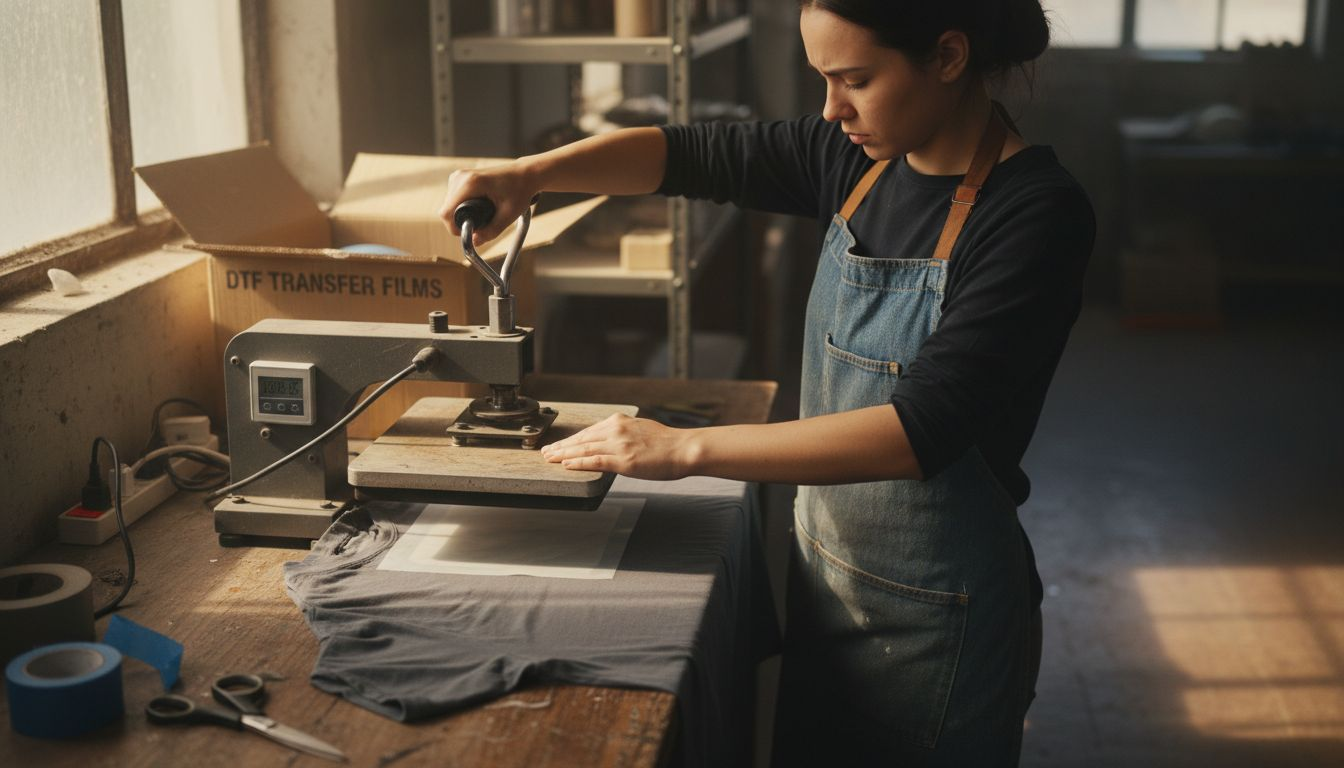
- Heat Transfer
In the design preparation phase, graphic designers must optimize artwork for DTF printing, which involves adjusting color profiles, resolution, and sizing to match transfer specifications. Digital files need precise formatting to translate effectively onto fabric. Custom DTF transfers for business branding require meticulous attention to image quality and color accuracy.
Subsequent stages involve specialized equipment and techniques. Film printing demands high-resolution printers capable of producing intricate designs with vibrant colors. The powder application step is particularly critical, where a precise layer of adhesive powder gets evenly distributed across the printed film. Proper curing involves controlled heat application that melts the powder, creating a seamless bonding surface for fabric transfer.
Here’s a concise summary of how key DTF production stages influence business results:
| Stage | Role in Workflow | Impact on Speed | Effect on Quality |
|---|---|---|---|
| Design Preparation | Artwork and file optimization | Faster setup times | Better color accuracy |
| Film Printing | Producing transfer images | Controls throughput | Sharper, vibrant designs |
| Powder Application | Adding adhesive to transfers | Reduces waste | Strong material adhesion |
| Curing & Melting | Fusing powder to film | Ensures consistency | Durable, long-lasting transfers |
| Heat Transfer | Applying film to fabric | Affects final output | Smooth, professional finish |
Pro tip: Invest in calibration tools and regularly maintain your DTF equipment to ensure consistent powder distribution and minimize print inconsistencies.
Major Factors That Impact Output Speed
Direct to Film (DTF) printing output speed represents a complex interplay of technological, operational, and human factors that collectively determine production efficiency. Understanding these critical variables allows businesses to optimize their printing workflows and maximize throughput. The most significant elements impacting production speed extend far beyond simple machine capabilities.
Key factors influencing DTF printing output speed include:
- Printer Technology: Printer resolution, print head quality, and processing speed
- Equipment Configuration: Printer model, number of print stations, and simultaneous printing capabilities
- Ink and Film Quality: Consistency, drying time, and compatibility with transfer materials
- Operator Expertise: Skill level, workflow management, and technical troubleshooting abilities
- Workspace Organization: Layout efficiency, material preparation zones, and equipment maintenance schedules
Technological constraints play a substantial role in determining production rates. Top DTF transfer material suppliers significantly influence print quality and speed by providing high-performance films and inks that reduce processing time. Advanced printers with faster processing capabilities can dramatically increase output, with some professional-grade machines producing multiple transfers per minute.
Human factors remain equally critical in maintaining consistent production speeds. Skilled operators who understand machine nuances, can quickly troubleshoot technical issues, and maintain a streamlined workflow can compensate for minor technological limitations. Systematic training, documented standard operating procedures, and continuous skill development can transform an average printing setup into a high-efficiency production environment.
Pro tip: Create detailed performance tracking spreadsheets to identify specific bottlenecks in your DTF printing workflow and systematically address each efficiency constraint.
Best Practices for Faster DTF Turnarounds
Achieving faster DTF printing turnarounds requires a strategic approach that combines technological optimization, workflow management, and continuous process improvement. Successful businesses recognize that speed is not just about equipment, but about creating a holistic, efficient production ecosystem that minimizes delays and maximizes output.
Key strategies for accelerating DTF printing turnarounds include:
- Workflow Optimization: Implement streamlined processes with minimal transition times between production stages
- Parallel Processing: Set up multiple workstations to handle different transfer stages simultaneously
- Preventative Maintenance: Schedule regular equipment checks to prevent unexpected downtime
- Digital Preparation: Use advanced design software for rapid file preparation and color matching
- Inventory Management: Maintain strategic stock levels of films, inks, and transfer materials
Technological integration plays a critical role in reducing production times. Affordable bulk DTF transfers demonstrate how strategic material sourcing and advanced printing techniques can significantly compress production timelines. Modern DTF printing operations leverage automation, smart workflow management software, and high-speed printing equipment to dramatically reduce transfer production times.
Human expertise remains the most adaptable component in accelerating production. Comprehensive operator training, standardized operating procedures, and continuous skill development enable teams to identify and eliminate inefficiencies quickly. Establishing clear communication protocols, creating detailed process documentation, and implementing regular performance reviews can transform an average printing operation into a high-speed, precision-driven production environment.
Pro tip: Develop a real-time performance dashboard that tracks each stage of DTF production, allowing immediate identification and resolution of potential bottlenecks.
Common Pitfalls Slowing Production Down
DTF printing production can encounter numerous obstacles that dramatically reduce output efficiency, transforming what should be a streamlined process into a frustrating bottleneck. Understanding these common pitfalls is crucial for businesses seeking to maintain competitive production speeds and minimize costly downtime.
The most significant production slowdowns typically stem from several key areas:
- Equipment Mismanagement: Inadequate maintenance and calibration of printing equipment
- Material Quality Issues: Using substandard films, inks, or transfer materials
- Workflow Inefficiencies: Poorly designed production layouts and communication gaps
- Operator Training Gaps: Insufficient technical skills and process knowledge
- Technical Complexity: Overlooking critical setup and preparation requirements
Bulk DTF transfer strategies reveal that many production challenges can be mitigated through systematic process optimization. Technical limitations often emerge from seemingly minor issues like inconsistent powder application, improper temperature control, or misaligned print heads, which can cascade into significant production delays.
Human factors play an equally critical role in production slowdowns. Operators who lack comprehensive training or work within poorly defined processes can inadvertently create substantial inefficiencies. Miscommunication between design, printing, and finishing teams, incomplete understanding of equipment capabilities, and resistance to adopting standardized procedures can transform what should be a smooth production line into a series of frustrating interruptions.
Compare these common DTF production slowdowns and their suggested solutions:
| Challenge | Typical Cause | Solution Approach |
|---|---|---|
| Equipment Downtime | Irregular maintenance | Scheduled preventative checks |
| Print Quality Issues | Low-grade film or ink | Upgrade material sourcing |
| Bottlenecked Workflow | Poor layout or transitions | Redesign work zones |
| Operator Error | Limited training, unclear steps | Skills workshops, SOPs |
| Technical Misconfigurations | Incorrect machine settings | Regular calibration audits |
Pro tip: Conduct weekly team retrospectives to systematically identify and document production bottlenecks, creating a continuous improvement culture that proactively addresses efficiency challenges.
Accelerate Your DTF Printing Efficiency with Transfer Kingz
Struggling to boost your production speed in DTF printing? The challenges of balancing quality and output often come down to choosing the right materials and streamlining your workflow. At Transfer Kingz, we understand that printer throughput, transfer preparation, and heat pressing are critical to maximizing efficiency. That’s why we offer premium DTF transfers, custom apparel printing, heat transfers, t-shirt printing, high-quality prints designed to support faster turnaround times without sacrificing durability or vibrancy.
Ready to eliminate common production bottlenecks and upgrade your printing outcomes? Explore our full range of DTF transfers, UV DTF Permastickers, custom printing supplies, heat transfers, bulk printing and experience rapid, reliable service tailored for small businesses and large shops alike. Visit Transfer Kingz now to place your order and start optimizing your DTF printing workflow today.
Frequently Asked Questions
What factors influence production speed in DTF printing?
Production speed in DTF printing is influenced by printer resolution, film and ink quality, heat press performance, transfer preparation techniques, and operator skill.
How can I optimize my DTF printing workflow for better efficiency?
To optimize your DTF printing workflow, implement streamlined processes, maintain proper workspace organization, conduct regular equipment maintenance, and invest in operator training.
What are the key stages in the DTF printing process?
The key stages in the DTF printing process include digital design preparation, film printing, powder application, curing and melting, and heat transfer.
What are common pitfalls that can slow down DTF production?
Common pitfalls include equipment mismanagement, using low-quality materials, workflow inefficiencies, operator training gaps, and overlooking technical setup requirements.
Recommended
- Can Digital Transfer Film Handle Intricate and Detailed Prints? – Transfer Kingz
- Are Bulk DTF Transfers Worth It? Cost, Benefits, and Comparison for Bu – Transfer Kingz
- Affordable Bulk DTF Transfers for Your Business Needs: Quality, Speed, – Transfer Kingz
- Affordable Bulk DTF Transfers for Your Business Needs: Quality, Speed, – Transfer Kingz
0 comments