

Finding a flexible way to produce vivid, long-lasting designs on everything from cotton t-shirts to polyester sportswear can feel complex for small shops and independent designers. The choice of transfer film is critical for Direct-to-Film printing and directly affects your print quality and order efficiency. With DTF transfers enabling photorealistic detail on a range of garment types without pre-treatment, this guide breaks down how the right transfer film unlocks quality, durability, and versatility for small-scale apparel decorators.
Table of Contents
- Defining Transfer Film For DTF Printing
- Main Types Of DTF Transfer Films Explained
- How The DTF Transfer Film Process Works
- Essential Applications In Apparel Decoration
- Mistakes To Avoid When Using Transfer Film
Key Takeaways
| Point | Details |
|---|---|
| Transfer Film’s Role | Transfer film is essential for DTF printing, serving as the substrate that carries designs through various production stages before becoming part of the fabric. |
| Versatility of DTF | DTF printing allows for decoration on multiple fabric types without pre-treatment, making it ideal for intricate designs and small orders. |
| Film Type Impact | The choice of transfer film significantly affects print durability and quality, emphasizing the need to select the right type for specific fabrics. |
| Process Precision | Accurate control of humidity, powder application, and heat press settings are crucial to achieving optimal print quality and avoiding defects. |
Defining Transfer Film for DTF Printing
Transfer film is the physical foundation of everything you do in DTF printing. Unlike traditional screen printing or direct-to-garment printing, DTF relies on a specially engineered film substrate that holds your design before it ever touches a garment. Think of it as the temporary home for your artwork—the film carries the design through printing, powder application, and heat pressing before disappearing into the fabric.
Here’s how it works in practice. Direct-to-film printing starts when you print your design onto coated PET (polyethylene terephthalate) film using CMYK pigment inks plus a white ink layer. The white ink acts as a base coat, ensuring vibrant colors and opacity on darker garments without pre-treatment. After printing, a thermoplastic polyurethane powder—often called adhesive powder—gets applied while the ink is still wet and tacky. Heat then fuses this powder to the inked design, creating a cohesive transfer unit. When you heat press the film onto your garment, the powder melts and bonds the design permanently to the fabric, and the film backing simply peels away.
What makes transfer film so valuable for your shop is its versatility. You can print on cotton, polyester, cotton-blend, nylon, or virtually any woven or knit textile without requiring pre-treatment or special preparation. The process handles intricate details remarkably well, making it ideal for photorealistic designs, fine linework, and complex color gradations that would challenge other transfer methods. Since there’s no minimum order requirement with DTF transfers, you can fulfill single-garment custom orders just as efficiently as bulk production runs—a massive advantage for small print shops competing against larger facilities.
The film itself is coated to accept ink uniformly and prevent feathering or color bleeding. The quality of your results depends heavily on using properly formulated film designed specifically for DTF applications, as standard film won’t accept the specialized pigment inks or hold the adhesive powder correctly. When processed correctly, transfer film produces excellent wash and abrasion resistance, meaning your customers’ garments will look vibrant wash after wash.
Pro tip: Store your transfer film in a cool, dry environment away from direct sunlight and humidity, since moisture absorption can interfere with ink adhesion and powder application—check your film’s expiration date before each production run to avoid wasted prints.
Main Types of DTF Transfer Films Explained
Not all transfer films are created equal, and your choice directly impacts your print quality, durability, and which garment types you can successfully produce. The film market offers several variations, each optimized for different printing scenarios and textile applications. Understanding these differences helps you stock the right inventory and set accurate customer expectations.
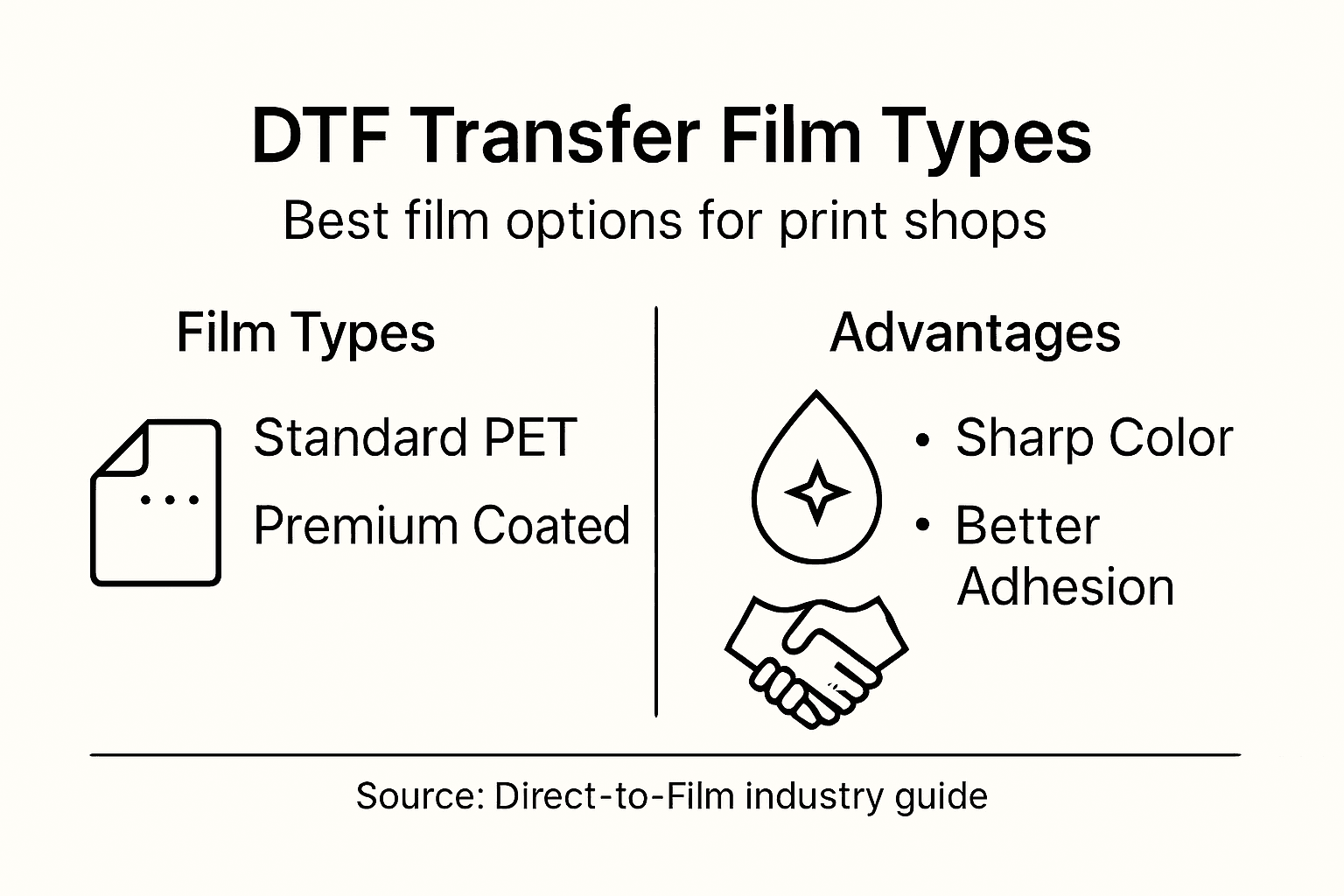
The most common category is standard polyester PET film with pigment ink coatings. These films come pre-coated to accept CMYK pigment inks and work with thermoplastic polyurethane adhesive powders. Standard films work well for general-purpose printing on cotton, polyester blends, and synthetics. However, transfer films differ in their coating formulations depending on intended textile substrate and printer compatibility. Some films are engineered specifically for cotton with more aggressive adhesion properties, while others prioritize flexibility for stretch fabrics like lycra blends. The coating thickness and tackiness level vary by manufacturer, affecting how powder adheres and how smoothly the transfer peels from the backing.
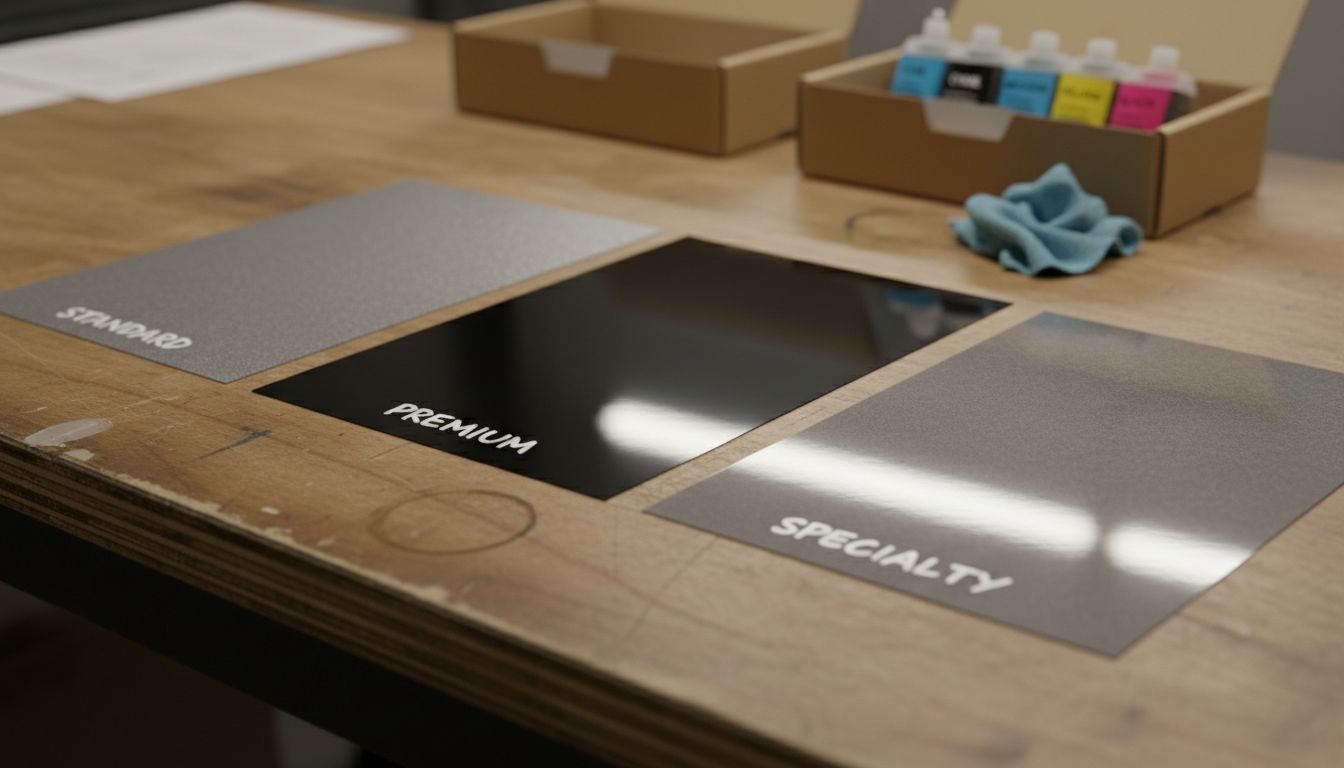
Premium or enhanced films represent the next tier. These feature specialized coatings that improve ink transfer efficiency, reduce ink consumption, and enhance color vibrancy. They typically cost more per roll but deliver superior detail reproduction for photorealistic designs and fine linework. Premium films also tend to have better storage stability and longer shelf lives. Roll-to-roll industrial films exist for high-volume shops running continuous production. These come in larger diameter rolls optimized for automated systems rather than sheet-fed printers. Film choice impacts transfer durability, detail, and flexibility on different textile materials, so matching your film type to your intended garment type matters significantly. Some films work better on natural fibers, while others excel on synthetics.
There are also specialty films designed for specific applications. Low-temperature films require less heat during pressing, beneficial for delicate fabrics or heat-sensitive materials. Clear-base films exist for lighter garments where you want the design to show without excess white ink, though they require more precise color management. Some newer films incorporate enhanced washability treatments, meaning they bond more aggressively to fiber molecules for longer-lasting prints. Your supplier and printer brand often determine which film options are readily available to you, so factor compatibility into your decision-making process.
Here’s a quick comparison of the main DTF transfer film types and their unique business impacts:
| Film Type | Best For | Key Advantage | Business Impact |
|---|---|---|---|
| Standard PET | Everyday garments | Reliable adhesion on textiles | Economical for bulk orders |
| Premium/Enhanced | High-detail designs | Superior color, longer shelf life | Better quality, higher margins |
| Specialty Films | Delicate or unique fabrics | Lower temp or unique finishes | Expands service range for clients |
Pro tip: Start by ordering sample packs from your supplier featuring their standard, premium, and specialty film options, then run test prints on your target garment types to determine which film delivers the best results for your specific customer base and production workflow.
How the DTF Transfer Film Process Works
Understanding the DTF process helps you troubleshoot problems, set realistic turnaround times, and explain quality variations to customers. The workflow involves several distinct stages, each requiring precision to avoid costly mistakes. From design upload to final garment, you’re orchestrating a multi-step chemical and thermal process.
The process starts with your design file. Unlike screen printing where artwork gets separated by hand, DTF lets you upload artwork directly to your printer software. The printer automatically mirrors your image because it prints onto film that will eventually transfer face-down onto the garment. Your design gets separated into CMYK color channels plus a dedicated white ink layer. That white ink is crucial on dark garments—it provides the base opacity that lets your colors pop without requiring any fabric pre-treatment. You send the mirrored file to your DTF printer, which deposits the ink onto your coated transfer film in multiple passes to build up color saturation and detail.
Here’s where the powder comes in. While the ink is still wet and tacky on the film, a thermoplastic polyurethane adhesive powder gets applied across the entire design area. This powder adheres only to the wet ink, not the bare film. Then heat activates the powder, fusing it to the ink layer and creating a cohesive transfer unit that can be stored or immediately used. The film is then pressed onto the garment using a heat press, melting the powder to bond everything to the fabric fibers. The heat and pressure activate the thermoplastic properties, causing the powder to flow and penetrate slightly into the fabric’s surface. After cooling completely, you simply peel back the carrier film, and the design stays bonded to your garment.
Timing and temperature matter enormously throughout this process. Your printer settings, powder application method, curing oven temperature, heat press temperature, and press duration all influence final quality. Undercoat the powder and your prints will wash out in a few cycles. Overheat during pressing and flexible fabrics lose their stretch, or designs crack. Get the timing right and you produce prints with excellent wash durability, vibrant colors, and soft hand feel. This is why DTF appeals to small shops—you can test variations quickly without the setup costs of screen printing, refining your process until you nail consistent results.
Pro tip: Establish baseline settings for your specific equipment and film type by running a test series using temperature strips and timing markers, then document those settings for each garment type you regularly produce to eliminate guesswork and reduce reprints.
Essential Applications in Apparel Decoration
DTF transfer film has carved out a specific niche in the apparel decoration market, and understanding where it excels helps you position your services correctly and attract the right customers. While screen printing dominates high-volume commodity orders, DTF fills the gap for smaller runs, complex designs, and niche markets where traditional methods become economically impractical.
Custom workwear and corporate apparel represent a massive DTF application. Companies order branded uniforms, safety gear, and branded merchandise in quantities ranging from 10 to 500 pieces. DTF handles these runs beautifully because you incur no screen setup fees or minimum order requirements. A client can order 25 embroidered polo shirts with company logos in multiple colors, then order 50 more with different designs next month without penalty. Sportswear and athletic apparel also benefit enormously from DTF. The process works on polyester, nylon, and performance blends without pre-treatment, making it ideal for moisture-wicking fabrics used in gym wear, team uniforms, and outdoor gear. Fine gradients in digitally printed designs bring photorealistic imagery to athletic wear that screen printing cannot achieve economically.
Promotional merchandise and event apparel represent another sweet spot. Concert t-shirts, festival merchandise, limited-edition releases, and event-specific apparel all move through DTF workflows. DTF printing enables high detail and multi-color prints on diverse textiles for small to medium production runs, making it perfect for bands, event organizers, and retailers wanting custom merchandise without massive inventory risk. You can print 100 concert shirts one week, then pivot entirely to 50 custom soccer team jerseys the next week. No screen reclamation, no waiting for setup—just upload the design and produce.
Fashion brands and indie designers increasingly rely on DTF for small-batch collections. Print-on-demand business models work beautifully with DTF because you can produce transfers ahead of time and store them, then fulfill orders rapidly. A designer launches a collection of 20 unique designs in quantities of 5 to 20 pieces each—DTF handles this elegantly. The ability to store pre-made transfers also adds operational flexibility. You can batch print transfers during slow periods, then complete garment fulfillment quickly when orders arrive. This separation of printing and pressing stages lets you optimize production scheduling and manage cash flow more effectively than methods requiring immediate finishing.
Pro tip: Build a simple spreadsheet tracking which customers order repeat designs or similar designs frequently, then proactively offer bulk transfer discounts or suggest storing pre-made transfers for their next order to build loyalty and increase order volume.
Mistakes to Avoid When Using Transfer Film
DTF printing looks straightforward until something goes wrong, then you’re left staring at a pile of ruined garments and wondering where the process broke down. Most failures stem from a handful of preventable mistakes. Learning what trips up other shops saves you thousands in wasted materials and customer refunds.
Environment control is foundational and easily overlooked. Your production space should maintain humidity between 40 and 50 percent. Too dry and static electricity causes powder to cling inconsistently, creating bare spots or uneven coverage. Too humid and the film absorbs moisture, becoming tacky and difficult to handle. The powder itself absorbs moisture from the air, clumping and applying unevenly. Temperature swings matter too. Store your film, powder, and pre-made transfers in climate controlled areas. A shop where the AC runs full blast during the day then shuts off at night creates expansion and contraction cycles that compromise adhesion. Improper humidity control causes stickiness and transfer defects, so invest in a basic humidifier or dehumidifier to maintain consistent conditions.
Powder application and curing represent the second major problem area. Underapplying powder means insufficient adhesive for the heat press stage, resulting in transfers that peel away after one or two washes. Overapplying creates a thick, stiff transfer that cracks easily and feels plasticky against skin. Your powder application method whether using a powder dispenser, shaker, or tumbler must be consistent. Equally critical is curing temperature and duration. Incorrect curing times or temperatures lead to poor adhesion, making transfers either sticky or insufficiently bonded. Too short and the thermoplastic powder doesn’t fully fuse to the ink. Too long and you risk degrading the film substrate or powder itself. Most shops establish baseline settings then never adjust them, failing to account for seasonal humidity changes or equipment drift.
Heat press mistakes create visible defects immediately. Wrong temperature settings damage the film or scorch fabric. Insufficient pressure prevents the powder from flowing into fabric fibers, resulting in transfers that sit on top of the garment and crack with movement. Too much pressure can compress delicate fabrics permanently or cause ink bleeding. Pressing too long causes ghosting or powder transfer to the upper platen. Improper heat press settings damage the film or fabric, so use temperature strips and calibrated heat press gauges to verify settings before production runs. Also avoid the temptation to skip cooling time. Peeling the film while transfers are still warm causes transfers to lift away partially from the garment.
For fast reference, here are core process variables and their effect on DTF transfer quality:
| Variable | What It Controls | Error Impact | How to Optimize |
|---|---|---|---|
| Humidity Level | Film/powder consistency | Adhesion defects | Climate controls |
| Powder Amount | Bonding strength | Cracking, peeling | Calibrated dispenser |
| Heat Press Temp | Design fusion | Scorch/cracking | Use temp strips |
| Press Duration | Adhesive melting | Poor bonding | Time markers/testing |
Pro tip: Create a laminated troubleshooting card documenting your exact settings for each fabric type with photos of acceptable prints, then hang it at your heat press station so your entire team follows consistent parameters and catches drift before reprinting entire batches.
Elevate Your Prints with Premium Transfer Film Solutions
Understanding what transfer film is and how it shapes your DTF printing process is just the first step towards creating vibrant, durable, and intricate designs. If you are looking for reliable transfer films that guarantee excellent adhesion, color vibrancy, and wash resistance, DTF transfers, custom apparel printing, heat transfers, t-shirt printing, high-quality prints. – Transfer Kingz offers professional-grade materials designed to meet your exact production needs. Avoid common pitfalls like uneven powder application or improper heat pressing by choosing transfer films and powders specially formulated for consistent, high-quality results.
Don’t wait until print errors or fabric damage affect your reputation. Take control of your apparel decoration workflow today by ordering from Transfer Kingz. Whether you are a hobbyist, a small print shop, or a large production facility, our platform supports your success with quick turnaround times and no minimum order requirements. Explore our full range of products from the home page – Transfer Kingz and learn how you can create flawless, professional DTF prints every time.
Frequently Asked Questions
What is transfer film used for in DTF printing?
Transfer film is the substrate that holds your design before it gets printed on a garment in Direct-to-Film (DTF) printing. It carries the design through various stages, including printing, powder application, and heat pressing.
How does the DTF transfer film process work?
In the DTF process, your design is printed onto coated PET film using CMYK pigment inks. Afterward, a thermoplastic polyurethane adhesive powder is applied, which bonds to the design when heat pressed onto the fabric, resulting in a durable transfer.
What types of garments can I use transfer film on?
Transfer film is versatile and can be used on a variety of materials, including cotton, polyester, cotton blends, and nylon, without needing pre-treatment.
What should be considered when choosing transfer film?
When selecting transfer film, it’s important to consider the type of garment you’ll be printing on, as different films are optimized for specific fabrics. Additionally, choose films that are designed for DTF applications to ensure proper adhesion and durability.
0 comments