

Finding the right method for producing standout custom apparel can feel daunting when so many options compete for your attention. DTF transfer technology has rapidly disrupted the apparel world, allowing creators to produce vibrant, professional-quality designs on a wide range of textiles with minimal setup and equipment. As misconceptions often cloud the real benefits of this process, understanding the facts behind DTF transfers will help you confidently embrace exceptional flexibility and elevate your business in a fast-changing market.
Table of Contents
- Defining DTF Transfers And Common Misconceptions
- Major DTF Technology Types And Key Advances
- Drivers Of Growth In Custom Apparel
- Sustainability Practices And Eco-Friendly Solutions
- Business Models, Costs, And Industry Challenges
- Automation, AI, And Future Outlook For DTF
Key Takeaways
| Point | Details |
|---|---|
| DTF Printing Advantages | DTF printing offers outstanding color vibrancy and versatility, allowing for high-quality designs on various fabric types without extensive setup. |
| Growth Drivers for Custom Apparel | The demand for personalized products and technological advancements are reshaping the custom apparel landscape, presenting opportunities for small businesses. |
| Sustainability Practices | Adopting eco-friendly production methods and sustainable materials is crucial for modern apparel businesses to meet consumer expectations. |
| Future Outlook with AI | The integration of AI and automation is set to enhance DTF operations, improving efficiency, precision, and responsiveness in custom apparel production. |
Defining DTF Transfers and Common Misconceptions
Direct-to-film (DTF) printing represents an innovative textile decoration method that has rapidly transformed custom apparel production. Unlike traditional printing techniques, DTF involves printing designs onto a specialized transfer film before applying them to fabric through heat pressing.
The core mechanics of DTF printing are relatively straightforward. Designers first create digital artwork, which is then printed onto a specialized transfer film using high-quality, vibrant inks. Textile printing technology allows intricate designs to be transferred seamlessly across various fabric types without requiring complex pre-treatment processes.
Common misconceptions about DTF transfers often stem from misunderstanding its capabilities and technical process. Here are some key points to clarify:
- DTF is NOT limited to specific fabric types
- The process is more versatile than traditional screen printing
- High-quality transfers can be produced with minimal equipment
- Color vibrancy remains consistent across different textiles
Many small business owners and independent designers initially believe DTF printing is overly complex or expensive. However, the reality is quite different. DTF transfers offer exceptional flexibility for custom apparel production, enabling creators to produce small batches or individual designs with professional-grade results.
The technical advantages of DTF transfers include:
- Superior color reproduction
- Ability to print on dark and light fabrics
- Minimal setup costs compared to traditional methods
- Quick turnaround times for custom orders
DTF printing democratizes custom apparel production, making professional-quality designs accessible to creators of all scales.
Pro tip: Start with small test batches to understand DTF transfer techniques and optimize your printing workflow before scaling up production.
Major DTF Technology Types and Key Advances
Direct-to-film (DTF) printing technology has rapidly evolved, introducing sophisticated methods that transform custom apparel production. Textile printing innovations have pushed the boundaries of what’s possible in digital garment decoration, creating more efficient and versatile production processes.
The core DTF technology primarily involves two fundamental approaches: roll-to-roll systems and flatbed transfer methods. Roll-to-roll systems represent the most advanced technological implementation, featuring integrated printers, powder applicators, and curing units that streamline the entire transfer production workflow.
Here’s how major DTF printing methods compare for apparel production:
| Method | Workflow Integration | Production Volume | Best Use Case |
|---|---|---|---|
| Roll-to-roll System | Fully automated, continuous | High-volume, industrial | Large-scale batch runs |
| Flatbed Transfer | Manual or semi-automated | Low to mid-volume | Small custom or prototyping |
Key technological components of modern DTF systems include:
- High-resolution digital printers capable of precise ink laydown
- Specialized polyester films designed for transfer stability
- Advanced thermoplastic polyurethane powder application systems
- Precise heat and curing mechanisms for transfer durability
The printing process typically follows a complex sequence of technical steps:
- Digital artwork preparation
- CMYK ink layer printing
- White ink underlayer application
- Thermoplastic powder coating
- Heat transfer and curing
Technological advances have significantly reduced production costs and improved transfer quality, making custom apparel more accessible to small businesses and independent designers.
Modern DTF technology enables unprecedented design complexity and color reproduction across diverse textile surfaces.
Pro tip: Invest in calibration equipment and regularly maintain your DTF printer to ensure consistent transfer quality and minimize production waste.
Drivers of Growth in Custom Apparel
Custom apparel production is experiencing unprecedented transformation, driven by complex global market dynamics and technological innovations. Global supply chain shifts are fundamentally reshaping how businesses approach textile manufacturing and personalized clothing design.
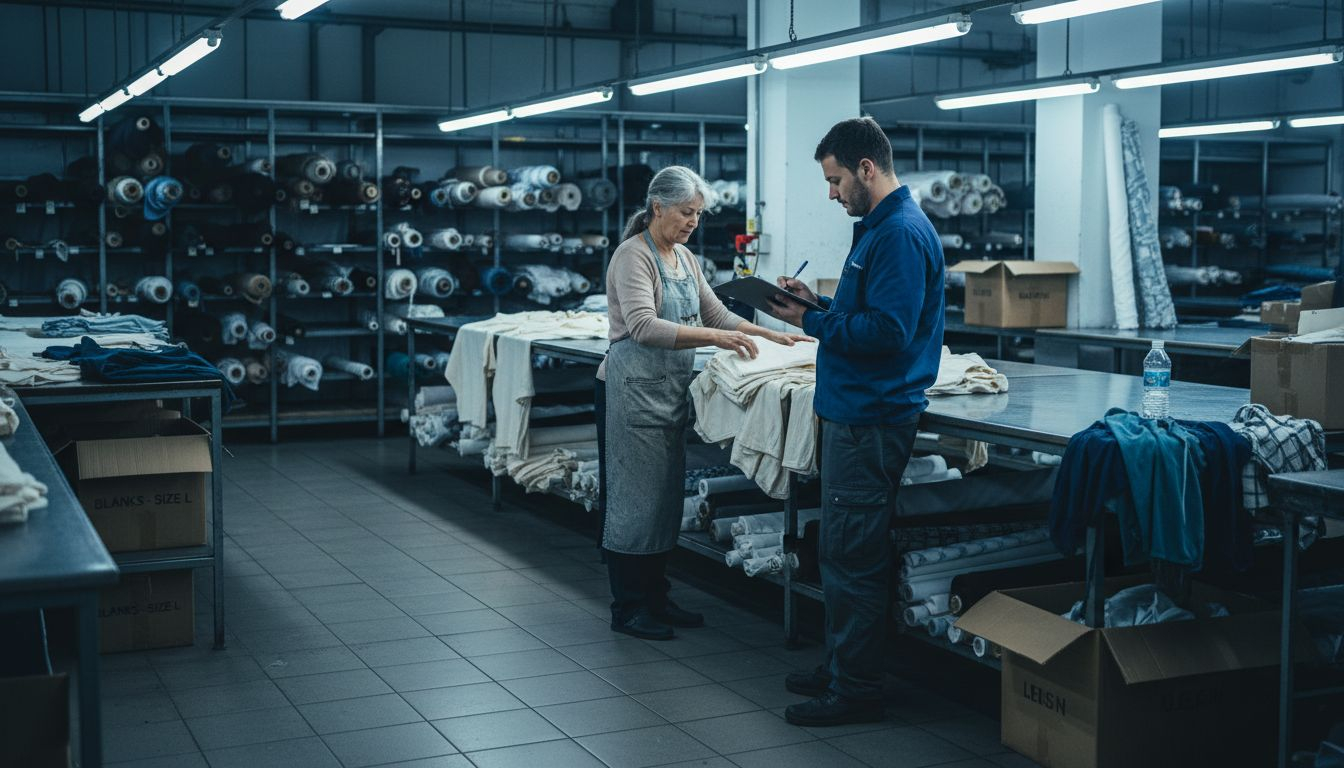
The primary drivers propelling custom apparel growth can be categorized into several interconnected dimensions. Technological advancements, changing consumer preferences, and economic restructuring are converging to create new opportunities for small and medium-sized apparel businesses.
Key growth drivers include:
- Rising demand for personalized product experiences
- Expansion of middle-income consumer segments
- Digital technology enabling faster design iterations
- Increased emphasis on sustainable and ethical production
- Reduced barriers to entry for small-scale manufacturers
Consumer expectations have dramatically shifted, with buyers now seeking unique, customizable products that reflect individual identity. This trend is particularly strong among younger demographics who value:
- Unique design experiences
- Rapid production turnaround
- Sustainable manufacturing practices
- Transparent supply chain processes
Technological innovations have been instrumental in democratizing custom apparel production, allowing smaller businesses to compete with traditional manufacturing models.
The future of custom apparel lies in flexibility, personalization, and technological integration.
Pro tip: Develop a flexible production model that can quickly adapt to changing consumer preferences and emerging design trends.
Sustainability Practices and Eco-Friendly Solutions
Sustainable manufacturing is transforming the DTF transfer industry, with technological innovations driving environmental responsibility. Digital sustainability strategies are revolutionizing how businesses approach eco-friendly production methods and reduce their environmental footprint.
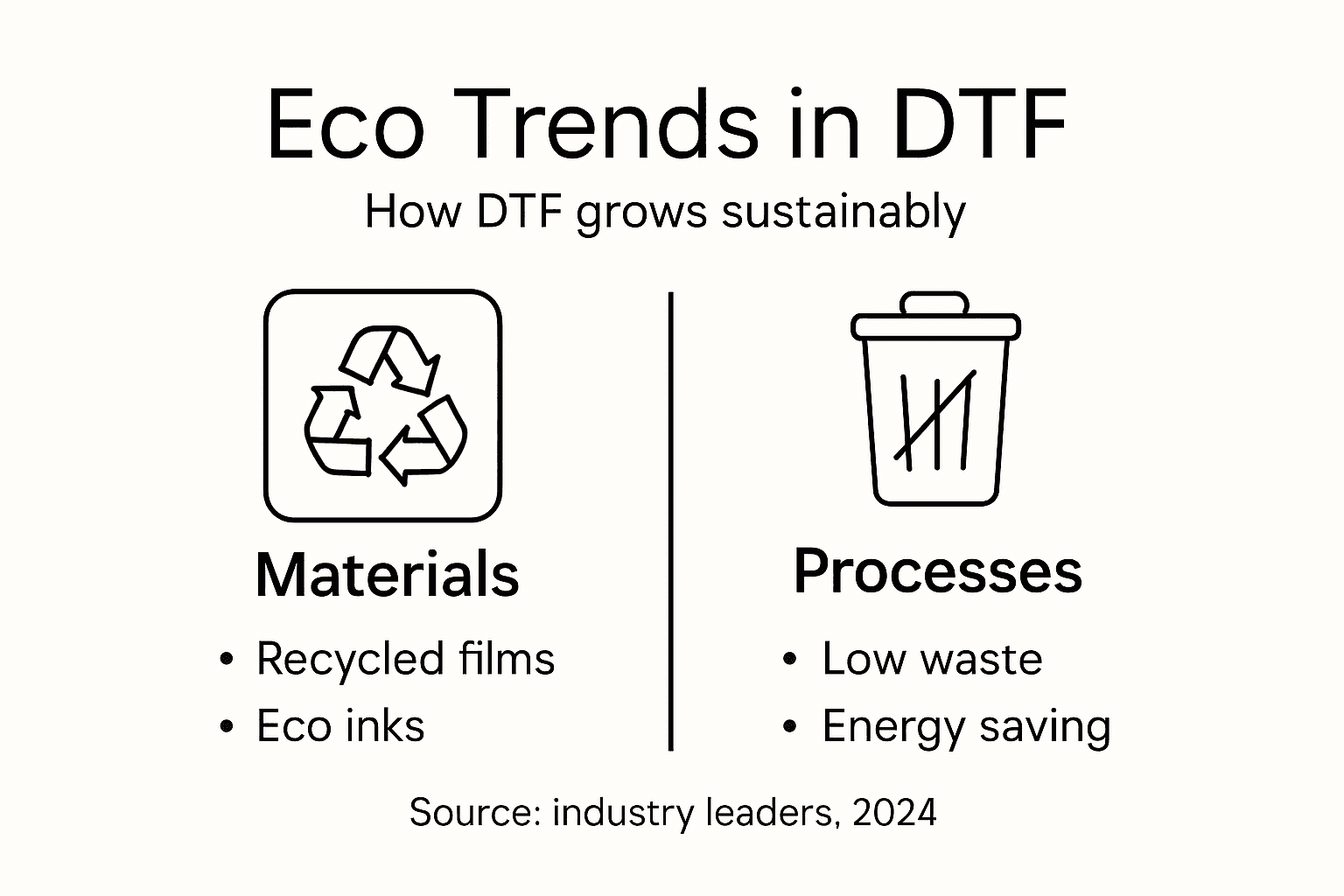
The apparel printing sector is experiencing a significant shift towards more environmentally conscious practices. This transformation involves integrating sustainable technologies, reducing waste, and implementing circular economy principles that minimize resource consumption and environmental impact.
Key sustainability practices for DTF transfer businesses include:
- Utilizing biodegradable and recyclable transfer films
- Implementing energy-efficient printing equipment
- Reducing chemical waste through precision printing technologies
- Adopting water-conservation printing methods
- Sourcing materials from environmentally responsible suppliers
Technological innovations are enabling more sustainable production processes through:
- Smart energy management systems
- Automated waste reduction technologies
- Eco-friendly ink and film development
- Carbon footprint tracking mechanisms
Environmental reporting has become increasingly sophisticated, with businesses now using advanced analytics to measure and communicate their sustainability efforts.
Sustainability is no longer optional - it’s a fundamental business imperative for modern apparel manufacturers.
Pro tip: Develop a comprehensive sustainability framework that integrates environmental metrics into your core business strategy and production workflows.
Business Models, Costs, and Industry Challenges
DTF transfer businesses are navigating a complex landscape of evolving market dynamics and economic challenges. International trade costs significantly impact the profitability and strategic planning of custom apparel production.
The industry encompasses diverse business models, each with unique cost structures and operational challenges. From small in-house print shops to large-scale contract manufacturing platforms, successful enterprises must develop adaptable strategies that balance technological investment, production efficiency, and market responsiveness.
Key business model variations include:
Consider these key cost and benefit differences among DTF business models:
| Business Model | Initial Cost Barrier | Scalability Potential | Market Flexibility |
|---|---|---|---|
| On-demand Print | Low | Moderate | Very high (custom orders) |
| Contract Manufacturing | High | Very high | Low (fixed contracts) |
| Direct-to-Consumer | Moderate | High | High (niche targeting) |
| Hybrid Model | High | Very high | Highest (diverse clients) |
- On-demand print services
- Contract manufacturing
- Direct-to-consumer custom apparel platforms
- Specialized design and transfer production
- Hybrid manufacturing and distribution models
Critical cost considerations for DTF transfer businesses involve:
- Equipment and technology investments
- Raw material procurement
- Labor and skill development
- Logistics and supply chain management
- Marketing and customer acquisition
Market competition remains intense, with businesses constantly seeking innovative approaches to differentiate themselves and manage operational expenses.
Successful DTF transfer businesses will prioritize workflow automation, strategic cost management, and customer-centric innovations.
Pro tip: Develop a flexible business model that allows rapid adaptation to market changes and technological advancements.
Automation, AI, and Future Outlook for DTF
Artificial intelligence is poised to revolutionize the DTF transfer industry, creating unprecedented opportunities for innovation and efficiency. AI transformation strategies are rapidly reshaping how businesses approach design, production, and customer engagement in custom apparel manufacturing.
The integration of AI and automation technologies will fundamentally transform operational workflows, enabling more intelligent and responsive production systems. These technological advances will empower DTF transfer businesses to achieve higher levels of precision, customization, and operational efficiency.
Key AI and automation capabilities include:
- Predictive equipment maintenance
- Autonomous quality control systems
- Real-time design optimization
- Intelligent workflow management
- Dynamic production scheduling
Emergent technological trends for DTF transfer businesses will focus on:
- Computer vision-based defect detection
- Machine learning design recommendation engines
- Automated color matching technologies
- Adaptive production line configurations
- Intelligent inventory management systems
Technological innovation represents the primary competitive differentiator for businesses seeking to remain relevant in the rapidly evolving custom apparel landscape.
The future of DTF transfer production lies in seamlessly combining human creativity with machine intelligence.
Pro tip: Invest in continuous training and technological infrastructure that supports AI integration and workflow automation.
Embrace the Future of Custom Apparel with High-Quality DTF Transfers
The rapid evolution of DTF transfer technology brings exciting opportunities alongside challenges like maintaining vibrant color reproduction and managing efficient, scalable production. If you want to confidently navigate these shifts and meet growing demands for personalized, durable designs, choosing reliable printing solutions is key. Transfer Kingz offers premium DTF transfers designed for versatility and quick turnaround times that empower small businesses and large production shops alike.
Explore our range of DTF transfers, custom apparel printing, heat transfers, t-shirt printing, high-quality prints that leverage advanced materials and inks to keep you ahead in the industry. Take control of your workflow with tools that support creativity without compromise. Start your journey to streamlined, eco-friendly, and cost-effective production today at Transfer Kingz. Unlock your full potential and order now to experience top-tier quality with no minimums required.
Frequently Asked Questions
What is DTF printing, and how does it work?
DTF printing, or Direct-to-Film printing, is a technique in which designs are printed onto a specialized transfer film before being applied to fabric using heat. This method allows for high-quality, vibrant designs on a variety of textiles without complex pre-treatment processes.
How does DTF compare to traditional screen printing?
DTF is more versatile than traditional screen printing because it can produce high-quality transfers on both light and dark fabrics, requires minimal setup costs, and allows for intricate designs. Additionally, DTF is better suited for small batches and individual designs.
What are the sustainability practices in the DTF transfer industry?
Sustainability practices in the DTF transfer industry include using biodegradable and recyclable transfer films, adopting energy-efficient equipment, implementing waste reduction technologies, and sourcing materials responsibly to minimize the overall environmental impact.
How can Artificial Intelligence (AI) transform the DTF transfer industry?
AI can revolutionize the DTF transfer industry by enhancing operational workflows, providing predictive maintenance for equipment, optimizing design processes, and automating quality control. These advancements lead to increased efficiency, higher precision, and more customization options in the production of custom apparel.
0 comments