

Choosing between inkjet and DTF printing for your custom apparel business can feel overwhelming. Both methods promise vibrant prints and professional results, but they work differently and excel in distinct scenarios. Understanding how each technology operates, what it costs, and which fabrics it handles best will help you make confident decisions that align with your production goals. This guide breaks down the key differences, compares durability and cost structures, and shows you exactly when to use each printing method for maximum quality and profitability in your clothing business.
Table of Contents
- Understanding Inkjet Printing For Apparel
- How DTF Printing Works And Its Benefits For Small Apparel Businesses
- Comparing Inkjet And DTF Printing: Cost, Quality, Durability, And Usability
- Choosing The Right Printing Method For Your Apparel Business
- Explore Premium DTF Printing Solutions At Transfer Kingz
- What Is The Main Difference Between Inkjet And DTF Printing?
- Which Printing Method Is More Cost Effective For Small Batches?
- Can Inkjet Printing Be Used On All Fabric Types?
- How Durable Are Prints From DTF Compared To Inkjet?
Key takeaways
| Point | Details |
|---|---|
| Inkjet excels in detail | Delivers photorealistic gradients but has limited fabric compatibility and wash durability. |
| DTF offers versatility | Works on cotton, polyester, and blends with superior wash resistance over 50 cycles. |
| Cost favors DTF for small runs | DTF has 40% lower setup costs, making it more economical for limited production batches. |
| Fabric type matters | Inkjet suits natural fibers while DTF handles synthetics and blends with consistent results. |
| Durability differs significantly | DTF prints withstand frequent washing far better than typical inkjet applications. |
Understanding inkjet printing for apparel
Inkjet printing applies tiny droplets of ink directly onto fabric surfaces, creating designs through precise nozzle control. This technology mirrors desktop printers but uses specialized textile inks formulated for fabric absorption. The process excels at producing photorealistic images with smooth color transitions, making it popular for custom photography prints and complex gradients that require fine detail.
Inkjet printing is widely used for intricate designs due to high color detail and gradient capability. The method works best on pretreated cotton and other natural fibers that absorb ink effectively. Polyester and synthetic blends often reject standard inkjet inks, limiting your fabric compatibility for apparel printing options significantly.
Ink penetration depth affects how well designs survive repeated washing. Unlike methods that bond to fabric surfaces, inkjet inks soak into fibers, which can lead to faster fading under harsh detergents or high heat drying. This makes inkjet less suitable for garments that customers will wash frequently or expose to intense wear conditions.
Key advantages of inkjet printing include:
- Exceptional color accuracy for photographic reproductions
- No minimum order requirements for most setups
- Ability to print variable data designs economically
- Lower equipment costs compared to industrial screen printing
Pro Tip: Always test inkjet prints on your specific fabric blend before committing to large orders, as ink absorption varies dramatically between materials and can affect both color vibrancy and durability outcomes.
The technology continues evolving within apparel printing industry trends, with manufacturers developing improved inks and pretreatment solutions. However, fundamental limitations around fabric compatibility and wash resistance remain challenges for businesses prioritizing longevity over initial print quality.
How DTF printing works and its benefits for small apparel businesses
Direct to Film (DTF) printing creates designs on specialized transfer film rather than printing directly on fabric. The process involves printing your artwork onto the film, applying adhesive powder, curing the powder with heat, and then transferring the complete design to garments using a heat press. This indirect method opens possibilities that direct printing cannot match.
DTF printing offers 50+ washes durability and about 40% lower setup costs for apparel printing. The film transfer bonds mechanically to fabric surfaces rather than relying on ink absorption, creating a durable layer that resists cracking, peeling, and color loss through dozens of wash cycles. This makes DTF ideal for commercial apparel that customers expect to last.
The technology works equally well on cotton, polyester, cotton blends, and even challenging materials like nylon or treated performance fabrics. You gain fabric versatility without changing inks, adjusting temperatures, or modifying your workflow. Small businesses benefit from this flexibility when serving diverse customer requests without maintaining multiple printing systems.
Follow these steps for successful DTF wash durability and cost benefits:
- Print your design on DTF film using compatible CMYK white inks
- Apply adhesive powder evenly across wet ink surfaces
- Cure the powder in a conveyor oven or heat press at specified temperatures
- Store finished transfers flat until ready for application
- Press transfers onto garments following manufacturer time and temperature guidelines
Pro Tip: Order pre-made DTF transfers from specialized suppliers to eliminate equipment investments entirely, allowing you to test the method with minimal financial risk before scaling production.
Cost advantages become apparent when comparing setup requirements. DTF eliminates screen creation, color separation, and lengthy setup processes that make small runs expensive with traditional methods. You can profitably produce single custom shirts or small batches without the per unit costs skyrocketing. This economic model suits businesses serving personalized orders or testing new designs before committing to inventory.
The DTF transfer setup guide shows how quickly you can integrate this technology into existing operations. Most businesses master the DTF print workflow within days, making it accessible even for operators new to custom printing.
| DTF Advantage | Business Impact |
|---|---|
| Multi fabric compatibility | Serve broader customer base without equipment changes |
| Low minimum orders | Accept profitable single unit custom requests |
| Vibrant color reproduction | Match brand colors accurately across product lines |
| Simplified workflow | Reduce training time and operational complexity |
Comparing inkjet and DTF printing: cost, quality, durability, and usability
Both inkjet and DTF printing have unique advantages depending on design complexity, fabric choice, and production scale. Understanding these differences helps you match technology to specific projects rather than forcing one method to handle all situations. Each approach delivers different value propositions that align with distinct business models and customer expectations.
Print quality differences become apparent when examining fine details and color gradients. Inkjet produces smoother photographic transitions without visible dot patterns, making it superior for reproducing complex images with subtle shading. DTF creates slightly thicker prints with a perceptible hand feel, though modern films minimize this texture considerably compared to earlier transfer technologies.
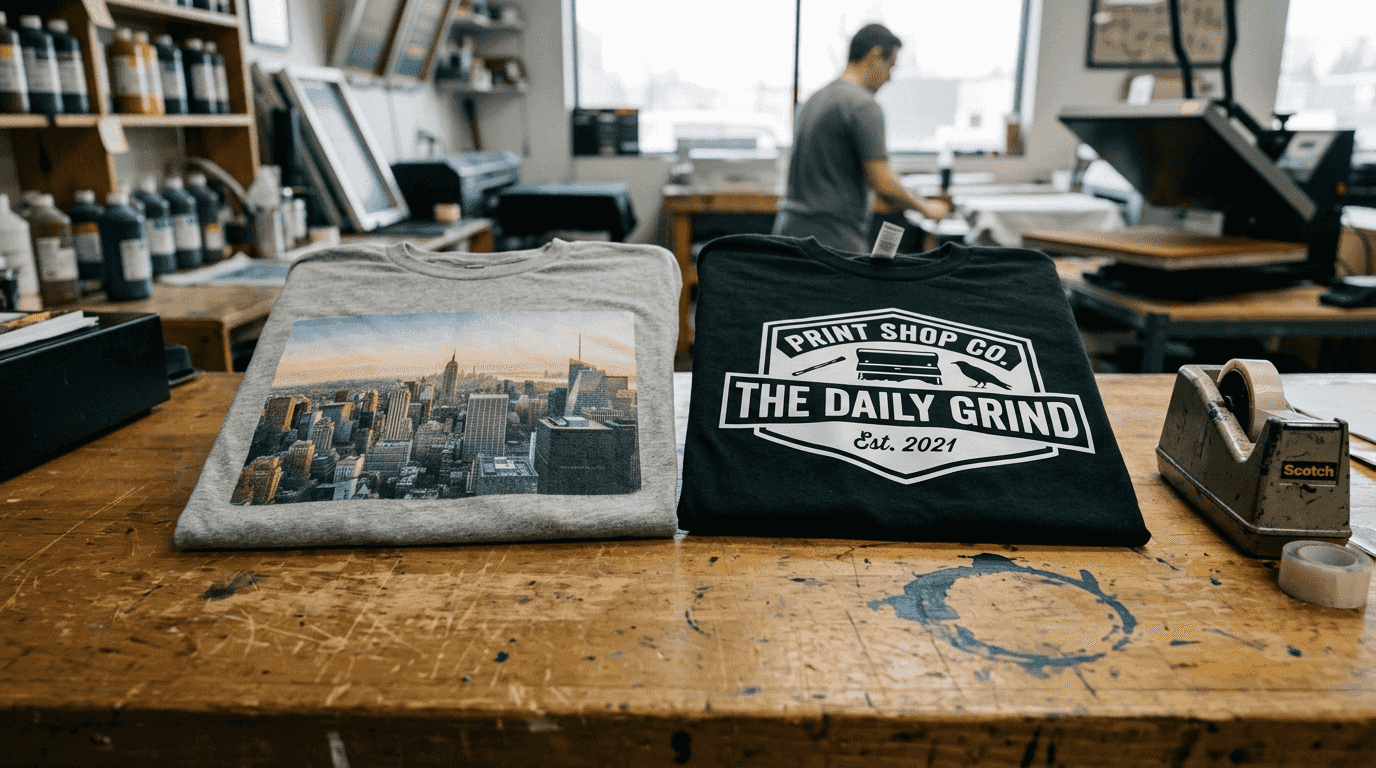
Fabric compatibility creates the most significant practical distinction. Inkjet requires porous natural fibers that absorb liquid inks, severely limiting material options. DTF bonds to virtually any fabric through adhesive chemistry, expanding your product catalog to include performance wear, outerwear, and specialty textiles that inkjet cannot accommodate.
Choosing printing methods affects project cost, quality, and customer satisfaction. Cost structures differ fundamentally between technologies. Inkjet demands pretreated fabrics, specialized inks, and often post treatment steps that add per garment expenses. DTF transfers cost more per square inch than ink droplets but eliminate pretreatment, reduce waste, and allow precise material usage without overruns.
Key comparison factors include:
- Inkjet delivers unmatched photographic detail but fades faster under washing
- DTF provides superior durability and fabric range with slight texture tradeoff
- Setup costs favor DTF for orders under 50 units due to eliminated screens
- Color matching proves easier with DTF due to consistent film base
Production speed varies based on volume and equipment. Inkjet printers produce finished garments in single passes but require drying time and heat setting. DTF separates printing from application, allowing you to build transfer inventory during slow periods and press garments rapidly when orders arrive. This workflow flexibility helps balance production capacity.
Durability testing reveals substantial performance gaps. Standard inkjet prints begin showing wear after 15 to 20 wash cycles, with noticeable fading and cracking appearing on high stress areas. DTF transfers maintain color integrity and structural stability beyond 50 washes when applied correctly, making them suitable for retail products customers expect to last.
| Comparison Factor | Inkjet Printing | DTF Printing |
|---|---|---|
| Print detail | Excellent photographic quality | Very good with slight texture |
| Fabric compatibility | Limited to natural fibers | Works on all fabric types |
| Wash durability | 15 to 20 cycles typical | 50+ cycles documented |
| Setup cost per design | Moderate for direct printing | 40% lower for small batches |
| Production flexibility | Single pass but requires drying | Separate print and press steps |
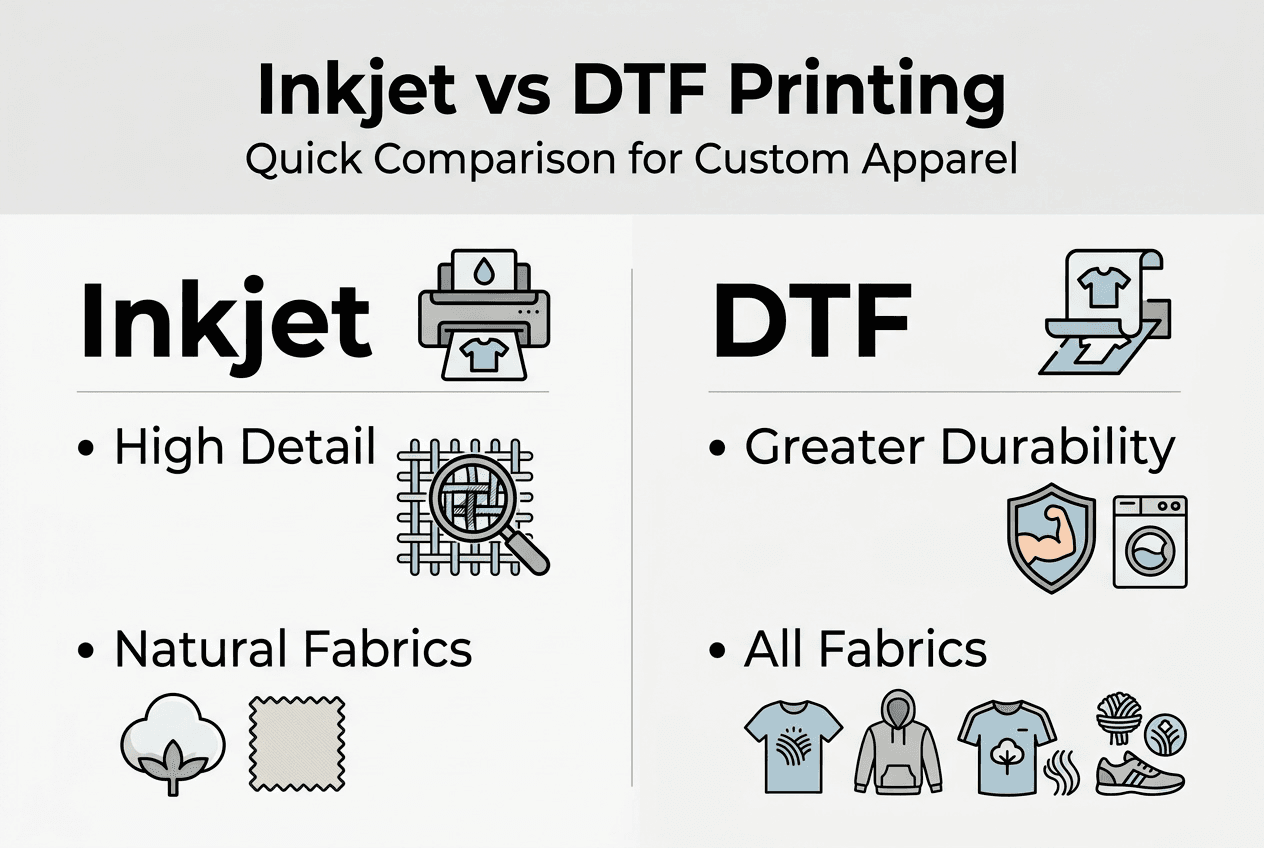
Consider your typical order profile when evaluating methods. Businesses focused on photographic reproductions, art prints, or designs requiring absolute color fidelity may accept inkjet limitations for superior visual results. Companies prioritizing durability, fabric variety, or small batch economics will find DTF vs screen printing comparison reveals advantages that outweigh any texture concerns.
Choosing the right printing method for your apparel business
Evaluate design detail versus durability needs as your primary decision factor. Projects requiring photorealistic reproduction with subtle gradients lean toward inkjet, while designs prioritizing longevity and wash resistance favor DTF. Match technology to customer expectations rather than forcing a single method across all applications.
Fabric types and color vibrancy requirements shape your options significantly. Natural fiber garments allow either method, but synthetic blends and performance fabrics demand DTF for reliable results. Dark garments need white ink underlays that DTF handles efficiently, whereas inkjet struggles without extensive pretreatment on colored fabrics.
Assess production volume and budget limits realistically. Understanding workflows and material requirements helps optimize printing choices and business efficiency. Calculate total costs including materials, labor, equipment, and waste rather than focusing solely on per print expenses. DTF often proves more economical when factoring setup time and material waste on small orders.
Follow this decision framework:
- Identify your primary fabric types and determine compatibility with each method
- Calculate average order sizes to understand setup cost impact
- Define durability requirements based on garment use cases
- Evaluate design complexity and color accuracy needs
- Test sample prints using both methods before committing to equipment purchases
Workflow complexity and equipment availability affect operational efficiency. DTF separates design creation from garment decoration, allowing you to outsource transfer production while maintaining in house pressing capabilities. This hybrid approach minimizes capital investment while preserving control over final quality and turnaround times.
Pro Tip: Start with purchased DTF transfers to test market demand before investing in printing equipment, then scale into full production once you validate profitable applications and develop technical expertise.
Testing prints and iterating before scaling prevents costly mistakes. Order sample transfers in various sizes and colors, apply them to your actual garment inventory, and wash test them through multiple cycles. Document results including application temperatures, pressure settings, and peel techniques that produce optimal adhesion and appearance.
Common troubleshooting scenarios appear in the DTF troubleshooting guide, helping you resolve issues quickly. Learning DTF printing terminology accelerates your ability to communicate with suppliers and diagnose problems. Reference the DTF glossary when encountering unfamiliar terms in technical specifications or application instructions.
Consider equipment availability and technical support in your area. DTF technology continues gaining adoption, making consumables and replacement parts increasingly accessible. Inkjet systems require ongoing maintenance and specific ink formulations that may prove difficult to source depending on your location and supplier relationships.
Explore premium DTF printing solutions at Transfer Kingz
Transfer Kingz specializes in high quality DTF transfers that deliver the durability and versatility your apparel business demands. Our UV DTF Permastickers products combine vibrant colors with exceptional wash resistance, perfect for custom merchandise that customers will love and wear repeatedly.
We handle intricate designs economically, eliminating minimum order requirements that limit your creative freedom. Whether you need single custom transfers or production runs, our detailed digital transfer film reproduces complex artwork with precision. Explore our product pages to discover how premium DTF solutions can elevate your printing capabilities and expand your market opportunities without major equipment investments.
What is the main difference between inkjet and DTF printing?
Inkjet printing applies liquid ink droplets directly onto fabric surfaces, relying on material absorption to create permanent designs. This direct application method works well for natural fibers but limits fabric compatibility. DTF printing creates designs on specialized film first, then transfers the complete image to garments using heat and pressure. This indirect process bonds designs mechanically to fabric surfaces rather than depending on ink absorption, allowing consistent results across diverse materials including synthetics and blends.
Which printing method is more cost effective for small batches?
DTF generally offers lower setup costs for small to medium orders because it eliminates screen creation and color separation processes. DTF printing has about 40% lower setup costs, making it cheaper for small runs. Inkjet can have higher costs per print due to pretreatment requirements, specialized inks, and material waste on partial designs. The cost advantage becomes more pronounced as order sizes decrease, making DTF ideal for custom one off projects and testing new designs before committing to larger inventory.
Can inkjet printing be used on all fabric types?
Inkjet printing works best on lighter and natural fabrics, with some limitations on synthetics. Cotton and cotton blends accept inkjet inks readily when properly pretreated, producing vibrant colors and acceptable durability. Synthetic and blended fabrics often require alternative methods like DTF because they repel water based inks and prevent proper bonding. Polyester, nylon, and performance fabrics typically produce poor results with standard inkjet technology, showing weak color saturation and minimal wash resistance.
How durable are prints from DTF compared to inkjet?
DTF prints can withstand 50+ washes, surpassing typical inkjet durability. The mechanical bonding process creates a flexible yet resilient layer that resists cracking, peeling, and color loss through repeated laundering cycles. Inkjet prints may fade or degrade more quickly under frequent washing, typically showing noticeable wear after 15 to 20 cycles. This durability difference makes DTF preferable for retail garments and commercial applications where longevity directly affects customer satisfaction and brand reputation.
Recommended
- High-Quality DTF Ink for Stunning Transfers: Achieve Vibrant, Durable – Transfer Kingz
- How DTF Printing Works: Boost Custom Apparel Quality – Transfer Kingz
- Top Picks for the Best DTF Transfer Ink in 2023 – Transfer Kingz
- What Is DTF Printing: Transforming Custom Apparel – Transfer Kingz
- Hochwertige Drucktechniken für Hundekleidung: Guide 2026 – Pfotenpoesie
- Streetwear in 2026: Sustainable Fabrics That Matter – MEXESS
0 comments