

Over 60 percent of independent designers now consider DTF printing a core technology for growing their brands, rivaling even established American apparel giants in versatility and print quality. As small clothing businesses compete in a fast-changing market, understanding how DTF can expand creative options and operate more efficiently matters more than ever. This article separates fact from fiction, uncovering how cutting-edge DTF innovations help brands produce custom apparel that stands out globally.
Table of Contents
- Defining Dtf Printing And Common Myths
- Latest Technological Advancements In Dtf
- Eco-Friendly Materials And Sustainability Trends
- Expanded Fabric And Substrate Compatibility
- Automation, Ai, And Workflow Integration
- Risks, Costs, And Common Pitfalls To Avoid
Key Takeaways
| Point | Details |
|---|---|
| Versatile Fabric Compatibility | DTF printing can be used on a wide variety of fabrics including cotton, polyester, and even leather, allowing for intricate designs without fabric pre-treatment. |
| Lower Initial Investment | The cost of DTF printing equipment has decreased, making it accessible for small businesses with the ability to produce high-quality custom apparel in small batches. |
| Sustainability Practices | Advances in eco-friendly materials and operational strategies in DTF printing significantly reduce environmental impact while maintaining high-quality outputs. |
| AI and Workflow Efficiency | The integration of AI and automation in DTF printing processes enhances efficiency and precision, streamlining production for independent designers and small businesses. |
Defining DTF Printing and Common Myths
Direct-to-film (DTF) printing represents a groundbreaking textile decoration technique that enables designers and small business owners to create vibrant, detailed graphics on virtually any fabric surface. Unlike traditional printing methods, DTF involves printing a design onto a specialized transfer film, which is then heat pressed onto garments with remarkable precision and durability.
The core process of DTF printing involves several strategic steps: First, a design is digitally printed onto a clear PET film using specialized water-based inks. Then, a powder adhesive is applied to the printed design. The film undergoes a curing process where heat activates the adhesive, preparing it for transfer. When pressed onto fabric at high temperatures, the design seamlessly bonds with the textile, creating stunning graphic applications.
Contrary to popular misconceptions, DTF printing offers exceptional versatility that many small clothing brands misunderstand. Some believe the technique works only on specific fabrics, but DTF actually provides compatibility across cotton, polyester, blends, and even challenging surfaces like leather and nylon. The technology eliminates traditional limitations of screen printing or direct-to-garment methods, allowing for intricate multicolor designs without fabric pre-treatment.
Many small business owners hesitate to explore DTF, believing it requires massive upfront investments or complex technical skills. In reality, the barrier to entry is surprisingly low. Modern DTF equipment has become more accessible, with compact printer systems suitable for small studios and independent designers. The ability to produce small batches with professional quality makes DTF an attractive option for custom apparel creators.
Here’s a comparison of DTF printing with traditional textile printing techniques:
| Aspect | DTF Printing | Screen Printing | Direct-to-Garment (DTG) |
|---|---|---|---|
| Fabric Compatibility | Works on most fabrics | Limited, pre-treatment | Mostly cotton and blends |
| Design Detail | High, photorealistic | Medium, less fine detail | High, but color limited |
| Setup Cost | Lower for small businesses | High for setup and colors | Moderate initial cost |
| Order Size Flexibility | Suitable for small batches | Economical for large runs | Ideal for one-offs |
| Pre-treatment Needed | Rarely needed | Often required | Usually needed |
Pro tip: Start with a small DTF printer and practice on scrap fabrics to understand the nuanced temperature and pressing techniques before investing in larger equipment.
Latest Technological Advancements in DTF
The digital textile printing landscape is experiencing a revolutionary transformation, with DTF technology emerging as a cutting-edge solution for custom apparel production. Recent technological breakthroughs have dramatically expanded the capabilities of DTF printing, pushing the boundaries of design complexity, color accuracy, and production efficiency for small businesses and independent designers.
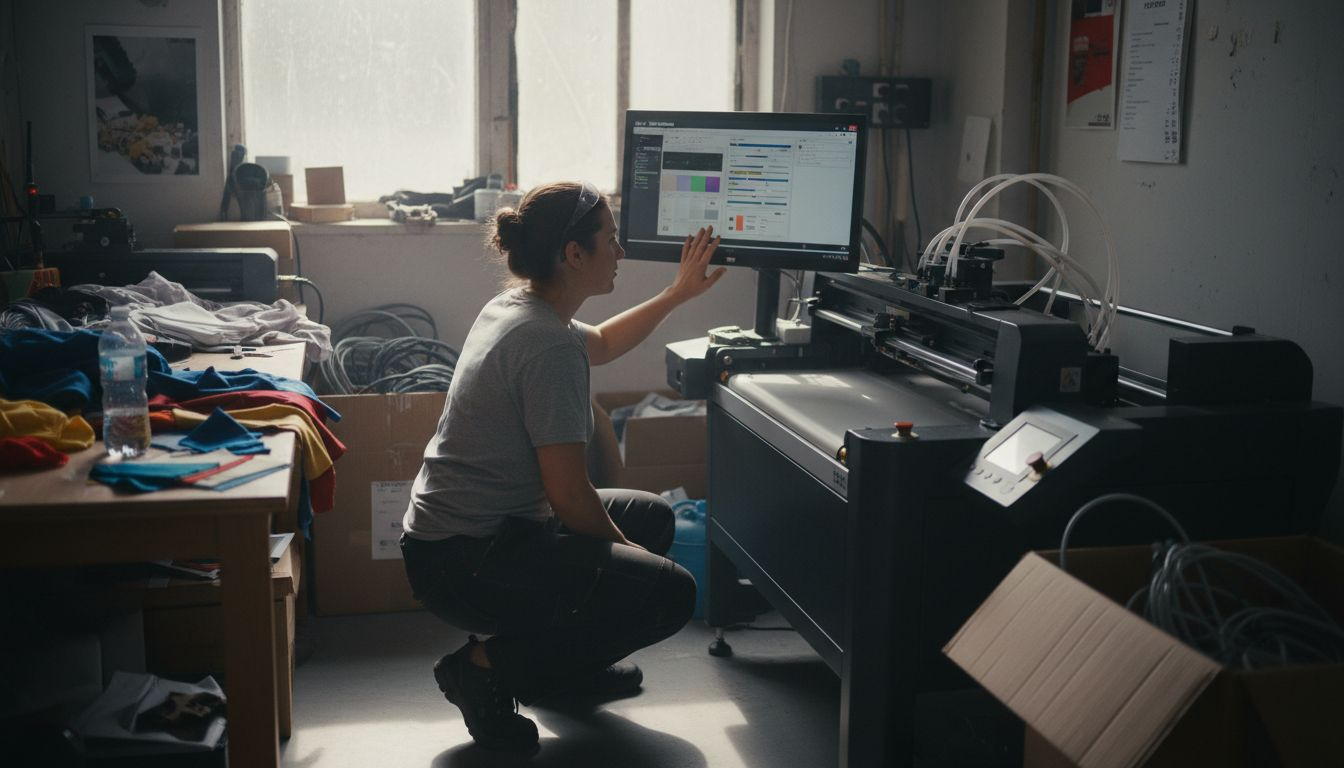
One of the most significant advancements is the development of next-generation DTF transfer technologies that enable unprecedented print resolution and color vibrancy. Modern DTF printers now incorporate advanced printhead technologies and specialized water-based inks that produce incredibly detailed designs with photorealistic quality. These innovations allow designers to reproduce intricate graphics with millimeter-level precision, including subtle gradients and complex color blending that were previously impossible with traditional printing methods.
Intelligent software integration has also revolutionized DTF workflows. Cutting-edge design platforms now offer real-time color management, predictive ink usage calculation, and automated image optimization features. Machine learning algorithms can now automatically adjust color profiles, recommend ideal print settings, and minimize material waste. This technological convergence means small apparel businesses can achieve professional-grade results with minimal technical expertise, democratizing high-quality custom printing.
Material science developments have introduced new powder adhesive formulations and specialized transfer films that significantly enhance transfer durability and flexibility. These advanced materials provide superior washability, increased stretch resistance, and improved adhesion across diverse fabric types. Manufacturers are now creating transfer solutions that maintain graphic integrity through multiple wash cycles, addressing historical limitations of heat transfer technologies.
Pro tip: Invest in calibration tools and regularly test print settings to ensure consistent color reproduction and transfer quality across different fabric substrates.
Eco-Friendly Materials and Sustainability Trends
The apparel industry is experiencing a transformative shift towards sustainability, with DTF printing emerging as a powerful avenue for environmentally conscious production. Small clothing brands and independent designers are increasingly recognizing the critical importance of adopting eco-friendly practices that minimize environmental impact while maintaining high-quality design capabilities.
Leading the charge in sustainable DTF printing are manufacturers developing eco-friendly printing practices that dramatically reduce waste and carbon footprint. Innovative companies are now producing water-based inks with significantly reduced volatile organic compound (VOC) emissions, biodegradable transfer films, and recyclable powder adhesives. These materials not only perform exceptionally well but also address growing consumer demand for environmentally responsible production methods.
Material science advancements have introduced groundbreaking sustainable alternatives that challenge traditional printing paradigms. Biodegradable transfer films made from plant-based polymers can now decompose within months, compared to traditional plastics that require hundreds of years. Powder adhesives derived from natural compounds offer comparable performance to synthetic alternatives while dramatically reducing petrochemical dependencies. Some manufacturers have even developed transfer solutions using recycled plastic materials, creating a circular economy approach that transforms industrial waste into valuable printing resources.
Beyond material innovations, sustainable DTF printing encompasses holistic operational strategies. Smart energy management systems in modern DTF printers optimize power consumption, while advanced color management algorithms minimize ink waste. Progressive manufacturers are implementing closed-loop recycling programs for printing consumables, encouraging responsible disposal and material reintegration. These comprehensive approaches demonstrate that environmental responsibility can coexist with technological innovation and high-performance printing capabilities.
Key sustainability innovations in DTF printing include:
| Innovation | Environmental Benefit | Typical Use Case |
|---|---|---|
| Water-based Inks | Reduces VOC emissions | All fabric types |
| Biodegradable Transfer Film | Decomposes quickly after use | Eco-friendly apparel lines |
| Recyclable Powder Adhesive | Minimizes landfill waste | Circular economy applications |
| Smart Energy Management | Lowers energy consumption | Large and small print runs |
Pro tip: Investigate local recycling programs for printing consumables and establish a systematic waste reduction protocol in your production workflow.
Expanded Fabric and Substrate Compatibility
DTF printing technology has dramatically expanded the horizons of textile decoration, breaking through traditional limitations that once constrained designers and small apparel businesses. The revolutionary approach allows for unprecedented versatility in transferring designs across an extraordinary range of fabric types and unconventional substrates, transforming how custom apparel and merchandise are produced.
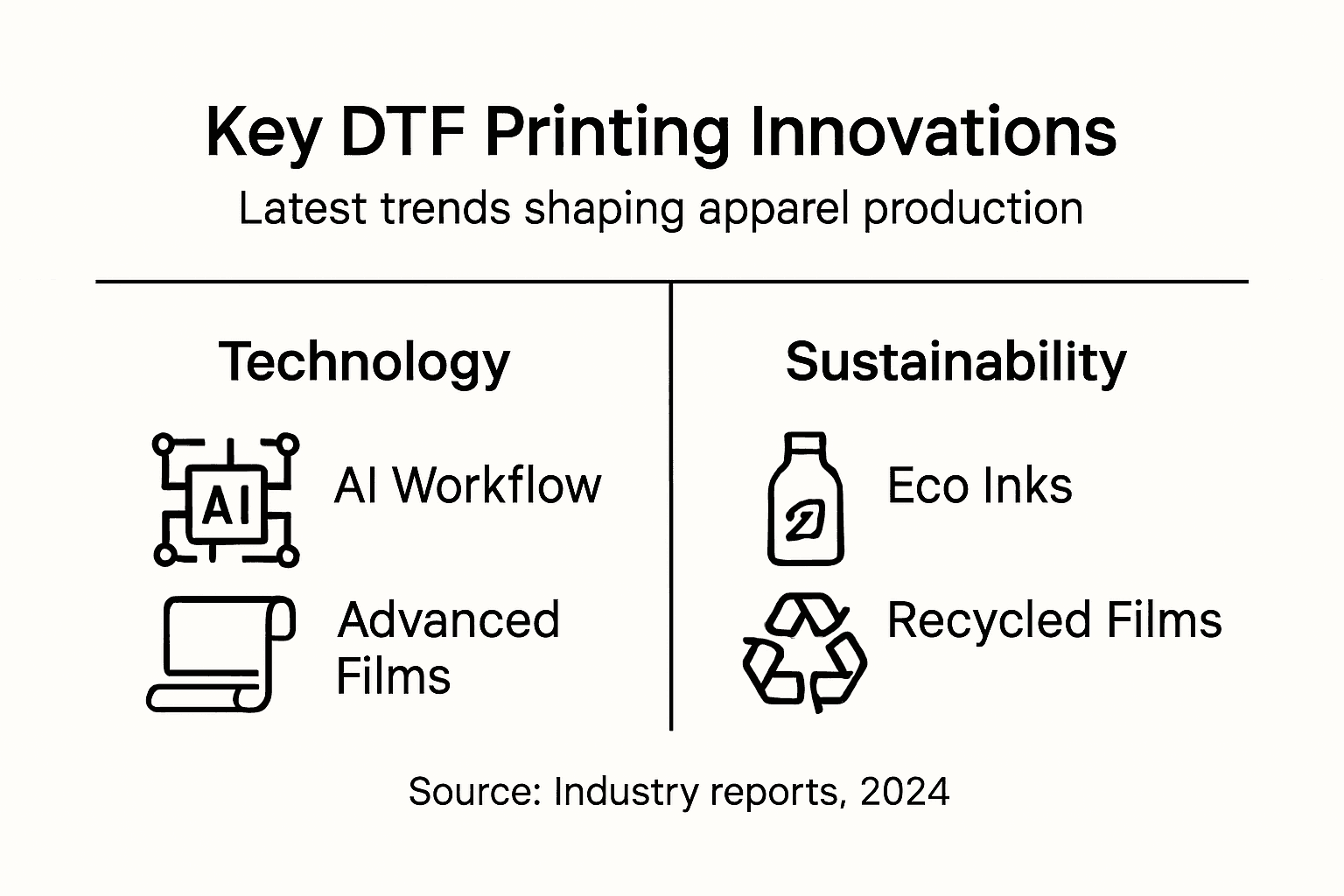
Modern DTF technology now enables printing on materials that were previously challenging or impossible. Traditional printing methods struggled with fabrics like polyester, nylon, and performance textiles, but advanced transfer technologies have overcome these historical barriers. Designers can now seamlessly apply intricate graphics to stretchy athletic wear, moisture-wicking sportswear, delicate silk garments, and even leather accessories with consistent color vibrancy and durability.
The substrate compatibility of DTF printing extends far beyond traditional textiles. Innovative manufacturers have successfully developed transfer techniques that work on hard surfaces like ceramics, wood, and even certain metallic materials. This expansion opens remarkable opportunities for businesses looking to diversify their product offerings. Entrepreneurs can now create custom merchandise ranging from personalized athletic jerseys to branded promotional items on diverse surfaces, all using the same fundamental DTF printing technology.
Technical advancements in powder adhesive formulations and specialized transfer films have been instrumental in achieving this remarkable substrate versatility. Engineers have developed adaptive adhesive technologies that can adjust their molecular bonding properties based on the specific material characteristics. These intelligent adhesive systems ensure robust transfer quality across different fabric weights, textures, and compositions, providing unprecedented flexibility for small production runs and custom design projects.
Pro tip: Conduct preliminary test transfers on sample materials to understand unique adhesion requirements and optimize temperature and pressure settings for each specific substrate.
Automation, AI, and Workflow Integration
The digital printing landscape is undergoing a profound transformation, with artificial intelligence and automation technologies revolutionizing how small businesses approach DTF printing workflows. These cutting-edge technologies are dismantling traditional production barriers, enabling unprecedented efficiency and precision for independent designers and apparel entrepreneurs.
AI-driven workflow integration is fundamentally reshaping production processes by introducing intelligent systems that optimize every stage of design and printing. Machine learning algorithms now analyze design files in real-time, automatically adjusting color profiles, detecting potential print issues, and recommending optimal transfer settings. These smart systems can predict potential print failures before production, dramatically reducing material waste and minimizing costly errors.
Advanced workflow automation platforms are creating seamless connections between design, production, and inventory management. Intelligent software can now track job progress, automatically schedule maintenance for printing equipment, and even predict potential supply chain disruptions. These integrated systems provide small businesses with enterprise-level management capabilities, allowing designers to focus on creativity while sophisticated algorithms handle complex operational logistics. Real-time analytics enable precise tracking of ink usage, transfer quality, and production metrics, transforming small-scale printing operations into data-driven, highly efficient enterprises.
The convergence of artificial intelligence and DTF printing technology is creating adaptive production environments that can dynamically adjust to changing design requirements. Neural networks can now learn from previous print jobs, continuously improving color accuracy, transfer quality, and production efficiency. This means that each print run becomes progressively more refined, with the system developing an increasingly sophisticated understanding of design nuances and material interactions.
Pro tip: Invest in workflow management software that offers AI-powered analytics and integrates seamlessly with your existing design and production tools to maximize operational efficiency.
Risks, Costs, and Common Pitfalls to Avoid
DTF printing represents an innovative technology with tremendous potential, but small business owners must navigate a complex landscape of potential challenges and unexpected expenses. Understanding these risks is crucial for developing a strategic approach that minimizes financial exposure and maximizes production efficiency.
Environmental factors pose significant challenges in DTF printing, with critical production parameters requiring meticulous management. Humidity, temperature fluctuations, and airborne particulates can dramatically impact print quality and transfer durability. Professional operations must invest in climate-controlled workspaces with precise environmental monitoring systems. Dust particles can contaminate transfer films, while inconsistent temperatures can cause adhesive activation problems, leading to costly print failures and material waste.
Initial equipment and ongoing consumables represent substantial financial investments that demand careful planning. High-quality DTF printers range from $2,000 to $15,000, with professional-grade systems approaching $25,000. Beyond equipment costs, businesses must budget for specialized inks, transfer films, powder adhesives, and maintenance supplies. Unexpected expenses can quickly accumulate through equipment calibration, replacement parts, and consistent consumable procurement. Smart entrepreneurs conduct thorough cost-benefit analyses, calculating precise per-transfer expenses and potential revenue streams before making significant financial commitments.
Technical skill gaps represent another critical risk factor for small businesses entering DTF printing. Successful implementation requires understanding complex interactions between design software, printer settings, transfer techniques, and fabric characteristics. Improper technique can result in transfer failures, color inaccuracies, and reduced print durability. Small business owners must invest time in comprehensive training, potentially engaging experienced professionals or participating in specialized workshops to develop robust technical competencies.
Pro tip: Create a detailed financial model that includes equipment depreciation, consumable costs, and potential revenue streams before investing in DTF printing equipment.
Embrace the Future of DTF Printing with Transfer Kingz
The rapid innovations shaping the future of DTF printing present exciting possibilities but also require reliable, high-quality solutions to fully unlock their potential. Whether you are facing challenges in achieving durable transfers on diverse fabrics, managing complex designs with photorealistic detail, or seeking eco-friendly materials and workflow automation, Transfer Kingz offers trusted expertise and premium products tailored to your needs. Explore our DTF transfers, custom apparel printing, heat transfers, t-shirt printing, high-quality prints to access cutting-edge print solutions that keep pace with technological advancements and sustainability trends.
Start transforming your apparel production today with trusted Transfer Kingz materials and services. Take advantage of our no minimum order options and quick turnaround so you can bring innovative design ideas to life without delay. Visit Transfer Kingz and explore our full range of DTF transfers, UV DTF Permastickers, custom printing supplies, heat transfers, bulk printing to effortlessly integrate future-ready DTF printing into your business strategy now.
Frequently Asked Questions
What is DTF printing and how does it work?
DTF printing stands for Direct-to-Film printing. It involves printing a design onto a specialized transfer film, applying an adhesive powder, and then heat pressing it onto the fabric. This technique allows for vibrant and detailed graphics on various fabric types.
What types of fabrics can be used with DTF printing?
DTF printing is compatible with a wide range of fabrics, including cotton, polyester, blends, and even challenging materials like leather and nylon. This versatility eliminates many limitations of traditional printing methods.
What are the benefits of using DTF printing over traditional methods?
DTF printing offers several advantages, such as high design detail, lower setup costs for small batches, and less need for fabric pre-treatment. It also allows for intricate, multicolor designs that would be difficult to achieve with screen printing or direct-to-garment methods.
How can small businesses minimize costs when starting DTF printing?
Small businesses can minimize costs by starting with a compact DTF printer, practicing on scrap fabrics to refine their techniques, and carefully budgeting for equipment, consumables, and maintenance. Conducting a cost-benefit analysis can help in making more informed decisions.
Recommended
- How dtf shirt transfers are Revolutionizing Custom Apparel – Transfer Kingz
- Can Digital Transfer Film Handle Intricate and Detailed Prints? – Transfer Kingz
- Where to Buy Top-Quality DTF Supplies USA: Your Guide to the Best Dire – Transfer Kingz
- Where to Buy Top-Quality DTF Supplies USA: Your Guide to the Best Dire – Transfer Kingz
0 comments