

Many small print shops believe all transfer films deliver the same durability, but premium transfer films show up to 30% higher color retention after 50 washes compared to lower-grade options. Understanding transfer films transforms your custom apparel quality and customer satisfaction. This guide breaks down how transfer films work, what properties matter, and practical techniques to maximize print longevity and vibrancy for your clothing business.
Table of Contents
- What Are Transfer Films And How Do They Work?
- Key Properties Of Transfer Films Affecting Print Quality
- Material Compatibility And Application Techniques
- Common Misconceptions About Transfer Films
- Comparing Transfer Film Technologies: DTF Vs Vinyl And More
- Practical Tips For Small Businesses And Independent Artists
- Troubleshooting And Maximizing Transfer Film Performance
- Summary And Next Steps For Implementing Transfer Film Solutions
- Explore Transfer Kingz For High-Quality DTF Transfers
Key takeaways
| Point | Details |
|---|---|
| Film quality determines print lifespan | Premium transfer films retain color 30% better after 50 washes than basic films. |
| Fabric and settings matter equally | Matching film type to fabric and using correct heat press parameters prevents adhesion failures. |
| DTF outperforms vinyl significantly | DTF transfers resist cracking 40% better than heat transfer vinyl after 100 washes. |
| Application technique reduces defects | Consistent pressure, proper cooling, and precise timing minimize peeling and fading issues. |
| Smart tools cut material waste | Gang sheet builders reduce material waste by up to 25% for cost-conscious businesses. |
What are transfer films and how do they work?
Transfer films are PET-based materials with specialized coatings enabling ink adhesion and release. These thin polymer sheets form the foundation of DTF printing, serving as temporary carriers for your designs before they move to fabric. The magic happens in the coating layer, which allows ink to grip firmly during printing but releases cleanly during heat transfer.
The role of transfer films in DTF printing involves a precise chemical balance. When your design prints onto the film, special microporous coatings absorb and hold pigment particles. During heat pressing, controlled temperature and pressure activate adhesive powder, bonding ink permanently to textile fibers while the film peels away.
Film thickness and coating quality impact print clarity and durability. Thinner films produce sharper edges and finer detail, while thicker options offer more forgiving application for beginners. Understanding these key facts about transfer films helps you select materials that match your production goals.
Transfer films enable complex designs impossible with traditional screen printing. You can reproduce photographic images, gradients, and intricate patterns with stunning accuracy. The process works on virtually any fabric, making it ideal for small batch custom orders where setup costs must stay low.
- PET base provides structural stability during printing and handling
- Specialized coatings create optimal ink absorption and release properties
- Heat and pressure trigger controlled transfer from film to fabric
- Release characteristics determine how cleanly film separates after pressing
- Quality films maintain design integrity through repeated washing cycles
Key properties of transfer films affecting print quality
Coating formulations determine how well ink bonds to fabric and withstands laundering stress. Microporous coatings enhance ink absorption, color gamut, and sharpness by up to 20% compared to standard surfaces. These microscopic pores create more contact points for pigment particles, improving color density and reducing ink bleeding.
Wash resistance separates premium films from budget options dramatically. Premium films show up to 30% better color retention after 50 washes, maintaining vibrant appearance while cheaper alternatives fade noticeably. This difference directly affects your brand reputation and customer return rates.
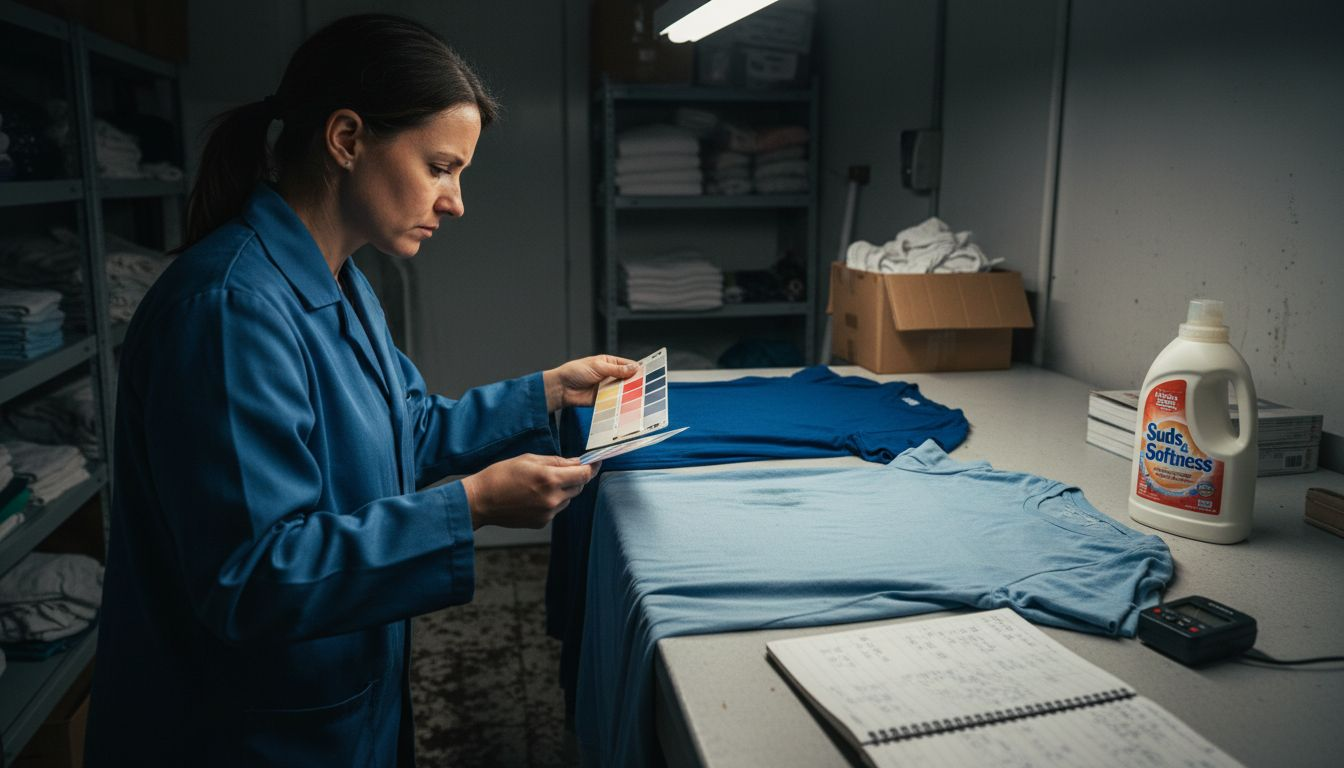
Film thickness influences how effectively ink transfers and how forgiving the application process becomes. Thicker films tolerate minor pressure variations better but may produce slightly softer detail edges. Thinner options deliver crisper lines but require more precise heat press technique to avoid incomplete transfer.
The benefits of high-quality transfer films extend beyond initial print quality to long-term garment performance. Superior coating chemistry resists cracking, peeling, and color shift even after dozens of wash cycles. This durability translates to happier customers and fewer warranty claims.
Pro Tip: Test new film batches with a small sample order before committing to large production runs. Press settings that worked perfectly with one brand might need adjustment with another supplier’s coating formulation.
- Release layer chemistry controls how cleanly film separates after heat application
- Coating porosity affects ink absorption depth and color vibrancy
- Base film clarity influences print sharpness and detail reproduction
- Heat tolerance determines maximum safe pressing temperatures
- Adhesive compatibility ensures proper bonding with various fabric types
Material compatibility and application techniques
DTF transfer films work beautifully on cotton, polyester, blends, and nylon with minor adjustments. Cotton accepts transfers readily at standard settings, while polyester may require slightly lower temperatures to prevent scorching. Blends perform well with middle-ground parameters that accommodate both fiber types.
Standard heat press settings: 150°C, 30 psi, 15-20 seconds for strong adhesion. These parameters create optimal conditions for adhesive powder to melt and penetrate fabric fibers without damaging the base material. Following the DTF transfer setup guide ensures consistent results across different garment types.
Nylon and synthetic blends sometimes need reduced temperature to avoid melting. Start 10 degrees lower and test on scrap fabric before pressing finished garments. Proper cooling before peeling is critical, hot peels often result in incomplete transfer or adhesive residue.
Mastering the DTF application process involves repeatable steps that eliminate guesswork:
- Preheat your garment for 5 seconds to remove moisture and wrinkles
- Position transfer face down on fabric, ensuring complete contact
- Apply firm, even pressure for the recommended time duration
- Allow transfer to cool for 30 seconds minimum before peeling
- Peel film slowly at a 45-degree angle for clean separation
- Cover with parchment and press again for 5 seconds to seal edges
| Fabric Type | Temperature | Pressure | Time | Special Notes |
|---|---|---|---|---|
| 100% Cotton | 150°C | 30 psi | 15-20 sec | Standard settings work best |
| Polyester | 145°C | 25 psi | 12-15 sec | Lower heat prevents scorching |
| Cotton Blend | 148°C | 28 psi | 15-18 sec | Middle ground settings |
| Nylon | 140°C | 20 psi | 10-12 sec | Reduce heat significantly |
Pro Tip: Keep a calibrated infrared thermometer near your heat press to verify actual platen temperature. Built-in press displays can drift over time, leading to inconsistent results even when you think settings are correct.
Common misconceptions about transfer films
Many beginners assume all DTF transfer films perform identically on every fabric type. Reality shows that film and fabric compatibility directly affects adhesion strength and wash durability. Matching film chemistry to textile composition prevents frustrating failures and wasted materials.
Another widespread belief suggests DTF transfers are less durable than heat transfer vinyl. Improper pressing leads to 15% higher defect rates, but when applied correctly, DTF actually outlasts vinyl significantly. The confusion stems from users applying DTF with vinyl techniques, which produces suboptimal bonding.
Some operators think higher temperature always means better adhesion. Excessive heat can actually degrade adhesive powder and damage fabric fibers, causing premature wear. Following manufacturer specifications prevents this counterproductive approach that undermines print longevity.
Understanding common transfer film misconceptions saves time and materials. Incorrect assumptions about peeling timing or pressure requirements lead to adhesion failures that appear to be film quality issues when they’re actually technique problems.
- Not all films suit every fabric without parameter adjustments
- DTF durability exceeds vinyl when applied with proper technique
- Temperature, pressure, and timing must all align for optimal results
- Cooling time before peeling is non-negotiable for clean transfer
- Film quality differences become apparent after multiple wash cycles
Comparing transfer film technologies: DTF vs vinyl and more
DTF outperforms heat transfer vinyl in cracking resistance by 40% after 100 washes. This durability advantage comes from how DTF ink bonds at the molecular level with fabric fibers rather than sitting as a surface layer. The DTF vs heat transfer vinyl comparison reveals critical differences in longevity and detail capability.
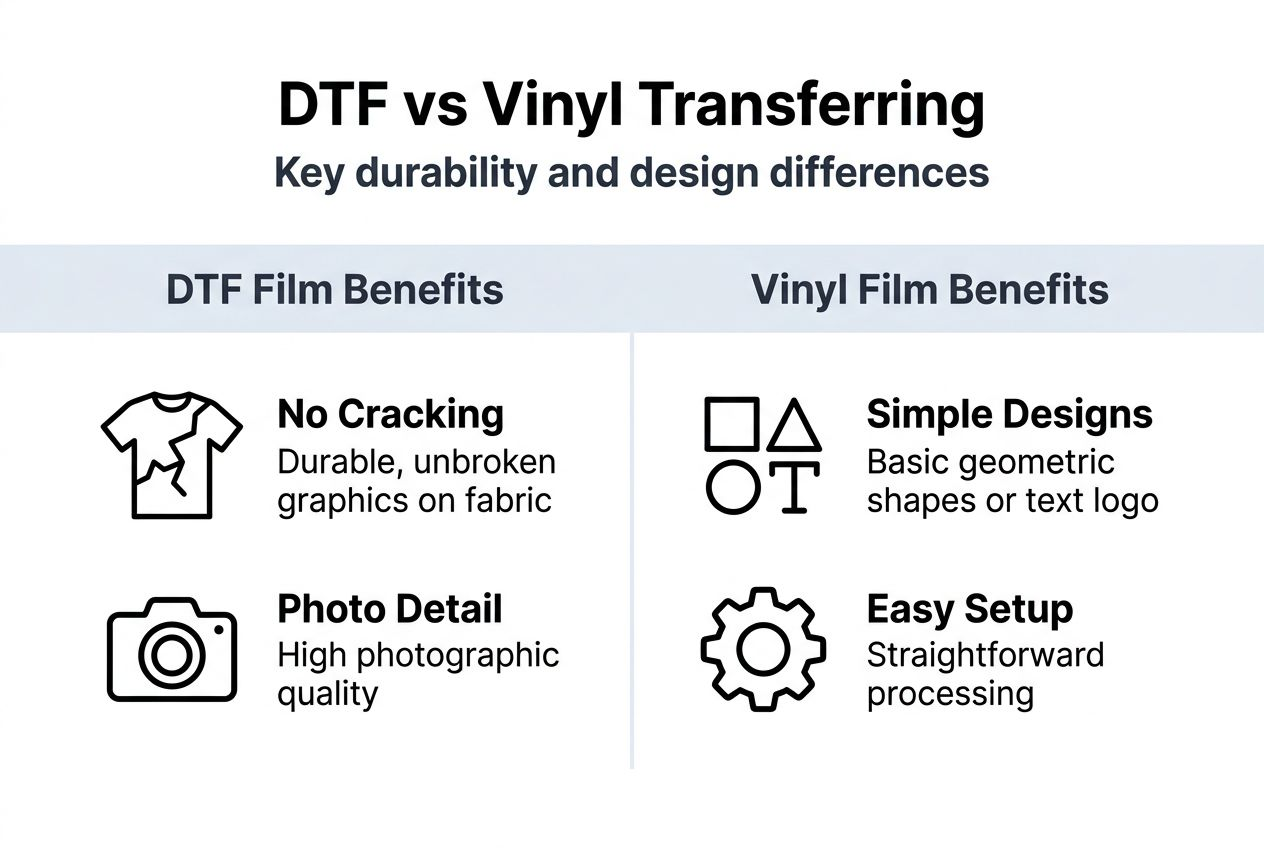
DTF excels at reproducing complex multi-color designs and photographic detail that would require multiple vinyl layers. A design with 12 colors prints as easily as a two-color graphic, with no weeding or layering required. This efficiency makes DTF ideal for small businesses handling diverse custom orders.
Vinyl remains simpler for basic single-color designs and very small production volumes. The learning curve is gentler, and setup costs are lower for occasional users. However, vinyl’s texture feels thicker on garments and tends to crack along cut edges over time.
Thermal transfer technologies comparison shows how different methods suit different production scenarios. DTF combines the detail capability of sublimation with vinyl’s versatility across fabric types, creating a middle ground that works for most custom apparel needs.
| Factor | DTF Transfers | Heat Transfer Vinyl | Screen Printing |
|---|---|---|---|
| Color complexity | Unlimited colors, gradients | Limited, layering required | Best for solid colors |
| Detail level | Photographic quality | Good for graphics | Moderate |
| Durability | 40% better crack resistance | Prone to cracking | Excellent |
| Setup time | Minutes per design | Weeding required | Hours for screens |
| Minimum order | No minimums | No minimums | High minimums |
| Fabric compatibility | Nearly universal | Cotton, polyester | Limited |
- DTF allows unlimited design complexity without additional cost
- Vinyl provides simpler workflow for basic designs and beginners
- DTF texture feels softer and more integrated into fabric
- Vinyl requires weeding, which adds labor for intricate designs
- DTF maintains color vibrancy better through repeated laundering
Practical tips for small businesses and independent artists
Using gang sheet builders reduces material waste by up to 25%. These digital tools arrange multiple designs on a single sheet, maximizing every inch of expensive transfer film. Smart layout planning directly improves your profit margins on every order.
Selecting suppliers who provide consistent film quality prevents the frustration of batch-to-batch variation. Reliable vendors test their coatings and provide specific pressing parameters that eliminate guesswork. Building relationships with trusted suppliers saves troubleshooting time and reduces material waste from failed transfers.
Proper curing and press techniques minimize peel and fade defects. Implementing quality control checkpoints catches issues before garments ship to customers. A simple pre-wash test on sample garments reveals potential durability problems early in your workflow.
The DTF gang sheet software tips include spacing designs properly to allow clean cutting and preventing heat press overlap issues. Leave at least half an inch between designs to ensure proper pressure distribution during application.
Pro Tip: Create a pressing log that records settings, film batch numbers, and garment types for every job. When you achieve perfect results, you’ll have exact parameters to replicate success. When problems occur, the log helps identify what changed.
- Invest in accurate temperature and pressure measurement tools
- Maintain consistent room humidity to prevent film handling issues
- Follow detailed DTF transfer care tips for customer education
- Clean heat press platens regularly to ensure even heat distribution
- Store unused transfer films in cool, dry conditions away from direct sunlight
Troubleshooting and maximizing transfer film performance
Peeling and fading often result from improper curing or timing; consistent heat and pressure are critical to print longevity. When transfers fail prematurely, the cause usually traces back to application parameters rather than film defects. Systematic troubleshooting identifies whether temperature, pressure, or timing needs adjustment.
Inconsistent results across identical garments often indicate heat press calibration drift. Platens heat unevenly as heating elements age, creating hot and cold spots that produce partial transfers. Regular equipment calibration maintains the precision necessary for professional results.
Matching film specifications to fabric composition prevents adhesion failures that appear mysterious without this knowledge. Some films optimize for natural fibers while others target synthetics. Using cotton-focused films on polyester yields disappointing bonds no matter how perfect your technique.
The transfer film troubleshooting process starts by isolating variables. Change only one parameter at a time when testing solutions, otherwise you won’t know which adjustment fixed the problem. Document every change to build institutional knowledge.
- Verify actual platen temperature with an independent thermometer
- Check pressure gauge accuracy with calibration weights annually
- Test film on scrap fabric before pressing finished garments
- Ensure complete film contact by removing wrinkles from garments
- Follow manufacturer recommendations for cooling time before peeling
Summary and next steps for implementing transfer film solutions
Mastering transfer films requires understanding how coating chemistry, fabric compatibility, and application technique work together. Quality films paired with proper heat press parameters deliver prints that maintain vibrancy and integrity through dozens of wash cycles. Small businesses gain competitive advantages by producing durable custom apparel that builds customer loyalty.
Digital tools like gang sheet builders optimize material usage while trusted suppliers provide consistent quality. Implementing systematic quality control and equipment maintenance prevents costly defects and customer complaints. Your investment in understanding these principles pays returns through improved efficiency and product quality.
Transfer Kingz provides comprehensive solutions for businesses ready to implement professional DTF transfer workflows. From premium films to detailed application guidance, the platform supports your journey toward consistent, high-quality custom printing. Take the knowledge from this guide and put it into practice with confidence.
Explore Transfer Kingz for high-quality DTF transfers
Transfer Kingz streamlines your custom apparel production with premium DTF transfers designed for durability and vibrant color reproduction. You get access to bulk DTF transfers benefits that reduce per-unit costs while maintaining professional quality standards.
The platform offers comprehensive DTF transfer care instructions to help your customers extend print life through proper washing and maintenance. Small businesses and independent artists benefit from expert support, reliable fulfillment, and no minimum order requirements. Visit the Transfer Kingz online store to explore transfer options and start producing custom apparel that stands out.
FAQ
What fabrics work best with DTF transfer films?
Cotton, polyester, blends, and nylon all accept DTF transfers when you adjust heat press settings appropriately. Cotton works at standard 150°C parameters while polyester needs slightly lower temperatures around 145°C. Nylon requires the most adjustment, typically 140°C with reduced pressure to prevent melting.
How can I prevent peeling and fading of DTF prints?
Use correct curing time of 15-20 seconds with consistent heat and pressure to ensure complete adhesive bonding. Allow transfers to cool for at least 30 seconds before peeling to prevent incomplete adhesion. Follow washing instructions that recommend inside-out cold water cycles and avoid harsh detergents that degrade ink bonds.
Are DTF transfers more durable than heat transfer vinyl?
Yes, DTF transfers resist cracking 40% better than heat transfer vinyl after 100 washes due to superior molecular bonding with fabric fibers. The ink integrates into textile rather than forming a surface layer that’s prone to edge cracking. This durability advantage becomes more pronounced with complex multi-color designs.
What are the key factors for successful DTF application?
Selecting transfer film matched to your fabric type ensures proper adhesion chemistry. Calibrating your heat press to accurate temperature and pressure readings eliminates inconsistent results. Apply transfers with proper timing, allow adequate cooling, and peel at a 45-degree angle for clean separation that preserves design integrity.
Recommended
- High-Quality DTF Ink for Stunning Transfers: Achieve Vibrant, Durable – Transfer Kingz
- Unlock Custom Direct To Film Transfers for Your Business Growth – Transfer Kingz
- Why Choose High-Quality Transfers for Apparel Printing? – Transfer Kingz
- 7 Essential Types of DTF Transfers for Custom Apparel Success – Transfer Kingz
0 comments